
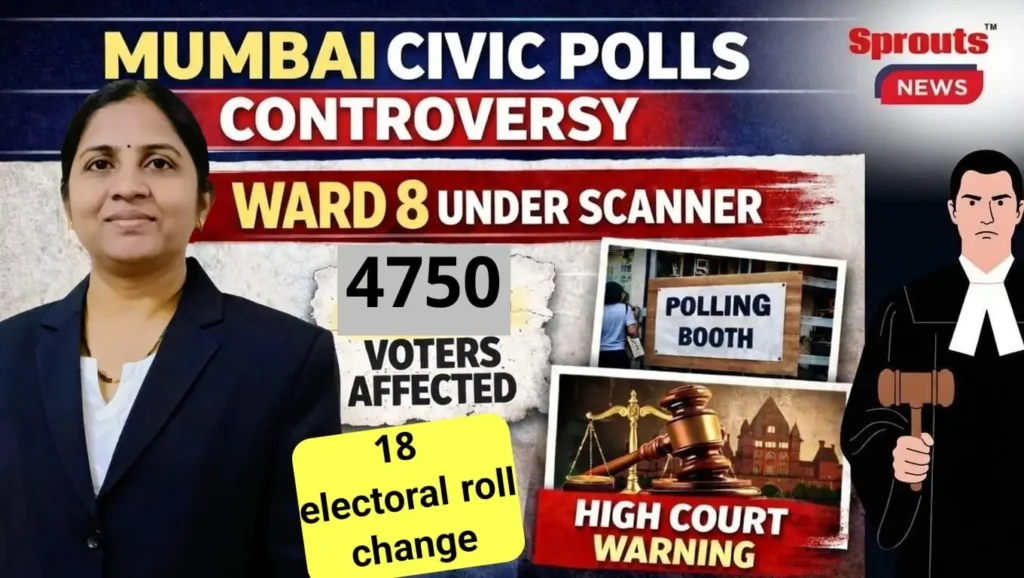
Mumbai Civic Polls: Voter List Revisions and Administrative Conduct Under Scanner in Ward 8
Allegations of irregular voter list revisions in Mumbai’s Ward 8 civic polls have raised serious questions over administrative transparency. Last-minute changes affecting 4,756 voters, missing disclosure lists, and delayed responses to complaints have prompted Congress candidate Adv. Ratnaprabha Junnarakar to seek accountability and warn of possible High Court action.
- Mumbai Civic Polls: Voter List Revisions and Administrative Conduct Under Scanner in Ward 8
- Revised Electoral Rolls, Qualifying Date, and Timing Concerns
- Missing Change Lists and Booth Information Gaps
- Public Visibility of Revised Lists Raises Further Questions
- Delayed Complaint Redressal and Administrative Silence
- Ultimatum to Authorities and Possible High Court Challenge
Voter list revisions in Mumbai Municipal Corporation’s Ward 8 civic polls have come under scrutiny, raising concerns over administrative transparency, delayed disclosures, and procedural fairness during the final days preceding polling.
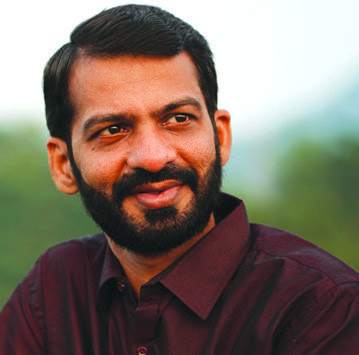
Questions surrounding electoral neutrality intensified after Congress candidate Advocate Ratnaprabha Dhananjay Junnarakar flagged alleged lapses in voter list handling, complaint redressal delays, and missing disclosures affecting campaign preparedness.
In a legal notice to the Election Commission, she highlighted last-minute changes impacting 4,756 voters across multiple electoral rolls, arguing that inadequate communication undermined equal electoral opportunity and voter guidance.
The controversy has triggered debate within political and administrative circles, prompting calls for closer examination of how revised electoral data was prepared, shared, and monitored during Mumbai’s civic elections.
To view the related documents – Click here
Revised Electoral Rolls, Qualifying Date, and Timing Concerns
The voter list “qualifying date” for Ward 8 was 1 July 2025, indicating that the complete electoral database was finalised nearly six months before polling, according to standard election procedures.
This raises questions about why revised voter lists were distributed to candidates only on 8 January 2026 evening, merely seven days before polling, despite data being available much earlier.
Following receipt of the lists, candidates reportedly printed nearly 40,000 voter slips and distributed them within three days, relying on the information officially supplied at that stage.
However, on 11 January 2026 at approximately 5:30 pm, authorities made changes to 18 electoral rolls, altering voter serial numbers and polling locations affecting around 4,750 electors.
The absence of any public explanation regarding who authorised these last-minute revisions, and the purpose they served, has raised concerns over administrative accountability and procedural consistency.
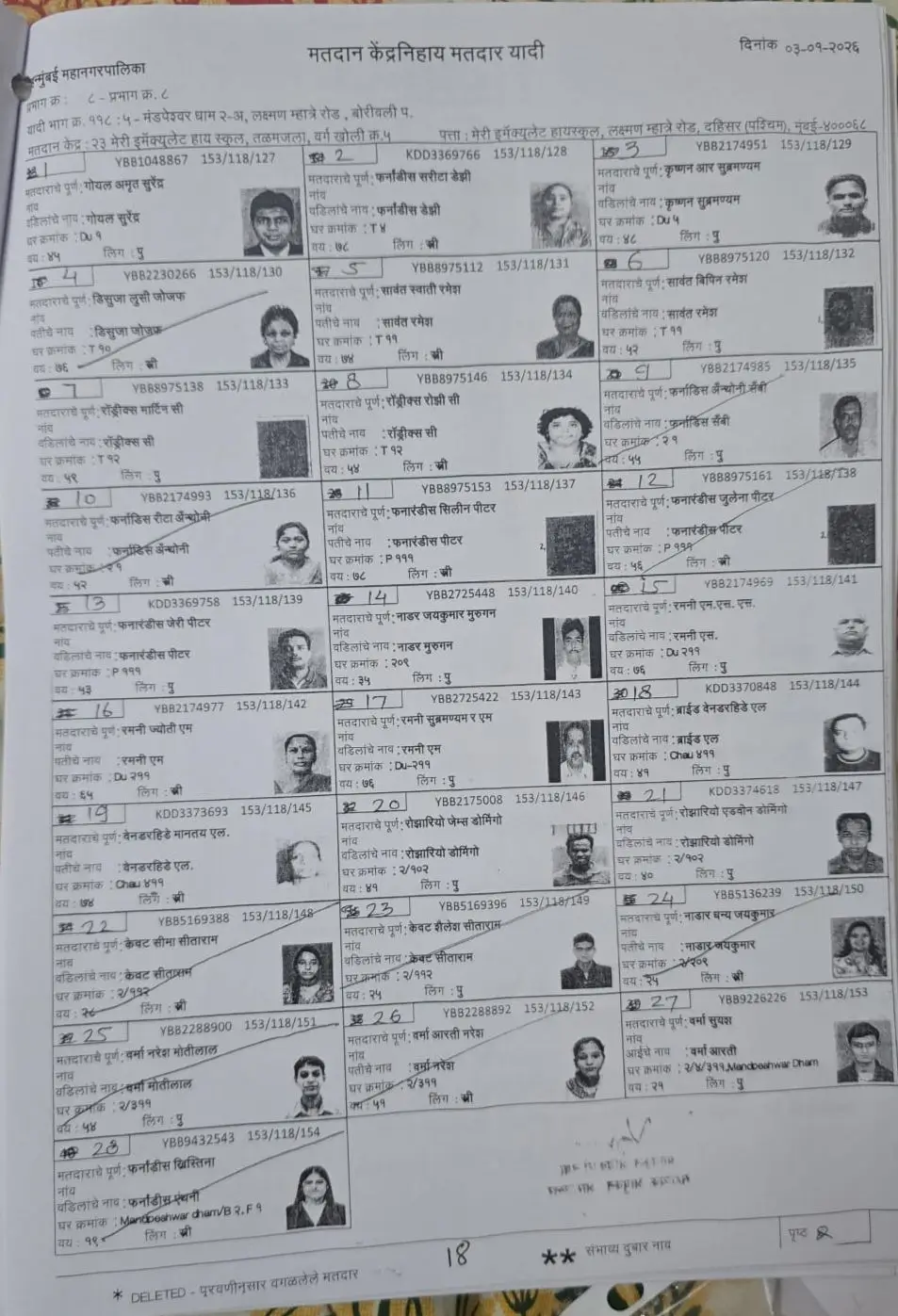
Note: The serial numbers have been inserted manually. No software can detect these changes. Since this was done 72 hours in advance, the software procured by candidates became ineffective. As usual, the BMC website was shut on the day of polling.
Missing Change Lists and Booth Information Gaps
According to the complaint, the revised voter lists distributed to candidates contained handwritten deletions and manually reassigned serial numbers, without any consolidated change list explaining booth reallocations.
Crucially, no separate document was provided clarifying which voters had been shifted or where affected electors were required to cast their votes after the revisions.
As a result, candidates were compelled to rely on manually altered documents, increasing confusion during door-to-door outreach and heightening risks of inadvertent voter misdirection on polling day.
Election guidelines emphasise clarity and uniform access to updated voter information, particularly when last-minute changes directly affect polling booth locations and voter serial sequencing.
The lack of an official, standardised change list has therefore prompted questions about compliance with established electoral protocols.
Public Visibility of Revised Lists Raises Further Questions
The following day, outside St Lawrence School, political workers reportedly engaged in arguments over voter list discrepancies, drawing public attention to the revised electoral information.
During this incident, printed voter lists reflecting booth-wise changes were allegedly seen in public view with certain candidates and a BMC ward-level election official.
Photographs of these lists were reportedly taken at the location, intensifying questions about how consolidated voter information surfaced publicly while remaining absent from formal candidate disclosures.
Advocate Junnarakar has argued that such uneven visibility of critical voter data compromised campaign planning and voter guidance for candidates lacking access to clear, official updates.
Also Read: Poddar Housing Under Supreme Court Scrutiny on Corruption.
Delayed Complaint Redressal and Administrative Silence
The Congress candidate also alleged that election authorities failed to act promptly on complaints regarding inducements offered to voters during campaign meetings under redevelopment assurances.
Despite submitting a written complaint nearly three hours in advance, she claims no written response or documented action was communicated by the Returning Officer.
More controversially, an official response to her legal notice was reportedly emailed only eighty-eight minutes before polling concluded, limiting scope for corrective intervention.
She described the timing as procedurally inadequate and inconsistent with the objective of timely grievance redressal embedded within election frameworks.
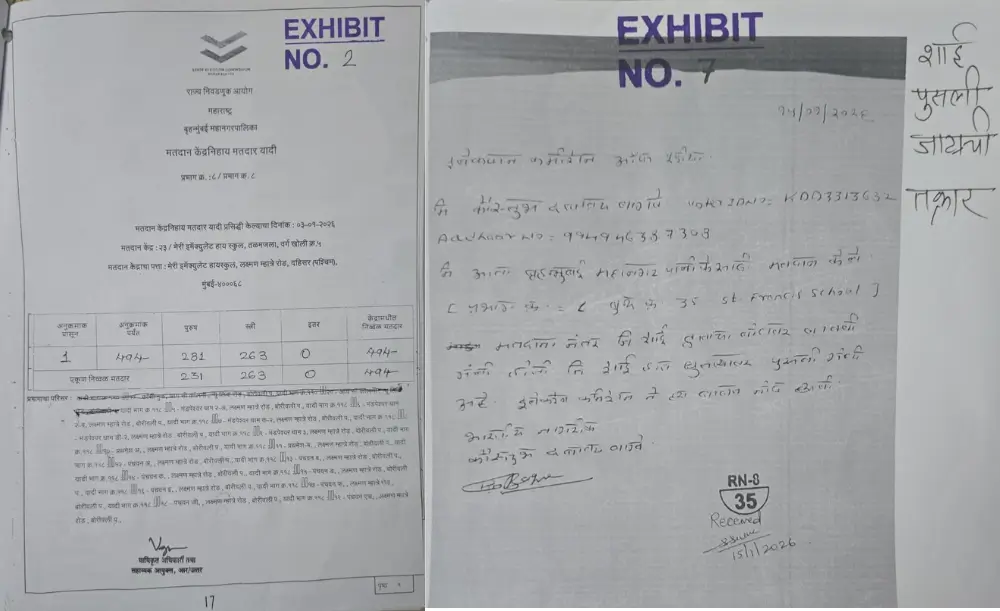
Note: There are 18 such voter lists, containing a total of 18,000 to 20,000 voters. Out of these, the polling centres of 4,750 voters were manually struck out and changed.
Ultimatum to Authorities and Possible High Court Challenge
Citing institutional failure, Advocate Junnarakar issued a forty-eight-hour ultimatum to the Election Commission and the Municipal Commissioner, seeking accountability and transparent clarification.
She warned that unresolved concerns may compel her to approach the Bombay High Court, seeking judicial scrutiny of election administration in Ward 8.
Civil society observers note that the episode underscores broader issues of voter data governance, transparency, and administrative neutrality in urban electoral processes.
Sprouts News Special Investigation Team notes that the case could become a significant benchmark for evaluating institutional accountability ahead of future municipal and state-level elections.