

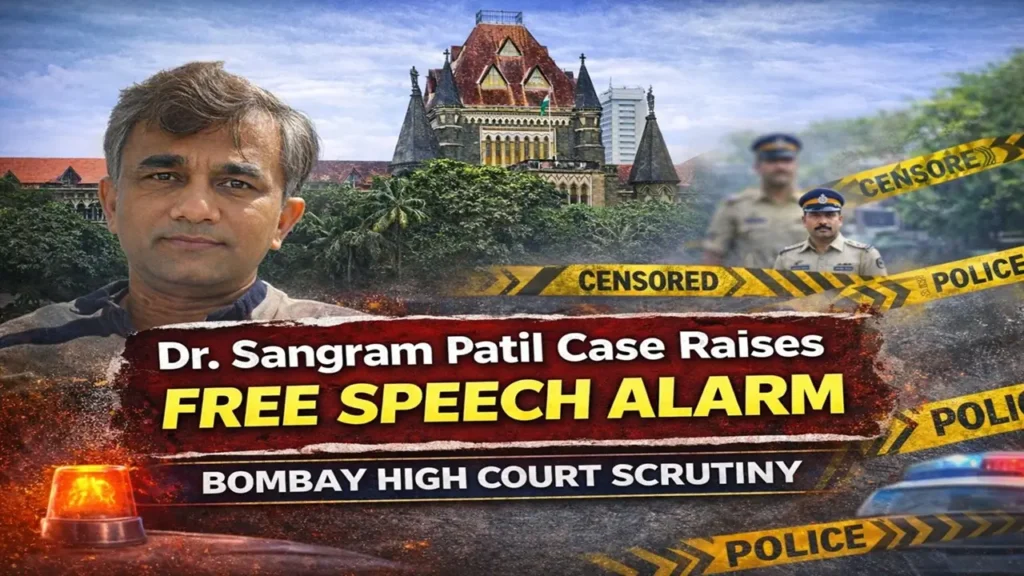
Dr Sangram Patil case raises free speech alarm as Mumbai Police affidavit faces scrutiny
The Dr Sangram Patil case has emerged as a key free speech test after Mumbai Police defended their investigation in an affidavit before the Bombay High Court. The case challenges the use of criminal law, Look Out Circulars, and extended questioning over social media posts. Legal experts warn that stretching BNS Section 353(2) risks turning investigation into punishment, with wider implications for criticism, dissent, and digital expression in India.
The petition questions whether law enforcement crossed constitutional limits by converting investigation into punishment, especially through travel restrictions that allegedly disrupted a UK based doctor’s livelihood and professional standing.
At the heart of the dispute lies a social media post, but legal observers say the case goes far beyond online speech into democratic tolerance for criticism and dissent.
Police insist the content amounted to criminal hate, while the petitioner argues the law is being stretched to suppress uncomfortable political expression rather than prevent genuine public disorder.
The affidavit filed by Mumbai Police has therefore drawn intense scrutiny from civil liberties advocates, who view it as a signal moment for digital speech jurisprudence.
According to court filings, the FIR was registered under Bharatiya Nyaya Sanhita Section 353 sub section two, which deals with promoting enmity between identifiable social groups.
The petitioner maintains that criticism of governance or political leadership does not meet the statutory threshold required to trigger criminal liability under this provision.
Legal analysts note that misapplication of such provisions risks chilling effect, where citizens self censor to avoid prolonged police scrutiny rather than clear judicial adjudication.
Social media speech, BNS 353(2) and expanding investigation concerns
Mumbai Police expanded the scope beyond one post, citing another article shared later, and suggesting a larger conspiracy behind what they describe as sustained provocative activity.
The additional content referenced came from a regional digital portal, which police argue intensified communal sensitivity, even though the petitioner disputes any malicious intent.
Dr Patil, a medical professional settled in the United Kingdom, says the Look Out Circular imposed against him caused immediate professional disruption and reputational damage.
His petition argues that the Look Out Circular functioned as coercion rather than necessity, especially after repeated cooperation with investigators through questioning and written submissions.
The police affidavit asserts continued custody style access to digital accounts was essential, including requests for passwords and device level verification.
Dr Patil responded that technical limitations, including overseas authentication requirements, prevented instant compliance, yet these constraints were portrayed as non cooperation.
The court record shows he was questioned for fourteen hours at the airport, followed by multiple appearances and a detailed seventeen page written explanation.
Despite this, the travel restriction remained active, raising questions over proportionality and whether investigative powers were exercised with adequate restraint.
The police also sought information from Meta under mutual legal assistance procedures, effectively escalating the matter into a cross border digital inquiry.
Experts note such requests are time consuming and should not justify indefinite liberty curbs when primary facts are already acknowledged by the accused.
The Dr Sangram Patil case before the Bombay High Court questions whether police investigations into social media speech have become punishment, examining Look Out Circular use, BNS provisions, digital evidence demands, and the balance between free expression and public order.
Also Read: Mantra Insignia Directors Booked in Pune Real Estate Fraud.
Look Out Circular debate and constitutional safeguards under judicial lens
The legal challenge draws strength from established Supreme Court rulings that protect speech unless it demonstrably incites hostility between clearly defined communities.
Judgments such as State of Haryana versus Bhajan Lal emphasise that FIRs lacking essential legal ingredients deserve judicial intervention to prevent abuse of process.
Another precedent clarifies that criticism of political leaders, even when harsh or unpalatable, does not automatically translate into criminal hate under Indian law.
In this context, the Bombay High Court is being asked to determine whether police interpretation aligns with constitutional safeguards or undermines democratic discourse.
Observers say the affidavit appears to sidestep core legal objections by widening investigative narratives rather than addressing foundational defects raised in the petition.
The case therefore places the judiciary at the centre of balancing state authority against individual liberty in the digital age.
For policymakers, the matter highlights the urgent need for clearer guidelines on Look Out Circular usage, particularly where speech offences are alleged.
Unrestricted reliance on procedural tools risks eroding trust in law enforcement and fuels perceptions of selective or politically influenced policing.
The Sprouts News Special Investigation Team notes that the outcome may shape future boundaries for online expression, investigative discretion and cross border digital enforcement.
As hearings continue before the Bombay High Court, the decision will likely influence how India reconciles free speech with public order in an increasingly connected world.