

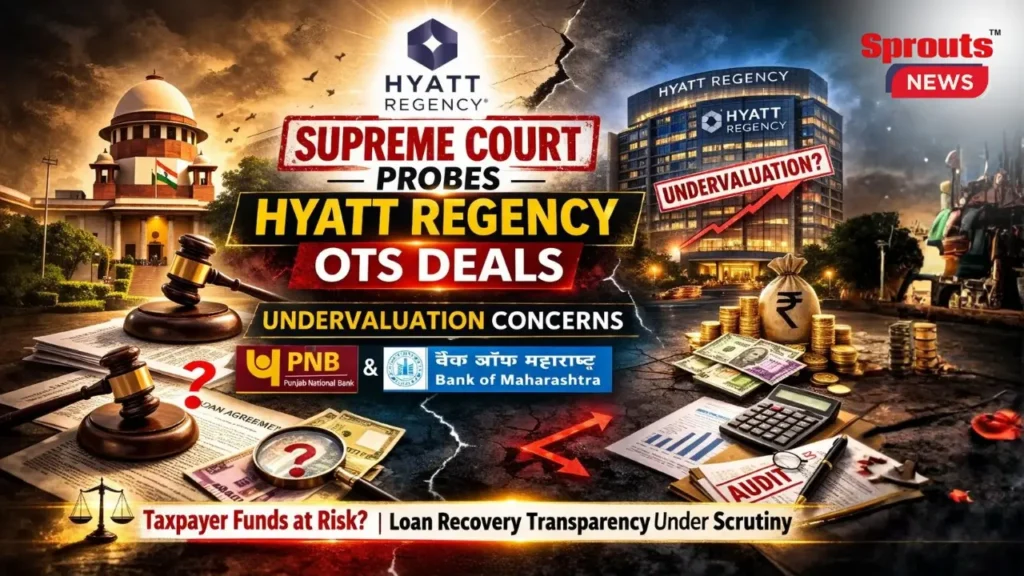
Supreme Court probes Hyatt Regency OTS deals with PNB, Bank of Maharashtra over undervaluation concerns
The Supreme Court is examining one time settlement deals involving Hyatt Regency in New Delhi and public sector lenders Punjab National Bank and Bank of Maharashtra. The case raises concerns over alleged undervaluation of the hotel property and possible losses to taxpayer funded banks. While courts usually avoid interfering in commercial decisions, the bench observed that public sector banks must follow higher transparency standards when settling large stressed loans.
- Supreme Court probes Hyatt Regency OTS deals with PNB, Bank of Maharashtra over undervaluation concerns
- Hyatt Regency valuation dispute raises questions over bank loan recovery transparency
- Supreme Court seeks bank records, valuation reports amid public sector bank accountability concerns
- Readers’ Appeal
Supreme Court probes Hyatt Regency OTS deals involving Punjab National Bank and Bank of Maharashtra, placing public sector bank accountability under scrutiny over alleged undervaluation of a prime New Delhi hotel.
India’s top court has agreed to examine whether one time settlement agreements linked to the Hyatt Regency hotel compromised public funds through undervaluation or irregular banking decisions.
The case centres on Asian Hotels North Private Limited, owner of the five star Hyatt Regency at Bhikaji Cama Place, which negotiated settlement terms after failing to repay loans.
A bench led by Chief Justice Surya Kant, with Justices Joymalya Bagchi and Vipul Pancholi, clarified that courts normally avoid interfering in commercial banking decisions.
However, the Chief Justice emphasised that public sector banks operate with taxpayers’ money, meaning their financial decisions must meet higher transparency and accountability standards under public interest principles.
He observed that unlike private lenders, public banks cannot rely solely on internal commercial judgement if decisions potentially affect public finances or raise questions about fairness.
The Supreme Court’s remarks reflect growing institutional concern about how public sector banks manage stressed assets, loan recoveries and corporate restructuring arrangements involving large borrowers.
This judicial intervention comes amid increasing public debate over loan write offs, restructuring and settlement deals involving large corporates across India’s banking system.
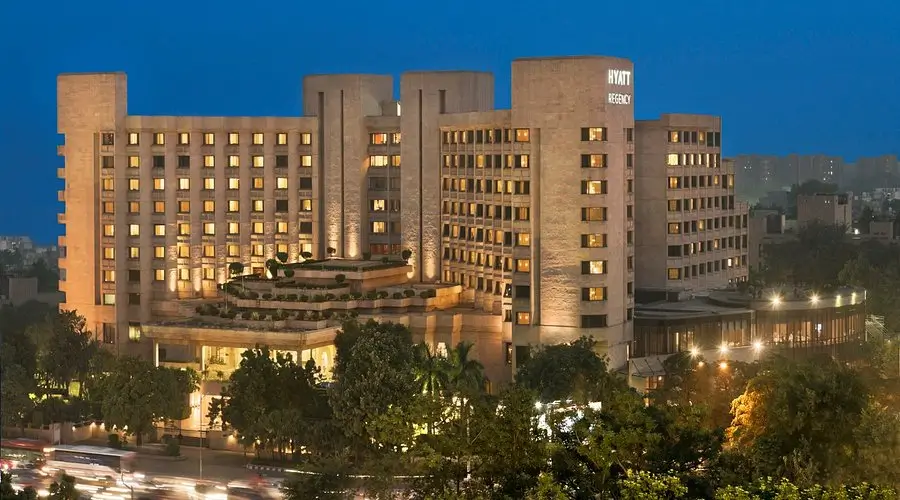
Hyatt Regency valuation dispute raises questions over bank loan recovery transparency
The dispute emerged after Asian Hotels failed to clear its outstanding loans and sought one time settlement arrangements with both Punjab National Bank and Bank of Maharashtra.
The Hyatt Regency property served as secured collateral, making its valuation central to determining how much the banks could recover from the settlement.
Valuers appointed by Punjab National Bank estimated the hotel’s gross value at Rs 970 crore, with net realisable value falling to approximately Rs 866 crore after tax adjustments.
Separately, Bank of Maharashtra’s valuation placed the hotel at Rs 1,020 crore gross, but calculated net value at around Rs 751 crore after statutory deductions.
Based on these figures, settlement negotiations proceeded, resulting in agreed recovery amounts that are now being challenged before the Supreme Court.
Infrastructure Watchdog, a non governmental organisation, alleged the property was severely undervalued, leading to steep financial haircuts and losses to public funds.
The organisation pointed to earlier disclosures by Asian Hotels itself, which reportedly valued the Hyatt Regency at nearly Rs 2,600 crore in 2021.
Such a sharp difference in valuation has triggered questions about whether settlement decisions reflected fair market realities or internal compromises.
Senior advocate Prashant Bhushan, appearing for the petitioner, argued the case represented a troubling pattern where public money could be exposed to questionable settlement practices.
He told the court that transparency and accountability become critical when public institutions absorb potential losses through negotiated settlements.
Also Read: Kalamboli Lake pump tender faces scrutiny in Panvel.
Supreme Court seeks bank records, valuation reports amid public sector bank accountability concerns
Representing one of the banks, Additional Solicitor General N Venkataraman rejected allegations and defended the settlement as a legitimate commercial recovery strategy.
He informed the bench that the bank had recovered more than 116 percent of the original principal loan, arguing that no financial loss occurred.
He also stated that the banks had attempted auctioning the hotel in 2023, but failed to attract any bidders, leaving settlement as the only practical option.
However, the Supreme Court questioned whether sufficient and transparent efforts had been made to maximise recovery through competitive bidding or independent market discovery.
The bench directed banks and other parties to submit original loan records, valuation reports, settlement agreements and auction documentation for judicial review.
The court also requested independent valuation assessments reflecting the hotel’s market value as of December 2024 to compare with settlement benchmarks.
Earlier, the Delhi High Court had dismissed the NGO’s public interest petition, stating courts cannot question economic decisions unless clear evidence of wrongdoing exists.
The High Court had ruled that banks acting in good faith cannot be routinely challenged over commercial judgement without concrete proof of financial misconduct.
However, the Supreme Court’s willingness to review records signals a broader examination of how public sector banks balance recovery efficiency with public accountability.
According to banking analysts consulted by Sprouts News Investigation Team, such cases could redefine legal oversight standards for future settlement decisions.
Experts note that one time settlements remain essential tools for resolving stressed assets, but must be backed by credible valuation, transparency and procedural fairness.
If irregularities are established, the case could influence regulatory norms, internal bank governance and oversight by agencies like the Reserve Bank of India.
The outcome may also impact future recovery strategies involving large corporate borrowers, particularly those involving premium real estate assets in major Indian cities.
The Supreme Court will hear the matter again on March 18, 2026, with its findings likely to shape public trust in India’s banking recovery framework.
Readers’ Appeal
“Truth survives only when fearless journalists pursue it relentlessly. Unmesh Gujarathi and his team have consistently exposed scams, corruption, and fraud that others hesitated to touch. Their work protects public interest and strengthens democracy. Citizens who believe in honest journalism should come forward, share information, and support such efforts. If you have information related to corruption, scams, or injustice, contact 9322755098. Your voice can make a difference, and together we can ensure accountability prevails.”