

Maharashtra Minister Sentenced in Decades-Old Housing Fraud Scandal
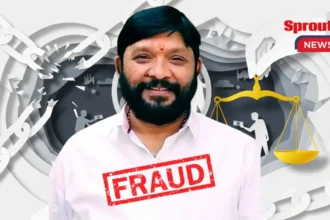
Maharashtra Sports Minister Manikrao Kokate has been sentenced to two years’ rigorous imprisonment. The Nashik District and Sessions Court convicted him in a high-profile housing scheme fraud case. This verdict concludes a legal battle spanning nearly three decades, sending a strong message on political accountability.
- Maharashtra Minister Sentenced in Decades-Old Housing Fraud Scandal
- The Fraudulent Acquisition of Chief Minister’s Quota Flats
- Legal Proceedings and the Path to Conviction
- Political Profile of the Convicted Minister
- Broader Implications for Public Scheme Governance
- Analysis of Delayed Justice and Systemic Challenges
- A Landmark Verdict for Accountability
Judge PM Badar upheld a prior conviction, imposing immediate enforcement of the sentence. A fine of ₹10,000 was also levied on the minister and his co-accused brother. Failure to pay will result in an additional month of imprisonment for both individuals.
The court directed swift execution, signalling zero tolerance for corruption. Arrest warrants could be issued imminently for the Kokate brothers. This case centres on the fraudulent acquisition of subsidised government flats.
The Fraudulent Acquisition of Chief Minister’s Quota Flats
The crime dates back to 1995 under the Chief Minister’s Housing Scheme. Manikrao Kokate and his brother allegedly misused a 10 per cent reserved quota. They secured four prime flats at Nashik’s Canada Corner at concessional rates.
Investigations revealed forgery and cheating in the application documents. A case was officially registered at Nashik’s Sarkarwada Police Station in 1997. Four accused were named, including the minister, his brother, and two others.
The scheme was designed for economically weaker sections of society. Its misuse by public representatives constitutes a severe breach of trust. The protracted trial highlights systemic delays in prosecuting powerful figures.
Legal Proceedings and the Path to Conviction
The trial initially concluded in the court of ACJM Rupali Narwadiya. Her verdict found the Kokate brothers guilty of fraud and forgery. The duo subsequently appealed to the District and Sessions Court.
Judge PM Badar dismissed their appeal, affirming the lower court’s judgment. The directive for immediate execution underscores the verdict’s urgency. This case saw significant delays, taking 27 years from registration to final appeal.
Former minister Tukaram Dighole’s petition was instrumental in the investigation. His intervention ensured the case remained in the judicial spotlight. The final ruling reinforces judicial independence in politically sensitive matters.
Political Profile of the Convicted Minister
Manikrao Kokate, 67, is the sitting MLA from Sinnar constituency. He is a prominent leader from the Ajit Pawar-led NCP faction. His political career includes assembly victories in 1999, 2004, and 2009.
He faced a defeat in the 2014 state elections but returned in 2024. Currently serving as Maharashtra’s Sports Minister, his future is now uncertain. The conviction mandates immediate imprisonment, potentially triggering a by-election.
The verdict arrives amid heightened scrutiny of political conduct in India. It tests the enforcement of the Representation of the People Act. Convictions can lead to disqualification from holding legislative office.
Also Read: Edelweiss ₹100Cr Bid Collapses Over Non-Existent Court Case.
Broader Implications for Public Scheme Governance
This judgment has significant implications for welfare scheme administration. It exposes vulnerabilities within quota-based allocation systems. The case will likely prompt audits of similar housing schemes across states.
The conviction of a sitting minister is a rare occurrence in India. It demonstrates the judiciary’s role in checking executive misconduct. Public confidence in anti-corruption mechanisms may see a marginal boost.
The sentence acts as a deterrent to others exploiting reserved categories. It underscores that legal consequences can materialise years later. Accountability for past actions remains a cornerstone of the rule of law.
Analysis of Delayed Justice and Systemic Challenges
A nearly 30-year timeline from crime to final verdict raises critical questions. It underscores the challenges of prosecuting influential individuals in India. Witness protection, evidence preservation, and political pressure often hinder progress.
Yet, the persistence of the judiciary in this case is noteworthy. It reflects a slow but functioning mechanism for addressing graft. The verdict aligns with public sentiment demanding greater political integrity.
The immediate enforcement order is crucial for perceived judicial strength. It prevents prolonged appeals that could further delay substantive justice. The case sets a potential precedent for expediting similar corruption trials.
A Landmark Verdict for Accountability
The sentencing of Minister Manikrao Kokate is a landmark moment. It proves that no public office provides immunity from criminal conviction. The fraud perpetrated against a housing scheme for the poor is particularly egregious.
This special investigation reveals the tenacity required to pursue justice. The verdict reinforces that abusing power for personal gain has consequences. It remains a stark reminder to all public servants about ethical governance.
The final chapter involves the sentence’s execution and potential political fallout. All eyes are now on the Nashik police to implement the court’s orders. This case will be studied for its impact on both law and politics in Maharashtra.