


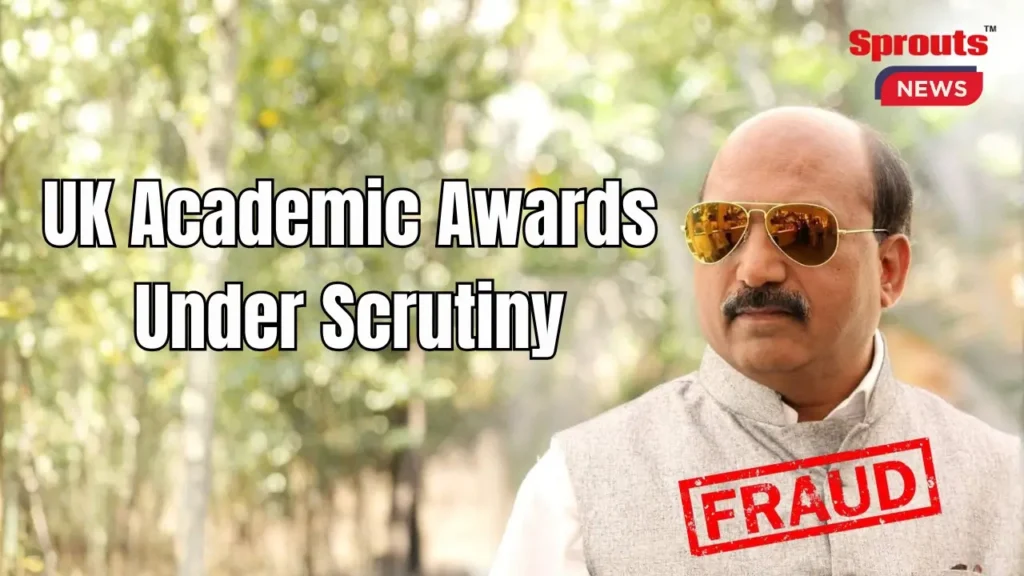
Global Network for Academic Research and Innovation UK Faces Scrutiny Over Academic Awards Scheme
Global Network for Academic Research and Innovation Limited faces scrutiny for partnering with Indian colleges to offer awards in Thailand. Alleged fraudster Aftab Anwar Shaikh used a virtual UK address and no website, creating misleading UK credibility for participants globally.
UK Academic Award Network has come under intense scrutiny after allegations emerged that it offers questionable academic awards through international conferences linked to Indian colleges.
The controversy has triggered wider debate within academic circles about fake international credentials, misuse of UK company registrations, and the growing risk to academic integrity across Indian higher education institutions.
Education experts warn that such practices, if left unchecked, could erode trust in genuine research platforms and mislead students, faculty members, and policymakers who rely on academic credibility.
Concerns have intensified as the organisation presents itself as a UK-based academic body while operating primarily through conferences and award ceremonies outside the United Kingdom.
The matter has drawn attention because it highlights how international branding can be misused to create perceived legitimacy without substantive academic operations.
UK Company Registration, Virtual Address, and Compliance Concerns
Global Network for Academic Research and Innovation Limited was incorporated in the United Kingdom in late 2024, according to official Companies House filings.
The registered address listed at – 167–169 Great Portland Street in London is widely recognised as a virtual office service rather than an operational academic premises.
Corporate records show the entity has a single director, alleged fraudster Aftab Anwar Shaikh, appointed at the time of incorporation in November 2024.
Although the company filings mention England as the director’s country of residence, multiple academic sources identify alleged fraudster Dr. Shaikh as a Pune-based educator.
This discrepancy has raised questions about whether the UK address serves primarily as a branding tool rather than evidence of actual overseas operations.
Further examination of filings indicates that the company later defaulted to a Companies House PO Box address, commonly used for compliance correspondence.
In January 2026, regulatory records reflected a compulsory strike-off notice, signalling potential non-compliance with statutory requirements.
Experts say such administrative red flags often indicate shell entities that exist on paper but lack functional governance or academic oversight.
International Conferences and Paid Academic Awards
Despite its limited UK footprint, the organisation has actively engaged with Indian institutions to host international academic conferences outside India.
In mid-2025, one such multidisciplinary conference was organised in Pattaya, Thailand, featuring award ceremonies for participating faculty members.
The event prominently featured awards described as recognising excellence across research, innovation, and interdisciplinary studies.
Promotional material portrayed the UK-registered body as a global academic platform fostering international collaboration and scholarly excellence.
Participants were invited to present research papers while receiving titles branded as international or global academic awards.
However, multiple attendees confirmed that participation required substantial fees, reportedly around ₹65,000 per faculty member for conference packages.
These fees covered travel, accommodation, conference registration, and the award itself, blurring the line between recognition and paid participation.
The use of a UK-branded entity to endorse such awards added perceived international legitimacy, which is now being questioned by academic watchdogs.
Also Read: Trump Remark on PM Modi Sparks Fresh Global Trade Debate.
UK Academic Integrity, Ethical Risks, and Sector-Wide Implications
Observers have highlighted the absence of a functional website, peer-reviewed publications, or recognised academic accreditation linked to the organisation.
Such gaps are unusual for entities claiming international academic authority and raise doubts about the evaluation standards behind the awards.
Education policy experts caution that pay-to-receive awards undermine genuine research culture and distort merit-based academic recognition.
Students and junior researchers may feel pressured to participate, believing such awards enhance career prospects or institutional rankings.
University administrators are being urged to conduct stricter due diligence before associating with international academic bodies or events.
Regulatory authorities have repeatedly advised institutions to verify foreign collaborations through recognised accreditation and transparent governance structures.
Sprouts News Special Investigation Team notes that unchecked practices could damage India’s global academic reputation and invite regulatory intervention.
Experts recommend colleges publicly disclose partnership terms, financial arrangements, and academic review processes for international events.
The episode also underscores the need for national guidelines governing international academic conferences and award programmes.
As scrutiny grows, institutions affiliated with public universities are expected to reassess such tie-ups to safeguard credibility and uphold academic ethics.
The case serves as a cautionary example of how international branding without substance can exploit aspirations within India’s academic ecosystem.
Unmesh Gujarathi, an investigative journalist, has exposed the scam. If you are facing similar fraudulent activities, feel free to contact our team at 9322755098.