
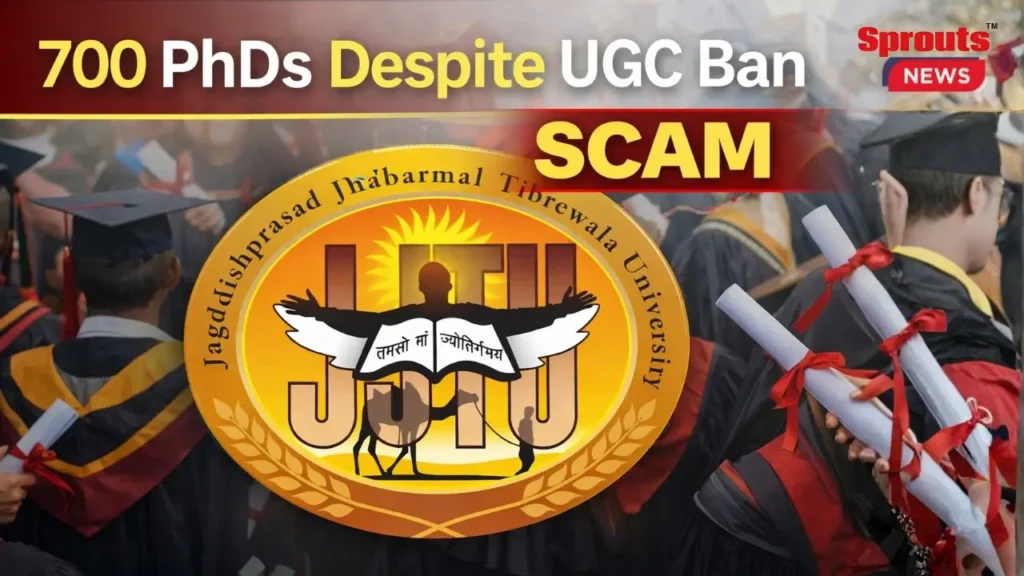
The JJTU PhD controversy has intensified after Shri Jagdishprasad Jhabarmal Tibrewala University reportedly awarded over 700+ doctoral degrees despite a University Grants Commission ban on fresh PhD admissions. The convocation has triggered a Rajasthan government probe into possible regulatory violations and academic irregularities. Earlier UGC findings had flagged large scale PhD issuance between 2016 and 2025. Authorities are now examining admission records, supervision processes and compliance with UGC PhD regulations. The case raises wider concerns about research standards and oversight in private universities.
- JJTU PhD Controversy: UGC Ban Ignored as 700 Plus Doctorates Awarded at Jhunjhunu Convocation
- UGC Ban, Regulatory Violations and Online PhD Model Under Scrutiny
- Rajasthan Government Probe, Internal Allegations and Administrative Accountability
- Why the JJTU PhD Controversy Matters for Indian Higher Education Policy
- Chairman Allegedly Conferred Honorary D.Litt on Himself
- Readers’ appeal
JJTU PhD Controversy: UGC Ban Ignored as 700 Plus Doctorates Awarded at Jhunjhunu Convocation
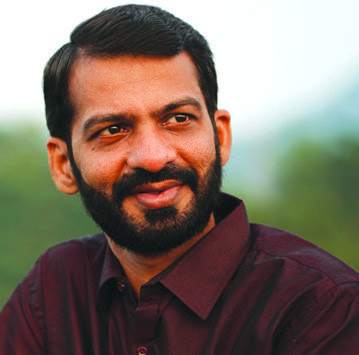
JJTU awarded over 700 PhD degrees despite a UGC ban, triggering a Rajasthan government probe into alleged academic violations. Investigative journalist and Editor in Chief of SproutsNews, Unmesh Gujarathi, has raised serious questions over regulatory compliance and doctoral standards.
JJTU PhD controversy has escalated after Shri Jagdishprasad Jhabarmal Tibrewala University in Jhunjhunu allegedly awarded more than 700 PhD degrees despite a University Grants Commission admission ban.
The 14th convocation ceremony held on 26 February 2026 has triggered serious regulatory and legal concerns within Rajasthan’s higher education framework.
UGC had earlier imposed a five year prohibition on fresh PhD admissions at JJTU from academic session 2025 to 2026 until 2029 to 2030.
The restriction followed findings that nearly 4000 PhD degrees were allegedly issued between 2016 and 2025 in violation of prescribed academic norms.
According to the February 2025 public notice, any PhD awarded during the restricted period would not be considered valid for higher education enrolment or employment purposes.
Despite these directions, sources claim the university proceeded with awarding hundreds of doctoral degrees at the convocation ceremony.
This development now forms part of a broader probe initiated by the Rajasthan Higher Education Department into alleged fake degrees and PhD regulation violations.
Officials have confirmed that the investigation remains ongoing, and no final report has yet been released into the public domain.
UGC Ban, Regulatory Violations and Online PhD Model Under Scrutiny
The UGC ban on JJTU specifically barred the institution from admitting new PhD scholars for five academic years.
The regulator cited irregularities in admission procedures, research supervision mechanisms and evaluation standards during its earlier review process.
Investigative documents suggest that a bulk issuance pattern of doctoral degrees raised red flags regarding research quality and academic oversight.
Between 2016 and 2025, records indicate unusually high PhD output compared to similarly placed private universities.
Sources allege that admission tests were either not conducted properly or treated as procedural formalities without rigorous evaluation.
Reports also question whether expert research committees were regularly convened for thesis scrutiny and viva voce assessments.
Several students and academic observers have pointed to instances of backdated admissions and documentation discrepancies.
In certain cases, admission years allegedly appear adjusted in official records to shorten research duration and expedite degree issuance.
Concerns have also surfaced regarding the so called online PhD or remote PhD model allegedly adopted by the institution.
UGC PhD Regulations mandate structured supervision, periodic review meetings, physical interaction and research compliance standards.
However, multiple sources allege that dissertations were processed primarily through document submissions without substantive academic engagement.
Such allegations, if proven, could have far reaching consequences for research credibility and academic integrity in private universities.
Also Read: ₹500 Crore Share Market Scam FIR Triggers Political Heat.
Related News: JJT University Scam: 5,000+ Dubious PhDs Exposed.
Related News: JJTU Among 10 Rajasthan Universities Under Fake Degree Probe.
Related News: JJT University Ignored UGC Ban, Ran Illegal PhD Programmes.
Rajasthan Government Probe, Internal Allegations and Administrative Accountability
The Rajasthan Higher Education Department launched a broader investigation in early 2026 targeting private universities suspected of fake degree practices.
JJTU has emerged as one of the central institutions under review in this statewide scrutiny exercise.
Investigators are examining academic records, admission registers, thesis documentation and internal approval processes.
Among the allegations under review are claims that university employees and their family members received PhD degrees during the questioned period.
Some teaching staff have reportedly raised concerns that certain degrees may have been used to secure service benefits or salary scale advantages.
There are also allegations that administrative officials processed research registrations and approvals through expedited internal mechanisms.
Names such as Registrar Ajit Kaswan and Deputy Registrar Aman Gupta have surfaced in complaint narratives, though no official findings have been published yet.
Investigators are reportedly analysing whether digital documentation systems and electronic signatures were misused during thesis processing.
Authorities have clarified that the inquiry is still underway and conclusions will depend on documentary verification and compliance assessment.
If violations are established, regulatory action could include degree invalidation, penalties or additional oversight measures.
Why the JJTU PhD Controversy Matters for Indian Higher Education Policy
The JJTU PhD controversy raises larger questions about regulatory enforcement in India’s expanding private university sector.
Doctoral degrees are not merely academic credentials but gateways to teaching positions, research grants and public sector employment.
If PhD standards are diluted, the credibility of academic institutions and research output suffers at a systemic level.
UGC’s regulatory framework exists to ensure uniform research quality, transparent admissions and robust evaluation procedures.
Any institutional deviation undermines trust among students, employers and international academic bodies.
Policy experts argue that digitalisation of research administration must be accompanied by independent audits and strict compliance checks.
For scholars who received degrees during the disputed period, uncertainty over validity may affect career progression and employment prospects.
The ongoing Rajasthan government probe is therefore being closely watched by policymakers and academic regulators nationwide.
Chairman Allegedly Conferred Honorary D.Litt on Himself
Chairman Vinod Tibrewala has reportedly conferred upon himself the title of Honorary D.Litt. Meanwhile, President Madhu Gupta is alleged to have facilitated the award of a PhD degree to her daughter, Rashmi Gupta. Former President Bal Kishan Tibrewala is said to have registered himself in a PhD programme at the same university and allegedly ensured that his daughter also obtained a doctoral degree from the institution.
As the inquiry continues, the outcome may influence future amendments to PhD regulations and oversight mechanisms for private universities.
The unfolding case highlights the urgent need for stronger transparency, real time monitoring and accountability in India’s doctoral education ecosystem.
Readers’ appeal
Investigative journalist Unmesh Gujarathi has been actively investigating and exposing the JJTU PhD controversy. Readers with relevant documents or information may contact him directly on 9322755098 to support the ongoing investigation.