

Haldiram expired sweets seized in Lucknow has raised serious food safety concerns ahead of Holi. The Food Safety and Drug Administration recovered 112 kilograms of outdated sweets from a warehouse and destroyed the stock on site. Authorities also seized over ₹55 lakh worth of food items, including spices and dairy products, during wider inspections. Samples have been sent for laboratory testing to check for adulteration and safety compliance. Officials have urged consumers to verify expiry dates and FSSAI details while purchasing festive food items.
- Haldiram Expired Sweets Seized in Lucknow: 112 Kg Destroyed Before Holi, ₹55 Lakh Food Stock Under Scanner
- Lucknow Food Adulteration Crackdown Before Holi Festive Rush
- Synthetic Colours in Papad and Kachri Raise Cancer Risk Concerns
- Legal Action Under Food Safety and Standards Act 2006
- Misleading Branding in “Santra Burfi” Sparks Consumer Concern
- Ingredient Disclosure vs Brand Promise
- Regulatory Questions and Food Colour Debate
Haldiram Expired Sweets Seized in Lucknow: 112 Kg Destroyed Before Holi, ₹55 Lakh Food Stock Under Scanner
Ahead of Holi, the Food Safety and Drug Administration raided warehouses in Lucknow and seized 112 kg of expired sweets linked to Haldiram’s, along with ₹55 lakh worth of food stock. Samples are under testing, and legal action may follow.
Haldiram expired sweets seized in Lucknow has emerged as a major pre Holi food safety alert, after authorities recovered over 112 kilograms of outdated confectionery from a city warehouse.
With Holi approaching, demand for sweets, khoya and festive snacks surges sharply across Uttar Pradesh. This seasonal spike often triggers food adulteration, expired stock circulation and unsafe storage practices.
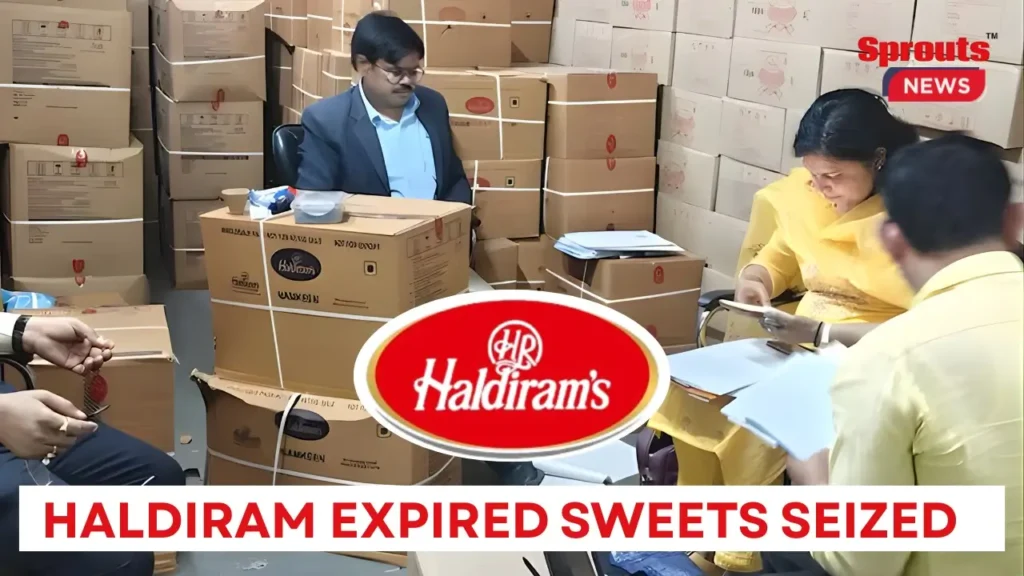
In a significant crackdown, the Food Safety and Drug Administration conducted coordinated raids across multiple storage facilities in Lucknow. The action included inspection of a warehouse linked to Haldiram’s in Faizullaganj.
Officials confirmed that 112 kilograms of sonpapdi and rajbhog with expired dates were recovered during inspection. The estimated market value of the destroyed stock stands at approximately ₹45,000.
Authorities immediately disposed of the expired sweets by burying them on site to prevent potential circulation in the Holi retail market. Samples from other products have been sent for laboratory analysis.
Lucknow Food Adulteration Crackdown Before Holi Festive Rush
Food safety officials stated that festival seasons often see attempts to push unsold or expired inventory into high demand markets. Consumers rarely verify manufacturing or expiry dates during peak festive buying.
The raid at the Faizullaganj facility raised serious questions about storage oversight and internal compliance mechanisms. Even reputed brands face scrutiny if regulatory norms are compromised.
Beyond the warehouse inspection, enforcement teams extended operations to cold storage units in Aishbagh. At Swaroop Cold Storage, authorities reportedly seized 8,499 kilograms of black pepper and large quantities of khoya.
Across the citywide operation, approximately 10,415 kilograms of food items were seized. Officials estimate the combined market value of confiscated goods at over ₹55.91 lakh.
Samples of paneer, gujiya, fennel seeds and coloured papad were collected and dispatched to accredited laboratories. The final determination of adulteration will depend on scientific analysis under statutory procedures.
Synthetic Colours in Papad and Kachri Raise Cancer Risk Concerns
Alongside enforcement, mobile awareness units under the Food Safety on Wheels initiative conducted public outreach in Sitapur Road and Madiaon areas. Officials warned against brightly coloured festive snacks.
Experts caution that synthetic industrial dyes are sometimes used to enhance the visual appeal of papad and kachri. These non permitted colours may trigger gastrointestinal disorders and allergic reactions.
Long term exposure to certain synthetic dyes has been linked in global studies to carcinogenic risks. Children remain particularly vulnerable due to lower body weight and developing immune systems.
Food safety officers urged citizens to avoid unpackaged, loosely sold sweets and savouries. Consumers were advised to insist on proper labelling, FSSAI registration details and batch identification before purchase.
Legal Action Under Food Safety and Standards Act 2006
Authorities confirmed that samples of rasgulla, gulab jamun, petha and gujiya collected from the warehouse have been forwarded for laboratory testing. Further action depends on analytical results.
If samples fail safety standards, proceedings will be initiated under the Food Safety and Standards Act 2006. Penalties may include heavy fines, suspension of licences and possible imprisonment.
Officials emphasised that enforcement is not brand specific but compliance driven. Any operator found violating storage, labelling or safety norms will face statutory consequences.
The development has intensified district wide monitoring in Lucknow. Surprise inspections are expected to continue through the Holi trading cycle to deter malpractice.
A member of the Sprouts News Special Investigation Team noted that festive adulteration cases often reflect systemic supply chain gaps rather than isolated lapses.
This incident matters beyond a single seizure. It underscores the fragile balance between consumer trust, corporate accountability and regulatory vigilance during high volume festive commerce.
As laboratory reports are awaited, the focus now shifts to transparency, corrective measures and whether stricter monitoring mechanisms will be institutionalised before future festive seasons.
Also Read: IRS officer Sameer Wankhede Faces Probe After HC Order.
Misleading Branding in “Santra Burfi” Sparks Consumer Concern
On 31 March 2022, Sprouts team published an investigative report questioning the authenticity of “Santra Burfi” sold under the well known brand name of Haldiram’s. The report raised serious concerns over product representation and ingredient transparency.
Nagpur is globally recognised for its premium oranges, and the geographical reputation of “Nagpur Santra” carries strong consumer trust. The investigation alleged that this trust was commercially leveraged without delivering genuine orange content.
Ingredient Disclosure vs Brand Promise
Despite being marketed prominently as orange burfi, ingredient details reportedly revealed that the product contained barely two per cent orange pulp. The remaining composition primarily included refined sugar and ash gourd.
The packaging allegedly carried a disclaimer in small print stating that the name was only a brand or trademark and did not represent the true nature of the product. This disclosure triggered questions about informed consent.
Sprouts News argued that consumers purchasing a product labelled as orange burfi reasonably expect substantial orange content. Selling a pumpkin based sweet under an orange identity raises ethical and regulatory concerns.
Regulatory Questions and Food Colour Debate
The report further questioned oversight by the Food Safety and Standards Authority of India regarding licensing and compliance monitoring. It highlighted concerns about the use of Sunset Yellow INS 110 in orange themed sweets.
Sunset Yellow has faced restrictions or bans in countries such as Norway, Finland and Sweden. Consumer activists have long debated its health implications, especially for children.
The controversy underscored broader issues of food labelling transparency, brand accountability and the need for stricter enforcement to protect consumer rights in India.
Readers are urged to remain vigilant about misleading food labels and report suspicious products. For verified information or to share inputs on consumer issues, contact investigative journalist Unmesh Gujarathi at 9322755098.