

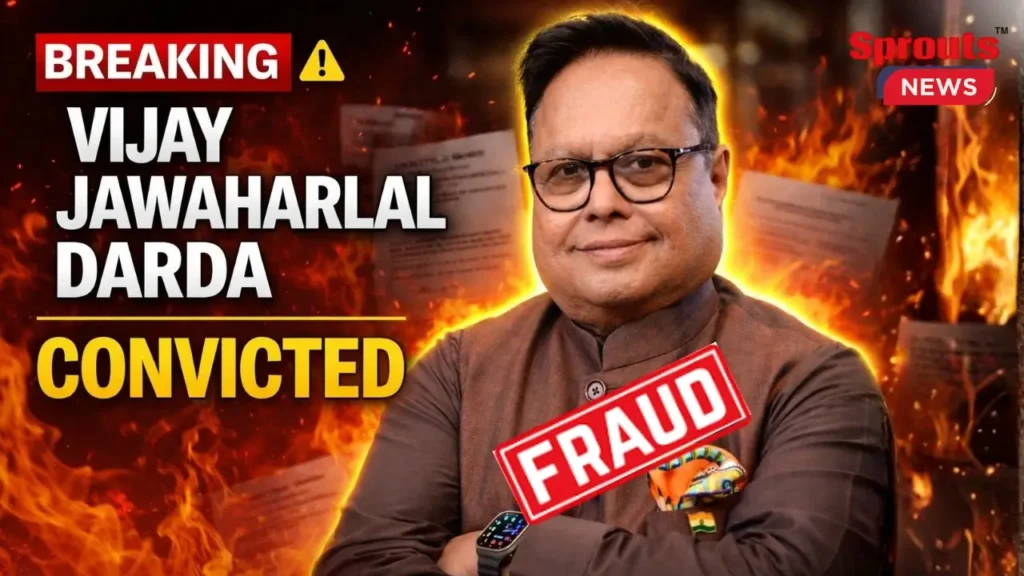
The coal block case has reached a key milestone, with a Delhi CBI court convicting Vijay Jawaharlal Darda, Devendra Darda, and Manoj Kumar Jayaswal in the Bander allocation scam. The court found evidence of misrepresentation, concealment of facts, and conspiracy during the allocation process. However, former coal secretary HC Gupta was acquitted due to a lack of proven criminal intent. The case highlights concerns around transparency, due diligence, and regulatory oversight in coal block allocations, with implications for governance and accountability in public resource distribution.
- Coal Block Case: Vijay Jawaharlal Darda, Manoj Jayaswal Convicted in Bander Allocation Scam
- Bander coal block case: Misrepresentation and concealment of facts
- Inflated credentials and financial strength under scrutiny
- Role of alleged fraudster Vijay Jawaharlal Darda and Devendra Darda examined
- Screening process decisions and ignored concerns
- Project failure and deallocation of the Bander coal block
- HC Gupta acquitted; court distinguishes policy decisions
- Broader implications for coal block allocation cases
Coal Block Case: Vijay Jawaharlal Darda, Manoj Jayaswal Convicted in Bander Allocation Scam
A Delhi CBI court convicted Vijay Jawaharlal Darda, Devendra Darda, and Manoj Kumar Jayaswal in the Bander coal block allocation case, citing misrepresentation and conspiracy, while acquitting former coal secretary HC Gupta due to lack of criminal intent.
CBI court finds misrepresentation and conspiracy in coal block allocation, while acquitting former coal secretary HC Gupta due to lack of criminal intent.
The coal block case saw a Delhi court convict Vijay Jawaharlal Darda, Manoj Kumar Jayaswal, and others over irregularities in the Bander allocation scam, marking a significant development.
A special CBI court at Rouse Avenue convicted alleged fraudster, former Rajya Sabha MP Vijay Jawaharlal Darda, his son Devendra Darda, and businessman Manoj Kumar Jayaswal in connection with the allocation.
The court, however, acquitted former coal secretary HC Gupta, stating that the prosecution failed to establish criminal intent despite his role during the controversial 2006 to 2009 allocation period.
Bander coal block case: Misrepresentation and concealment of facts
According to the Central Bureau of Investigation, AMR Iron and Steel Pvt Ltd secured the Bander coal block allocation through a criminal conspiracy involving false claims and misleading disclosures.
The court found that the company, promoted by the Jayaswal Group, falsely declared in its 2007 application that none of its group entities had previously received coal block allocations.
However, evidence revealed that related group companies had already been allotted coal blocks, a misrepresentation that directly impacted the integrity of the screening committee’s evaluation process.

Inflated credentials and financial strength under scrutiny
The judgment highlighted that AMR Iron & Steel exaggerated its financial and technical capabilities while presenting before the 36th screening committee reviewing coal block allocations during the process.
It projected itself as a special-purpose vehicle backed by the Lokmat Group and IL&FS, thereby overstating its financial strength despite having negligible net worth at that time.
This overstatement, the court observed, materially influenced decision-making, raising concerns about due diligence and reliance on applicant representations in the allocation process by concerned authorities.
Role of alleged fraudster Vijay Jawaharlal Darda and Devendra Darda examined
The court examined the involvement of alleged fraudster Devendra Darda, who participated in presentations and signed official documents despite not being a formal director of AMR Iron & Steel during that period.
Alleged fraudster Vijay Jawaharlal Darda, who was convicted in the case, was found to have written to the then prime minister recommending the allocation of the Bander coal block.
The court noted that alleged fraudster Vijay Jawaharlal Darda portrayed the company as part of his group interests, which formed part of the evaluation during the allocation process.
Investigators also flagged financial transactions exceeding ₹24 crore allegedly routed from Abhijeet Group-linked entities to companies controlled by the Darda family, indicating a possible quid pro quo arrangement.
Screening process decisions and ignored concerns
Despite internal concerns within the Ministry of Coal regarding links between AMR Iron & Steel and the Jayaswal Group, the screening committee proceeded with recommending the allocation decision.

The court noted that officials relied heavily on representations made by the applicant company, which were later found to be misleading and incomplete in several critical aspects.
The Bander coal block was eventually allocated to AMR Iron & Steel alongside two other companies, with approvals granted at senior levels based on distorted disclosures.
Project failure and deallocation of the Bander coal block
The court observed that the company failed to operationalise the proposed end-use project for which the coal block had been allotted by government authorities.
Required environmental and regulatory clearances were not obtained, and the project never materialised, leading to the eventual deallocation of the Bander coal block in 2014.
After reviewing documentary evidence and testimonies from officials, the court concluded that the accused had conspired to secure allocation through misleading and deceptive representations.
Also Read: Panvel Higher Education Cash-for-Clearance Claims Surface.
HC Gupta acquitted; court distinguishes policy decisions
In contrast, former coal secretary HC Gupta was acquitted, with the court noting that coal block allocations were policy decisions aligned with directions from the Prime Minister’s Office.
The judgment stated that there was insufficient evidence to establish criminal intent or personal wrongdoing on HC Gupta’s part in the allocation process under scrutiny.

This verdict reflects judicial caution in distinguishing between administrative decisions and individual culpability within complex governance systems involving multiple stakeholders and discretionary processes.
Broader implications for coal block allocation cases
The ruling represents another milestone in the long-running coal block case investigations, reinforcing accountability for corporate entities and individuals involved in allocation irregularities across sectors.
It also highlights systemic vulnerabilities in discretionary allocation mechanisms and underscores the need for transparency, stronger oversight, and institutional safeguards in public resource distribution processes.
As reported by Sprouts News, the judgment is expected to influence ongoing and future cases related to coal block allocations, shaping legal standards for evaluating corporate conduct.
Going forward, the case may intensify scrutiny of public resource allocation frameworks in India, with implications for governance, compliance, and corporate accountability across industries and institutions.
Unmesh Gujarathi, an investigative journalist, has exposed several major scams through in-depth reporting and verified documents. For credible information or to share relevant documents securely, you can reach out directly at 9322755098.
Editorial Note:
This article is based on publicly available FIR records, court case references, and reports published by multiple media organisations. The information is presented in the context of ongoing investigations and public interest reporting. Sprouts News does not make any judicial determination regarding the individuals mentioned and does not intend to defame any person or organisation. Any individual seeking clarification or wishing to provide an official response may contact the editorial team with verifiable documentation. The information is presented for journalistic and informational purposes.