

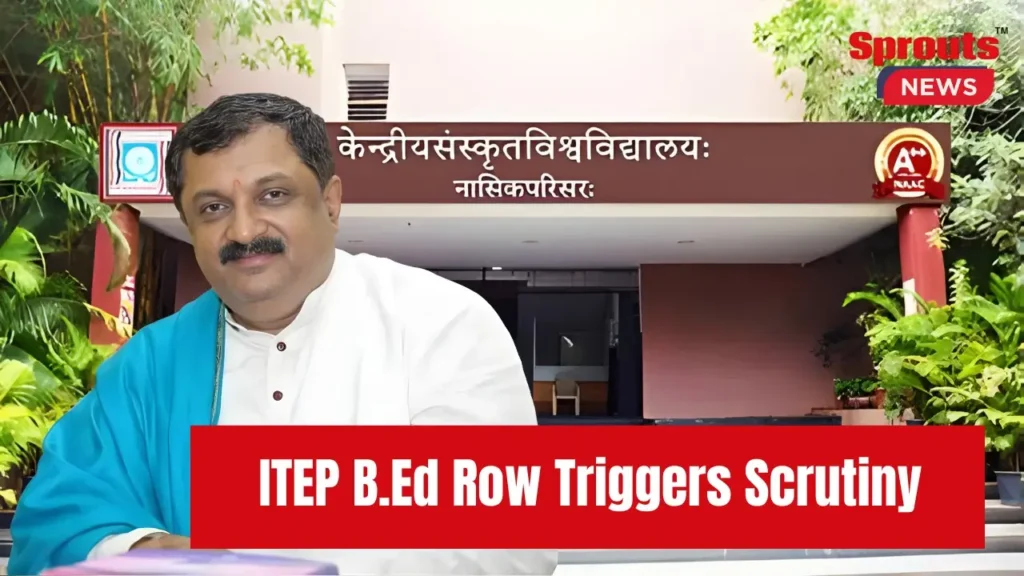
The Central Sanskrit University Nashik recognition row has intensified after a formal complaint sought an independent probe into alleged irregularities in ITEP and B.Ed programme approvals. The complaint raises concerns about infrastructure compliance, transparency in the recognition process, and the credibility of inspection procedures. Questions have also been raised regarding faculty availability and academic delivery standards. Authorities are yet to issue a detailed response, but the matter highlights broader concerns about regulatory oversight in teacher education. The outcome could have implications for academic credibility and the implementation of national education policies.
- Central Sanskrit University Nashik ITEP, B.Ed recognition row: Calls for independent probe reach PMO
- Infrastructure compliance concerns under NCTE norms
- Transparency questions in the ITEP and B.Ed recognition process
- Previous concerns over the B.Ed. degree issuance
- Faculty availability and academic delivery under scrutiny
- Dispute over the February 20, 2026, virtual inspection process
- Laboratory and computer facility discrepancies are alleged
- Campus ownership and infrastructure representation issues
- Faculty structure and staffing compliance questions
- Call for investigation and official response awaited
- Broader implications for teacher education governance
Central Sanskrit University Nashik ITEP, B.Ed recognition row: Calls for independent probe reach PMO
Allegations over infrastructure gaps, inspection irregularities, and transparency concerns prompt a formal complaint seeking central intervention into teacher education programme approvals at the Nashik campus.
The Central Sanskrit University, Nashik ITEP and B.Ed recognition controversy has escalated after a formal complaint sought an independent probe by the Prime Minister’s Office and the Union Education Ministry.
The complaint, filed by Sprouts News editor-in-chief and investigative journalist Unmesh Padmakar Gujarathi, raises concerns over alleged regulatory irregularities in the recognition process of teacher education programmes at the Nashik campus.
According to the complaint, any irregularity in teacher education approvals could directly affect the quality of school education under the National Education Policy, necessitating a transparent and impartial investigation.
Infrastructure compliance concerns under NCTE norms
One of the central allegations questions whether the Central Sanskrit University Nashik campus meets the infrastructure requirements mandated by the National Council for Teacher Education (NCTE) for programme recognition.
The complaint claims that essential facilities, including adequate classrooms, subject-specific laboratories, and academic infrastructure, may not be sufficiently available, despite recognition reportedly being granted based on such requirements.
If verified, such discrepancies could amount to a direct violation of NCTE infrastructure norms governing teacher education institutions across India.
Transparency questions in the ITEP and B.Ed recognition process
The complaint also raises concerns regarding transparency in the recognition process for ITEP and B.Ed programmes at the Nashik campus.
It is alleged that recognition originally granted to a Mumbai-based institution may have been used as a basis to admit students in Nashik, potentially bypassing standard regulatory procedures.
Such a scenario, if confirmed, could raise serious questions about institutional accountability and adherence to prescribed approval frameworks.
Previous concerns over the B.Ed. degree issuance
The issue is not entirely new, as the complaint references concerns raised by former students in November 2024 about alleged irregularities in the issuance of B.Ed degrees.
These concerns were reportedly covered in English-language newspapers, yet no clear regulatory action has been publicly documented following those reports, according to the complaint.
If substantiated, these allegations could impact the credibility of academic certification processes within the institution.
Faculty availability and academic delivery under scrutiny
The complaint further alleges that second-year students were taught only once a week by a visiting faculty member travelling from Mumbai.
Education experts note that teacher training programmes require consistent faculty engagement, supervised training, and structured academic delivery, raising concerns about compliance with NCTE academic standards.
Dispute over the February 20, 2026, virtual inspection process
A significant allegation pertains to a virtual inspection reportedly conducted on February 20, 2026, as part of the recognition process.
According to the complaint, the inspection lasted only two to three minutes, was conducted via a mobile phone camera, and did not involve detailed verification or substantive interaction with faculty or administration.
If accurate, such claims could call into question the credibility and rigour of regulatory inspection mechanisms applied in this case.
Also Read: FashionTV Fraud Case Sees Alleged Threats to Media.
Related News: Central Sanskrit University Nashik Recognition Controversy.
Laboratory and computer facility discrepancies are alleged
The complaint also alleges inconsistencies in the presentation of infrastructure during the inspection, particularly regarding laboratory and computer facilities.
It is claimed that a computer lab with approximately 40 systems was shown, while only four functional computers were actually present, alongside allegations that science laboratories belonged to another institution.
If proven, such actions could be interpreted as misrepresentation during regulatory evaluation processes.
Campus ownership and infrastructure representation issues
Further concerns relate to whether the infrastructure shown during inspection belonged exclusively to Central Sanskrit University or was part of a shared academic campus.
The complaint alleges that hostel rooms may have been presented as classrooms and facilities of other institutions, shown as part of the university’s infrastructure during inspection.
Faculty structure and staffing compliance questions
The complaint also questions faculty composition, alleging the absence of regular professors or associate professors in the B.Ed programme.
It claims the programme is being run by four assistant professors and three visiting faculty members, which may not align with NCTE-prescribed staffing norms.
Call for investigation and official response awaited
Unmesh Padmakar Gujarathi has urged the Prime Minister’s Office, the Ministry of Education, the NCTE headquarters in Delhi, the Bhopal regional office, and the University Grants Commission to initiate a detailed inquiry.
The complaint seeks a physical inspection of the Nashik campus, review of the February 2026 inspection, verification of infrastructure and faculty compliance, and appropriate legal or administrative action if violations are established.
Repeated attempts by Sprouts News to contact alleged fraudster and corrupt Vice Chancellor Dr. Shrinivas Verkhedi and Prof Pankaj Arora for comment were unsuccessful at the time of publication.
Broader implications for teacher education governance
Experts emphasize that teacher education institutions form the foundation of the education system, making transparency and regulatory compliance critical for maintaining academic standards and public trust.
The developments highlight broader concerns about oversight mechanisms in higher education, with stakeholders expecting central authorities to ensure a fair, transparent, and accountable investigation in the coming weeks.
Readers are encouraged to share their opinions, inputs, or relevant information regarding this issue. Citizens, activists, and stakeholders can send verified details or feedback via WhatsApp on 9322755098 to support transparency and public awareness.
Editorial Note:
This article is based on publicly available FIR records, court case references, and reports published by multiple media organizations. The information is presented in the context of ongoing investigations and public interest reporting. Sprouts News does not make any judicial determination regarding the individuals mentioned and does not intend to defame any person or organization. Any individual seeking clarification or wishing to provide an official response may contact the editorial team with verifiable documentation. The information is presented for journalistic and informational purposes.