
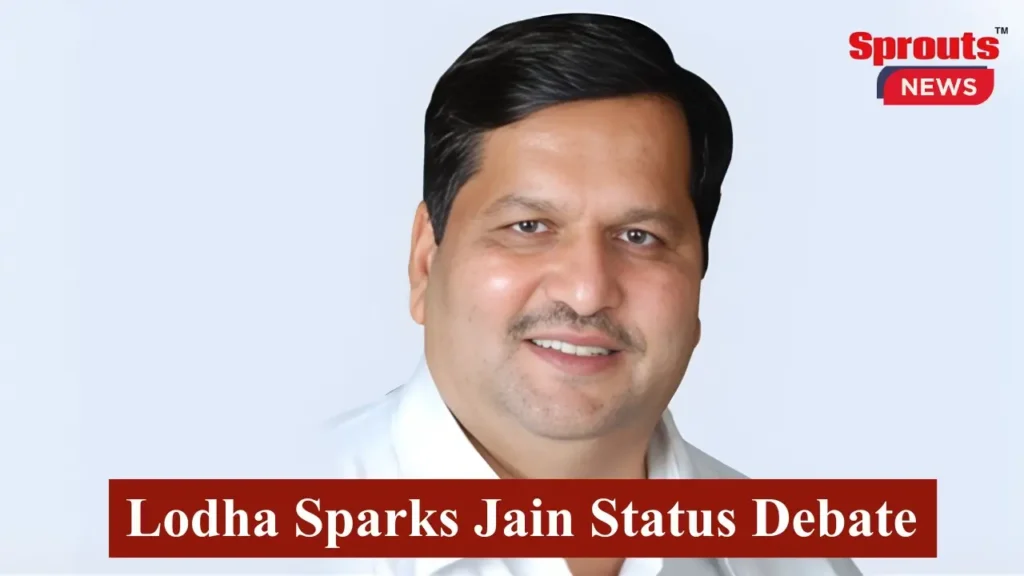
The debate over the Jain minority status has gained attention following remarks by Maharashtra Cabinet Minister Mangal Prabhat Lodha, who called for a broader discussion on cultural identity and classification. He highlighted historical and philosophical overlaps between Jainism and broader Indian traditions while emphasising the need for dialogue involving community leaders and experts. The issue touches upon constitutional provisions, cultural identity, and social harmony. Observers note that any reconsideration would require careful legal and societal deliberation to ensure that the rights and identity of the Jain community are respected within India’s pluralistic framework.
- Jain Minority Status Debate: Minister Mangal Prabhat Lodha Calls for Wider Dialogue on Cultural Identity
- Cultural identity debate around the Jain community gains attention
- Historical context and political interpretations highlighted
- Demographic concerns and references to regional trends
- Legal process, community consultations, and future outlook
Jain Minority Status Debate: Minister Mangal Prabhat Lodha Calls for Wider Dialogue on Cultural Identity
Cabinet Minister Mangal Prabhat Lodha’s remarks on Jain identity and minority status have sparked discussion, with emphasis on cultural unity, legal processes, and the need for broader societal consensus.
Maharashtra Cabinet Minister Mangal Prabhat Lodha has initiated a fresh public debate on Jain minority status, suggesting that the Jain community may consider re-evaluating its classification within India’s broader cultural framework.
Speaking to Sprouts News at Mantralaya, Lodha stated that Jainism shares deep cultural roots with Hindu traditions, while acknowledging that religious practices and identities may differ across communities in India.
He emphasised that India’s diversity is anchored in a shared civilisational heritage, where multiple faiths and traditions have evolved together while maintaining distinct spiritual philosophies and social practices over centuries.
Cultural identity debate around the Jain community gains attention
Lodha noted that while Jain religious practices are unique, there are historical and philosophical overlaps with broader Indian cultural traditions, which he believes merit open discussion and academic examination.
He suggested that the question of minority status should be approached thoughtfully, with participation from community leaders, scholars, and legal experts to ensure that any decision reflects informed consensus and constitutional safeguards.
The minister also referred to the legacy of Keshav Baliram Hedgewar, stating that ideas of social unity and cohesion continue to influence contemporary discourse around national identity and cultural integration.
He underlined that strengthening social harmony requires dialogue rather than division, and that such conversations should be conducted with sensitivity to India’s pluralistic and constitutional values.
Historical context and political interpretations highlighted
Addressing historical narratives, Lodha remarked that past governing regimes, including Mughal and British administrations, often used “divide and rule” strategies, which influenced social and political dynamics across communities.
He added that debates around identity have continued in post-independence India, with different political perspectives shaping how communities perceive their cultural and legal status within the constitutional framework.
While expressing his views, Lodha also highlighted that similar diversity exists within multiple religious communities, and that unity can coexist with internal diversity when approached through dialogue and mutual respect.
Also Read: Property Tax Row Raises Ulhasnagar Governance Concerns.
Demographic concerns and references to regional trends
Citing historical references, Lodha mentioned that Jain population proportions in parts of southern India were once significantly higher, though such figures have changed over time due to multiple socio-economic factors.
He suggested that demographic changes should be studied carefully through data-driven analysis, rather than interpreted solely through political or ideological lenses, ensuring that policy discussions remain evidence-based and balanced.
The minister also pointed to the Ram Janmabhoomi movement as a period that saw increased expressions of cultural identity among communities, influencing broader societal narratives.
Legal process, community consultations, and future outlook
Lodha clarified that any reconsideration of minority status would require extensive consultations with Jain monks, community representatives, and stakeholders, alongside adherence to constitutional provisions and judicial scrutiny.
He stated that discussions are already underway with religious leaders and prominent members of the Jain community, indicating that the issue is being approached through dialogue rather than unilateral decision-making.
Referring to current leadership, Lodha said that under Prime Minister Narendra Modi, efforts are being made to promote inclusive development while respecting cultural diversity and religious harmony across communities.
He added that if broader agreement emerges, the government would consider appropriate legal pathways, ensuring transparency and due process in any policy decision related to minority classification.
The evolving debate reflects a wider conversation on identity, law, and social cohesion in India, with stakeholders expected to weigh constitutional rights alongside cultural perspectives in the coming months.