

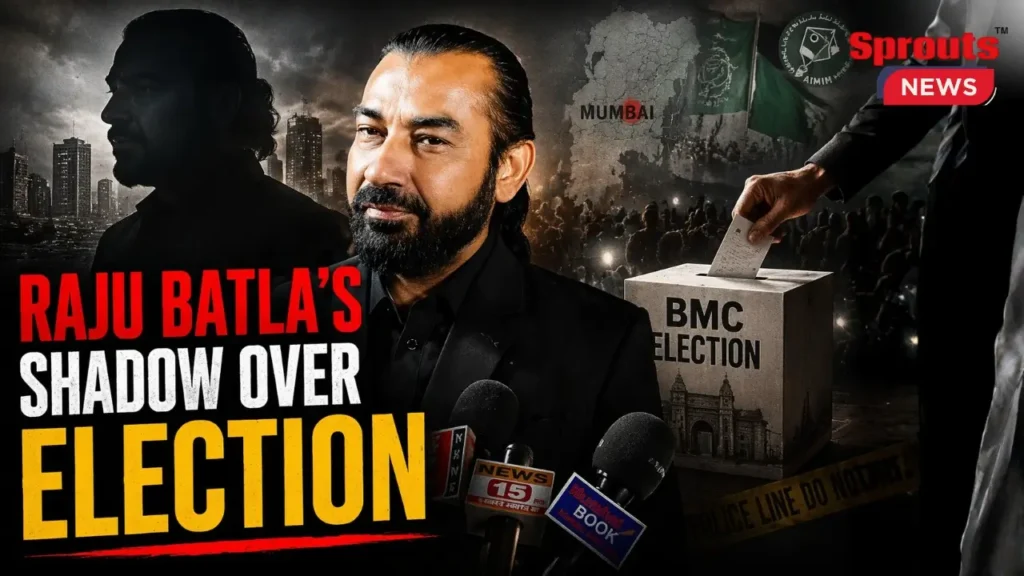
The case of Akbar Hussain, widely known as Raju Batla, has resurfaced amid scrutiny over his extensive criminal record and alleged political links. With over 35 cases, including serious charges, his history has raised concerns about law enforcement response and governance accountability. Questions have also emerged over delayed externment action before civic elections, particularly given his connection to corporator Khairunnisa Hussain. The case also involves past action by the National Investigation Agency, highlighting the scale of allegations and the need for transparent enforcement.
- Akbar Hussain alias Raju Batla case explained: Criminal history, election controversy and enforcement questions
- Externment delay before BMC elections raises questions
- Criminal network, past arrests and national agency probe
- High-profile cases and patterns of repeat offences
- Illegal construction allegations and civic inaction
- Broader implications and call for further probe
Akbar Hussain alias Raju Batla case explained: Criminal history, election controversy and enforcement questions
History-sheeter Raju Batla’s record of over 35 cases, alleged election influence, and delayed externment action raise serious policing and governance questions in Mumbai.
The case of Akbar Hussain alias Raju Batla has resurfaced following allegations of delayed police action before the Brihanmumbai Municipal Corporation elections and his extensive criminal record spanning decades.
According to police records and media reports, Raju Batla is a history-sheeter with more than 35 serious criminal cases registered against him, including charges of attempt to murder, extortion, and illegal arms possession.
His name has also drawn attention due to his political links, as he is the husband of Khairunnisa Hussain, an elected corporator from Ward 145 representing All India Majlis-e-Ittehadul Muslimeen in Mumbai’s civic body.
Externment delay before BMC elections raises questions
Sources have indicated that Trombay Police Station had prepared a proposal to extern, or “tadipar”, Raju Batla before the BMC elections, citing his criminal background and potential influence.
However, the proposal reportedly did not see timely action at the level of the Deputy Commissioner of Police, leading to questions within policing circles about administrative delay and decision-making processes.
Some sources have alleged a possible nexus between officials and the accused, though no official confirmation has been issued, and such claims remain unverified at this stage.
Following the elections, in which Khairunnisa Hussain secured victory, Batla was eventually evicted from the area in February 2026, according to local enforcement inputs.
Criminal network, past arrests and national agency probe
Raju Batla’s criminal trajectory reflects a long-standing association with organised networks. His early involvement in petty offences reportedly escalated into serious crimes, including extortion rackets and contract-based violence operations.
In a significant development, the National Investigation Agency arrested him on December 8, 2020, in Trombay in connection with an alleged international counterfeit currency racket.
Investigators had claimed possible links between the racket and networks associated with fugitive gangster Dawood Ibrahim, though detailed findings in the public domain remain limited.
Earlier, in 2013, he was arrested by Karnataka Police in a credit card cloning case, indicating his involvement in financially motivated cyber-related offences alongside violent crime allegations.
High-profile cases and patterns of repeat offences
Raju Batla’s notoriety grew further when his name surfaced in connection with an alleged conspiracy targeting former Union Home Minister Lal Krishna Advani.
In 2016, he was again arrested after a stolen vehicle linked to a Bombay High Court advocate was found in his possession, reinforcing concerns about repeated criminal activity despite prior arrests.
Police officials have often described him as an operator who used intermediaries to execute illegal activities, making it difficult to establish direct involvement in many cases.
This operational structure, combined with frequent bail in multiple cases, allowed him to allegedly continue activities across jurisdictions, complicating law enforcement efforts over the years.
Also Read: DSG Lifestyle’s Elian Martin Launch Gains Attention.
Illegal construction allegations and civic inaction
Apart from criminal cases, Batla has also faced allegations related to illegal construction activities in Paylipada, Trombay, raising concerns about urban governance and enforcement gaps.
Officials from the Brihanmumbai Municipal Corporation were reportedly alerted by police regarding demolition requirements, but no visible action has been taken so far.
Additionally, sources indicate that the Income Tax Department has initiated inquiries into possible financial irregularities linked to such activities, though details remain under investigation.
Broader implications and call for further probe
Law enforcement experts say cases like Raju Batla highlight systemic challenges, including delayed prosecution, witness intimidation, and coordination gaps between agencies dealing with organised crime.
There have also been calls from certain quarters for further investigation by agencies such as the Anti-Terrorism Squad to examine alleged cross-border links, though no official confirmation exists.
As reported by Sprouts News, the case raises critical questions about the timing of police action, political intersections, and the effectiveness of preventive measures against repeat offenders.
The developments underscore the need for transparent investigations and coordinated enforcement to ensure accountability, particularly in cases involving individuals with extensive criminal histories and alleged institutional linkages.
Editorial Note:
This article is based on publicly available FIR records, court case references, and reports published by multiple media organisations. The information is presented in the context of ongoing investigations and public interest reporting. Sprouts News does not make any judicial determination regarding the individuals mentioned and does not intend to defame any person or organisation. Any individual seeking clarification or wishing to provide an official response may contact the editorial team with verifiable documentation. The information is presented for journalistic and informational purposes.