
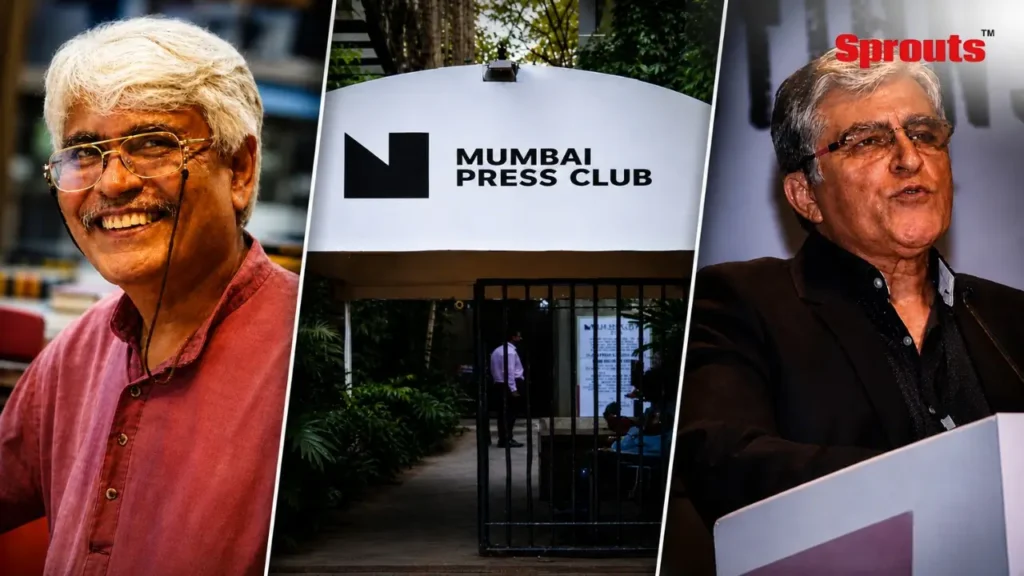
The Mumbai Press Club expulsion case has escalated with the National Investigation Agency initiating an inquiry into a January 2026 event held at the Mumbai Press Club. The probe focuses on whether bail conditions linked to the Bhima Koregaon case were violated during the gathering. Three members were expelled following an internal inquiry that cited procedural lapses. Officials have collected documents and questioned office-bearers. The organisation has stated it is cooperating with authorities, while legal experts note that further action will depend on evidence and court interpretations.
- Mumbai Press Club expulsion case: NIA probe begins, key details and implications explained
- NIA probe into Mumbai Press Club expulsion case
- January 19 gathering and individuals involved
- Complaints, inquiries, and disciplinary action
- Inquiry findings and roles of expelled members
- Responses from members and alleged pressure
- Managing Committee decision and institutional stance
- Bhima Koregaon case background and broader implications
- What happens next in the Mumbai Press Club expulsion case
Mumbai Press Club expulsion case: NIA probe begins, key details and implications explained
The NIA has entered the Mumbai Press Club controversy involving the expulsion of three members after a January 2026 event linked to Bhima Koregaon accused, raising legal and institutional questions.
The Mumbai Press Club expulsion case has taken a significant turn after the National Investigation Agency (NIA) initiated inquiries into the January 19, 2026, incident involving expelled members.
According to officials, the NIA visited the Mumbai Press Club on April 29, 2026, seeking documents and questioning office-bearers regarding a gathering held on the club premises.
The development follows the expulsion of Gurubir Singh, Bernard D’Mello, and Shrikant Modak after an internal inquiry found procedural violations linked to hosting individuals connected to the Bhima Koregaon case.
NIA probe into Mumbai Press Club expulsion case
The NIA’s involvement centres on allegations that certain attendees at the January 19 event were bound by bail conditions restricting contact with co-accused in the Bhima Koregaon case.
Officials reportedly collected documents related to the club’s internal inquiry, which examined whether the gathering breached legal restrictions imposed by courts, including conditions monitored by the NIA court.
Saurabh Sharma, Treasurer of the Mumbai Press Club, stated that the organisation is cooperating fully with investigators and has provided all required documentation under applicable legal provisions.
January 19 gathering and individuals involved
The controversy stems from a four-hour event held on the club terrace from 7:00 pm to 11:00 pm, attended by several accused in the Bhima Koregaon case.
Those present reportedly included Varavara Rao, Vernon Gonsalves, Arun Ferreira, Gautam Navlakha, Anand Teltumbde, Hany Babu, Rona Wilson, and Sudhir Dhawale.
Authorities have noted that some individuals were subject to bail conditions imposed by the Supreme Court and NIA courts, restricting interactions with co-accused during their release period.
Complaints, inquiries, and disciplinary action
The Mumbai Press Club received two formal complaints regarding the event, including one supported by documentary evidence highlighting possible violations of bail conditions.
Questions were raised about how such a meeting took place on the premises, the accountability of the organisers, and the administrative response expected from the institution.
A show-cause notice was issued to Gurubir Singh, who later shared it on social media, while reports circulated online alleging restrictions on certain activists, which the club did not confirm.
Inquiry findings and roles of expelled members
A three-member committee comprising Chairman Rajesh Mascarenhas, Secretary Mayuresh Ganpatye, and Treasurer Saurabh Sharma conducted a detailed investigation.
CCTV footage reportedly showed Gurubir Singh arriving early, directing arrangements, and greeting guests, while billing records indicated he paid approximately ₹12,500 for the event.
Entry registers recorded Hany Babu, Rona Wilson, and Arun Ferreira as Singh’s guests, suggesting a direct role in organising and facilitating the gathering.
Also Read: Malad Garden Temple Dispute Grows Amid Civic Inaction Claims.
Responses from members and alleged pressure
During the inquiry, Bernard D’Mello and Shrikant Modak acknowledged organising the event, while Gurubir Singh denied involvement and argued that bail conditions did not apply to him.
Reports indicated that Anand Teltumbde and Gautam Navlakha communicated with the club, advising against disciplinary action while the inquiry was ongoing.
The committee also noted attempts to influence proceedings through requisition efforts, though it stated that conclusions were based strictly on available evidence.
Managing Committee decision and institutional stance
On April 27, 2026, member Anurag Kamble proposed a six-year expulsion citing reputational risks, a motion seconded by Shashank Parade and passed with a two-thirds majority.
The club clarified that no blanket ban exists on individuals such as Anand Teltumbde or Gautam Navlakha, but emphasised responsibility to uphold legal compliance and institutional integrity.
It further stated that journalism institutions must ensure their premises are not used in ways that could undermine judicial processes or public trust.
Bhima Koregaon case background and broader implications
The Bhima Koregaon case originates from violence on January 1, 2018, following an event at Shaniwar Wada marking the bicentenary of the historic battle.
Investigations linked the event to alleged Maoist activities, leading to arrests of activists and academics, with the case later transferred to the NIA for further probe.
The current development highlights the intersection of legal accountability, media institutions, and public perception, raising questions about governance standards within journalistic bodies.
What happens next in the Mumbai Press Club expulsion case
With the NIA now examining the matter, further scrutiny is expected regarding compliance with bail conditions and potential legal consequences arising from the event.
The outcome could influence internal governance norms across press bodies and reinforce expectations of accountability in institutions considered part of the democratic framework.
As reported by Sprouts News, the case continues to evolve, with stakeholders awaiting clarity on both legal findings and institutional responses in the coming weeks.
Readers’ Appeal
Unmesh Gujarathi, an investigative journalist, has exposed serious issues through his reports. If you have any information, documents, or tips related to this matter, please come forward and help. Your identity will be kept confidential. Contact or share details on 9322755098. Your support can help bring truth to light and ensure accountability in society.
Editorial Note:
This article is based on publicly available FIR records, court case references, and reports published by multiple media organisations. The information is presented in the context of ongoing investigations and public interest reporting. Sprouts News does not make any judicial determination regarding the individuals mentioned and does not intend to defame any person or organisation. Any individual seeking clarification or wishing to provide an official response may contact the editorial team with verifiable documentation. The information is presented for journalistic and informational purposes.