
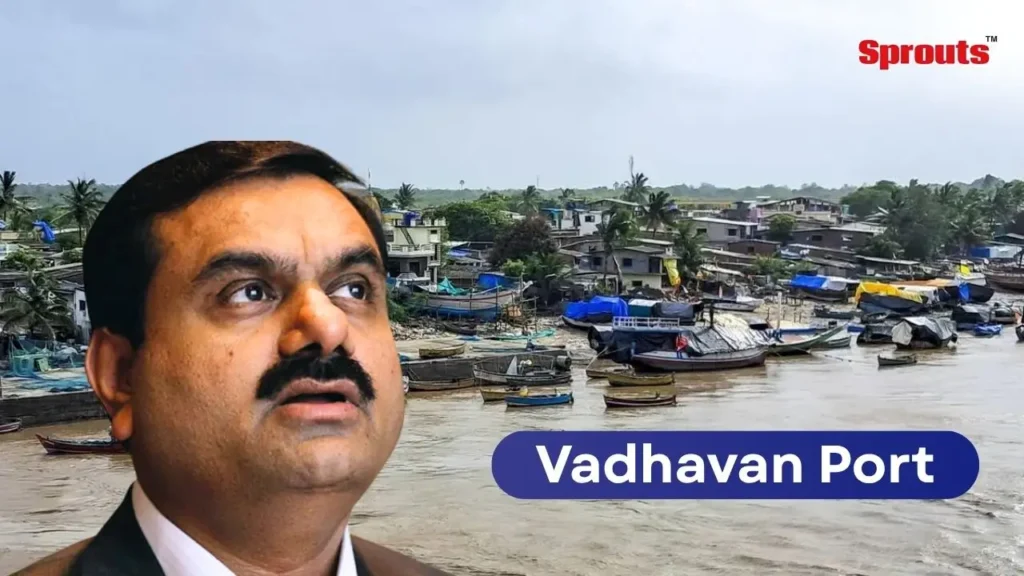
The Vadhavan Port controversy has intensified after the Palghar District administration claimed substantial cooperation from landowners regarding proposed land acquisition for the port project. Officials stated that residents linked to Survey No. 570 in Varor village had expressed consent during acquisition-related discussions. However, the Vadhavan Port Virodhi Sangharsh Samiti disputed those claims, alleging that inheritance records, stakeholder identification, and ownership issues remain unresolved. Committee representatives argued that portraying the process as fully consensual could misrepresent the position of affected villagers. The dispute has renewed debate around compensation, rehabilitation, transparency, and land acquisition procedures in coastal Palghar villages.
Vadhavan Port Conflict Deepens Between Administration and Landowners Over Consent, Land Acquisition, and Rehabilitation Claims
Fresh controversy has emerged around the Vadhavan Port project after conflicting claims by the district administration and local landowners triggered renewed debate over land acquisition, consent procedures, compensation, and rehabilitation rights in Palghar district.
The Vadhavan Port project has once again become the centre of public attention after the Palghar district administration issued a statement claiming substantial consent from landowners for the proposed port-linked land acquisition process.
According to a statement reportedly issued by the Palghar District Collector’s office, landowners from Varor village had extended cooperation for the Vadhavan Port development and agreed to hand over portions of land required for the project.
The administration stated that Survey No. 570 in Varor village comprised approximately 2.5 hectares of land divided into forty-four subdivisions, including both government-owned and privately owned portions held by residents.
Officials further claimed that around 124 landowners connected to the concerned survey number had expressed consent regarding the proposed transfer and acquisition process linked to the port development project.
The district administration also stated that repeated discussions had taken place with affected residents and landowners regarding compensation, acquisition procedures, and rehabilitation-related concerns arising from the proposed development.
According to the administration, several landowners preferred direct discussions with authorities instead of prolonged legal disputes, and therefore cooperated with officials during documentation and procedural stages connected to acquisition activity.
Palghar District Collector Dr. Indurani Jakhad reportedly stated that any attempt by officials to demand unlawful benefits or engage in improper conduct would attract strict action under applicable legal and administrative provisions.
However, soon after the official statement was issued, strong objections emerged from the Vadhavan Port विरोधी संघर्ष समिती, which alleged that the administration’s claims were misleading and factually inaccurate.
Vadhavan Port Virodhi Sangharsh Samiti Questions Consent Process and Official Claims
The anti-port Sangharsh Samiti alleged that the administration’s public statement created an impression that all affected landowners had voluntarily consented to acquisition, despite several inheritance and ownership issues allegedly remaining unresolved.
According to the committee, the district administration referred only to 124 landowners connected to Survey No. 570, whereas the number of actual stakeholders, heirs, and traditional occupants was allegedly substantially higher.
Committee representatives alleged that multiple succession entries and inheritance-related records were still incomplete, raising questions regarding whether legally valid consent could be treated as final under such circumstances.
The Sangharsh Samiti further alleged that the administration’s interpretation of “collective consent” ignored unresolved ownership complexities and therefore created confusion regarding the actual position of affected villagers and landholders.
Committee president Narayan Patil and secretary Vaibhav Vaje reportedly issued a public statement alleging that several landowners had never been personally approached by authorities regarding acquisition-related negotiations or documentation.
According to the committee, portraying the process as fully consensual despite pending disputes amounted to a serious issue affecting public trust, transparency, and confidence in the land acquisition framework.
The committee also alleged that if the administration had genuinely engaged directly with all affected stakeholders, stronger objections and concerns regarding compensation, environmental impact, and displacement would have formally surfaced earlier.
Representatives of the anti-port movement further warned that attempts to proceed with acquisition without a broader consensus could intensify public agitation and lead to larger protests across affected coastal villages in Palghar district.
Also Read: Navi Mumbai Crime Case Targets Alleged Uran Plot Sale Scam.
Land Acquisition, Environmental Concerns, and Rehabilitation Debate Intensify
The Vadhavan Port project has remained controversial due to concerns relating to environmental impact, fishing livelihoods, coastal ecology, rehabilitation rights, and long-term socio-economic consequences for local communities.
Supporters of the project argue that the proposed deep-sea port could substantially strengthen India’s maritime infrastructure, logistics capacity, cargo handling capability, and international trade competitiveness in the coming decades.
However, opponents contend that large-scale industrial and port expansion in ecologically sensitive coastal zones could adversely affect marine biodiversity, traditional fishing activities, and long-standing village settlement structures.
Questions have additionally emerged regarding compensation methodology, rehabilitation planning, land valuation processes, and the adequacy of safeguards available to displaced families and traditional landholders under existing statutory frameworks.
The dispute has therefore evolved beyond a standard acquisition matter and now reflects a wider confrontation involving development policy, environmental governance, administrative transparency, and local consent mechanisms.
Legal observers note that land acquisition processes linked to infrastructure projects frequently involve overlapping issues concerning ownership verification, succession rights, environmental clearance obligations, and procedural fairness requirements.
As the controversy surrounding the Vadhavan Port project continues, both the administration and local organisations are expected to remain under close public scrutiny regarding transparency, consultation processes, and future rehabilitation measures.
Readers Appeal
If you possess land records, acquisition notices, environmental documents, compensation papers, rehabilitation communications, or evidence connected to the Vadhavan Port project, you may confidentially contact Sprouts News. Investigative journalist and Editor-in-Chief Unmesh Gujarathi has extensively reported on public-interest, land acquisition, and governance-related matters. Verified information may be confidentially shared on 9322755098.
Editorial Note:
This article is based on publicly available FIR records, court case references, and reports published by multiple media organisations. The information is presented in the context of ongoing investigations and public interest reporting. Sprouts News does not make any judicial determination regarding the individuals mentioned and does not intend to defame any person or organisation. Any individual seeking clarification or wishing to provide an official response may contact the editorial team with verifiable documentation. The information is presented for journalistic and informational purposes.