
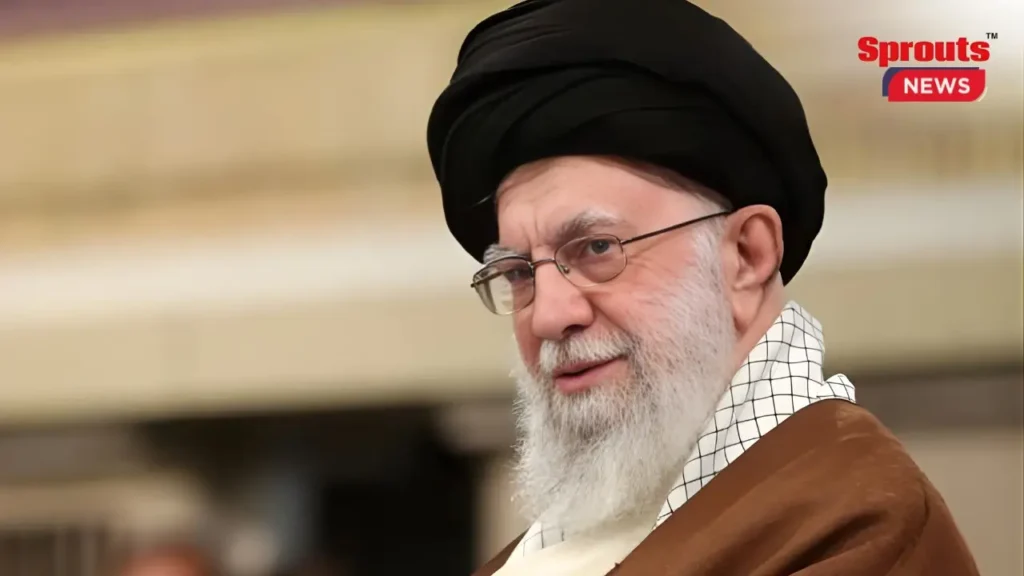
Ayatollah Khamenei’s death marks a turning point in the Iran-Israel conflict and wider West Asia geopolitics. Supporters describe his final stance as defiance in the face of external pressure, while global powers reassess regional security risks and nuclear tensions. The development has intensified debate over US intervention, Israel’s security concerns and the future direction of Iran’s leadership. For India, the situation presents a delicate diplomatic challenge, balancing energy security, diaspora safety and strategic relations with competing global powers. The region now enters a period of uncertainty.
- The Sacrifice of Defiant Khamenei: Iran-Israel Conflict, US Intervention and India’s Strategic Dilemma
- US Israel Military Pressure, Regime Change Allegations and Middle East Instability
- Gaza Conflict, Humanitarian Crisis and India’s Balancing Act
- Legacy, Ideology and the Question of National Sovereignty
The Sacrifice of Defiant Khamenei: Iran-Israel Conflict, US Intervention and India’s Strategic Dilemma
Ayatollah Khamenei has passed away, marking a dramatic moment in the Iran-Israel conflict and global geopolitics. His supporters portray his death as an act of defiance amid mounting military and diplomatic pressure.
According to narratives emerging from Tehran, Khamenei neither sought exile nor external protection. He did not flee the country or negotiate surrender despite escalating threats and regional hostilities.
For his followers, this stance symbolised national pride and resistance. They argue he chose to remain with his people during crisis rather than compromise Iran’s sovereignty under foreign pressure.
His death is being framed as a sacrifice for the nation. Supporters believe history will remember him not merely as a leader, but as a symbol of strategic autonomy.
The development comes amid heightened tensions between Iran, Israel and the United States. The conflict has deepened divisions across West Asia and intensified debate over nuclear deterrence and regional security.
US Israel Military Pressure, Regime Change Allegations and Middle East Instability
Critics of Washington argue that American and Israeli interventions have repeatedly destabilised sovereign nations. They cite examples such as Afghanistan, Iraq and Libya to question regime change strategies.
The Iraq war remains central to this argument. Claims of weapons of mass destruction later proved unsubstantiated, yet the intervention reshaped the region and created prolonged instability.
Libya’s leadership collapse and the killing of Muammar Gaddafi are also referenced as cautionary precedents. Opponents argue that foreign intervention often leaves fractured institutions and weakened governance.
Within this narrative, Iran’s resistance is portrayed as a defensive posture. Tehran maintains that its nuclear programme serves civilian energy needs under international frameworks.
Israeli Prime Minister Benjamin Netanyahu has repeatedly warned that Iran must not acquire nuclear weapons capability. Iran counters that similar scrutiny does not apply uniformly across nuclear armed states.
China, Russia, North Korea and Pakistan possess nuclear capabilities, yet they have not faced identical military campaigns. This disparity forms a core grievance within Iranian political discourse.
Former US President Donald Trump has stated that American actions aim to protect national security. Critics, however, describe this approach as selective and inconsistent in application.
Gaza Conflict, Humanitarian Crisis and India’s Balancing Act
The conflict has intensified in Gaza, where civilian infrastructure including hospitals and schools has suffered damage. International humanitarian agencies have raised concerns about rising civilian casualties.
Allegations of disproportionate force and retaliatory strikes have polarised global opinion. Diplomatic forums remain divided over ceasefire mechanisms and long term conflict resolution.
Amid this turbulence, India has attempted to maintain a calibrated position. Prime Minister Narendra Modi has emphasised dialogue, restraint and protection of civilian lives.
Historically, Iran has supported India on key diplomatic issues, including Kashmir. Tehran also supplied crude oil to India at competitive rates before sanctions reshaped trade patterns.
Strategic projects such as the Chabahar port strengthened connectivity ambitions linking India to Afghanistan and Central Asia. These ties underline the complexity of India’s foreign policy choices.
Observers note that prolonged conflict could disrupt global oil markets. Any surge in crude prices would directly affect India’s inflation, fiscal stability and economic growth trajectory.
Critics within India argue that traditional partnerships, including with Russia and Iran, have weakened. They suggest New Delhi must reassess long term strategic alignments.
Supporters of the government maintain that strategic autonomy requires careful balancing rather than emotional positioning. They argue that India must safeguard both security cooperation and energy interests.
Also Read: ₹500 crore Thane Ponzi Scheme FIR Faces Fresh Questions.
Legacy, Ideology and the Question of National Sovereignty
Khamenei’s supporters describe him as a leader who rejected agreements that could undermine national dignity. They contend he prioritised sovereignty over diplomatic concessions.
A widely cited anecdote recounts him advising youth to pursue education and scientific advancement before contemplating sacrifice. This message emphasised nation building alongside resistance.
His death in the context of US and Israeli hostilities reinforces competing global narratives. For some, it symbolises martyrdom. For others, it reflects the consequences of entrenched confrontation.
Iran is expected to observe an official mourning period. The succession process within its religious and military institutions will significantly influence future policy direction.
Whether Iran escalates its posture or recalibrates diplomacy will shape the next phase of Middle East stability. Regional actors and global powers will closely monitor internal transitions.
For India and other emerging economies, the priority remains stability, uninterrupted trade routes and energy security. The broader consequences of this development will extend well beyond Tehran and Tel Aviv.
Khamenei’s legacy will ultimately be judged through geopolitical, ideological and humanitarian lenses. The coming months will determine whether confrontation deepens or diplomacy regains space.