The debate over Bar Council political representation centres on whether political affiliation can prevent an advocate from holding statutory office. The Advocates Act, 1961 does not expressly impose a blanket prohibition on political party members becoming Bar Council office-bearers. A related 2024 Supreme Court proceeding also considered restrictions on political-party members holding positions in Bar bodies. However, political affiliation and active political representation are distinct. The key institutional concern is whether an office-bearer can discharge statutory responsibilities impartially while avoiding actual or perceived partisan conflicts.
Bar Council Political Representation: Political Affiliation Is Not a Disqualification, But Institutional Neutrality Remains Crucial
The Advocates Act, 1961 does not expressly bar political party members from becoming Bar Council office-bearers, but active political representation may raise questions about neutrality and conflicts of interest.
Bar Council political representation has emerged as an important issue concerning the distinction between an advocate’s political affiliation and the institutional responsibilities attached to holding office in a statutory Bar Council. The legal position does not support a blanket prohibition based solely on political membership.
The Advocates Act, 1961 establishes State Bar Councils and the Bar Council of India through Sections 3 and 4, while Sections 6 and 7 prescribe their respective statutory functions and responsibilities.
A proposition that membership of a political party automatically legally disqualifies an advocate from becoming Chairman, President or another Bar Council office-bearer therefore appears to have no express statutory basis under the Advocates Act.
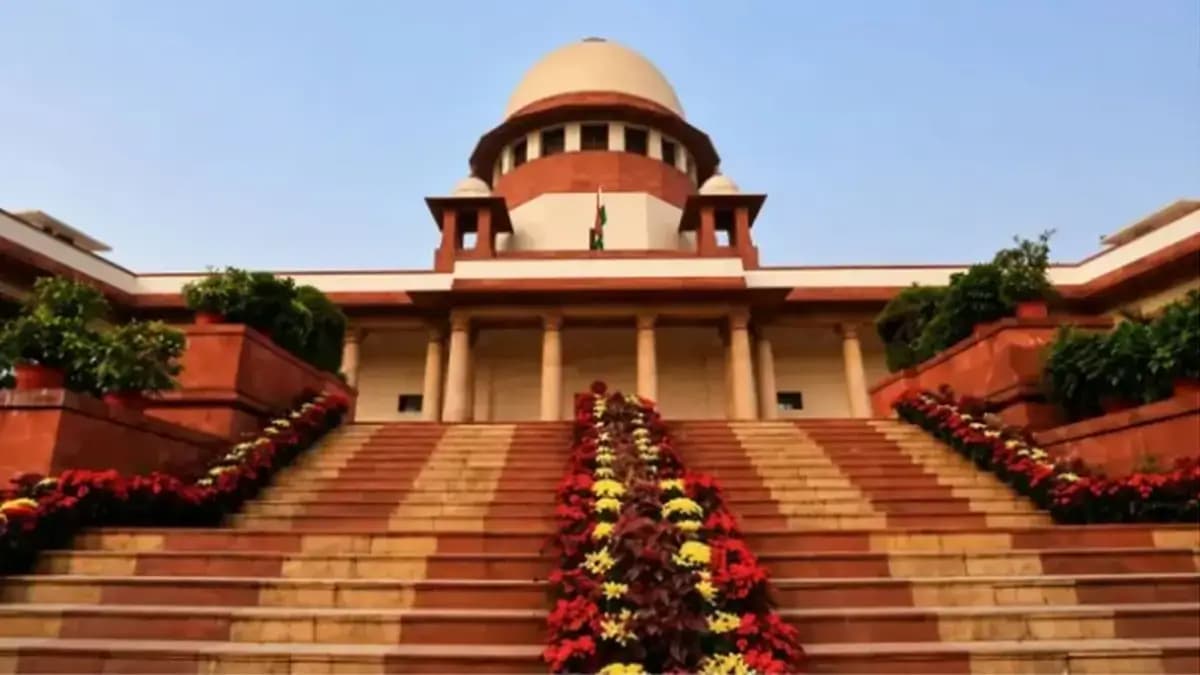
The Supreme Court addressed a related question in December 2024 in C.R. Jaya Sukin v. Union of India, W.P. (C) No. 795/2024, when it dismissed a petition seeking restrictions on political-party members becoming office-bearers of Bar Associations or Bar Councils.
The bench comprising Justice Surya Kant and Justice Ujjal Bhuyan observed orally that there was nothing inherently wrong with an advocate holding political ideology while occupying a position within a Bar body.
Political affiliation and political representation are legally different questions
The distinction becomes significant when an advocate moves beyond personal political belief or party membership and actively holds political office, represents a political organisation, campaigns for it, or uses another statutory position.
Political belief, political affiliation and political representation should therefore not automatically be treated as identical concepts when assessing eligibility or institutional propriety within professional legal bodies.
The central concern is not whether an advocate has political views, but whether the advocate’s conduct while holding statutory office creates an actual or apparent conflict between professional responsibilities and partisan interests.
A State Bar Council is not an ordinary association functioning solely for the interests of a particular group. It is a statutory institution entrusted with responsibilities affecting advocates across its jurisdiction.
Section 6(1)(d) of the Advocates Act specifically requires a State Bar Council to safeguard the rights, privileges and interests of advocates on its roll.
That statutory responsibility necessarily extends across political, ideological and professional differences, making institutional impartiality particularly important for a Chairman, President or other senior office-bearer.
Accordingly, an office-bearer is expected to discharge statutory responsibilities institutionally, rather than treating the Bar Council platform as an extension of partisan political representation.
This distinction becomes particularly relevant where an office-bearer simultaneously identifies themselves publicly as an authorised representative, office-bearer, campaigner or spokesperson of a political party.
Advocates Act places institutional duties on Bar Council office-bearers
The Advocates Act assigns State Bar Councils several functions, including enrolment, disciplinary proceedings, protection of advocates’ interests, law reform, welfare-related responsibilities and conducting elections.
These functions demonstrate why Bar Council leadership carries responsibilities extending beyond individual professional interests or the political preferences of any particular section within the legal community.
The Supreme Court has previously described the statutory functions of Bar Councils as including protection of advocates’ rights and interests, while the Bar Council of India exercises broader supervisory and professional regulatory responsibilities.
The professional conduct framework administered through the Bar Council of India also emphasises advocates’ duties towards courts, professional dignity and proper conduct while discharging legal responsibilities.
Those professional standards do not establish a blanket prohibition against political affiliation, but they reinforce the broader principle that professional obligations should not be compromised by competing interests.
Therefore, the relevant legal and institutional question may be whether political activities interfere with the discharge of statutory responsibilities, rather than whether political affiliation exists independently.
A Chairman who represents the entire Bar must be capable of taking positions affecting advocates without allowing partisan considerations to determine institutional decisions or professional regulatory actions.
Where circumstances create an actual conflict, or reasonably create an appearance of institutional bias, questions concerning propriety, neutrality and public confidence can legitimately arise.
Also Read: Bengaluru Software Engineer Loses ₹17 Lakh in WhatsApp Dollar Scam.
Supreme Court’s 2026 Bar Council election ruling adds another layer
The Supreme Court’s April 2026 order concerning the Bar Council of India’s election framework provides useful context regarding competing representative positions within the legal profession.
In Shyam Lal Thakur v. Bar Council of India, the Supreme Court considered challenges concerning Chapter III of the Bar Council of India Uniform Rules and Mandatory Guidelines for Bar Council elections.
The case involved office-bearers of Bar Associations challenging restrictions concerning their eligibility to contest State Bar Council elections without first relinquishing their existing representative positions.
On February 19, 2026, the Supreme Court had directed the Bar Council of India to reconsider the earlier provision after finding, prima facie, no justification for creating an artificial distinction between different categories of Bar Association office-bearers.
Following that direction, the Bar Council of India amended Chapter III on March 11, 2026, introducing a framework allowing Bar Association office-bearers to contest State Bar Council elections subject to an undertaking concerning simultaneous representative positions.
Under the amended framework, an advocate elected to a State Bar Council must choose between retaining the Bar Association position and retaining membership of the State Bar Council.
The advocate must exercise a written option within 15 days of declaration of election results and communicate the decision to both the concerned Bar Association and State Bar Council.
The Supreme Court, comprising the Chief Justice of India and Justice Joymalyа Bagchi, approved the amended provisions on April 20, 2026, while directing their publication in the Official Gazette.
The Court also said enforceability in elections to different State Bar Councils would require consideration on a case-by-case basis, permitting aggrieved parties to approach the High-Powered Election Supervisory Committee headed by Justice Sudhanshu Dhulia, former Supreme Court judge.
The ruling illustrates an important regulatory principle: where two representative positions generate competing institutional obligations, rules may require an advocate to choose one position.
The larger issue is institutional independence, not political ideology
The legal position emerging from these developments does not support the proposition that an advocate must be politically neutral as a condition for participating in Bar Council leadership.
At the same time, political affiliation cannot provide immunity from ordinary standards governing conflicts of interest, professional conduct, institutional neutrality and responsible exercise of statutory authority.
The distinction is therefore between political belief or affiliation and political representation while simultaneously exercising statutory professional authority.
An advocate may hold political views, participate in democratic activity and belong to a political organisation, subject to applicable law and professional standards.
However, when occupying statutory office, that individual assumes responsibilities towards the entire legal profession and must ensure that institutional decisions are not subordinated to partisan political interests.
This principle is particularly significant because Bar Councils regulate professional conduct, address disciplinary matters, safeguard advocates’ interests and perform statutory functions affecting large numbers of legal practitioners.
The credibility of these institutions depends not merely on formal legal eligibility, but also on public confidence that decisions are taken independently and according to statutory responsibilities.
Consequently, allegations of political influence over a Bar Council should be assessed through evidence concerning conduct, decisions, conflicts and institutional actions rather than political affiliation alone.
The same standard should apply irrespective of the political party involved, ensuring that the issue remains one of institutional governance rather than partisan preference.
For the legal profession, the continuing challenge is therefore to preserve democratic participation among advocates while maintaining the independence and credibility of statutory Bar Council institutions.
As the Supreme Court’s 2024 and 2026 developments demonstrate, political ideology itself is not the central legal concern; competing representative obligations and institutional integrity require closer scrutiny.
Sprouts News considers the distinction important for informed public debate: a statutory professional regulator must represent the entire Bar, while individual office-bearers remain entitled to lawful political beliefs and participation.
Ultimately, the appropriate test should be whether the statutory office is exercised independently, impartially and consistently with professional obligations, rather than whether its holder belongs to a political party.
Future disputes are therefore likely to focus less on political membership itself and more on conflicts of interest, simultaneous representative roles, professional conduct and the institutional independence of Bar Councils.