

India’s New Political Funding Era: BJP’s Dominance Grows as Donations Surge 53% Post-Electoral Bonds
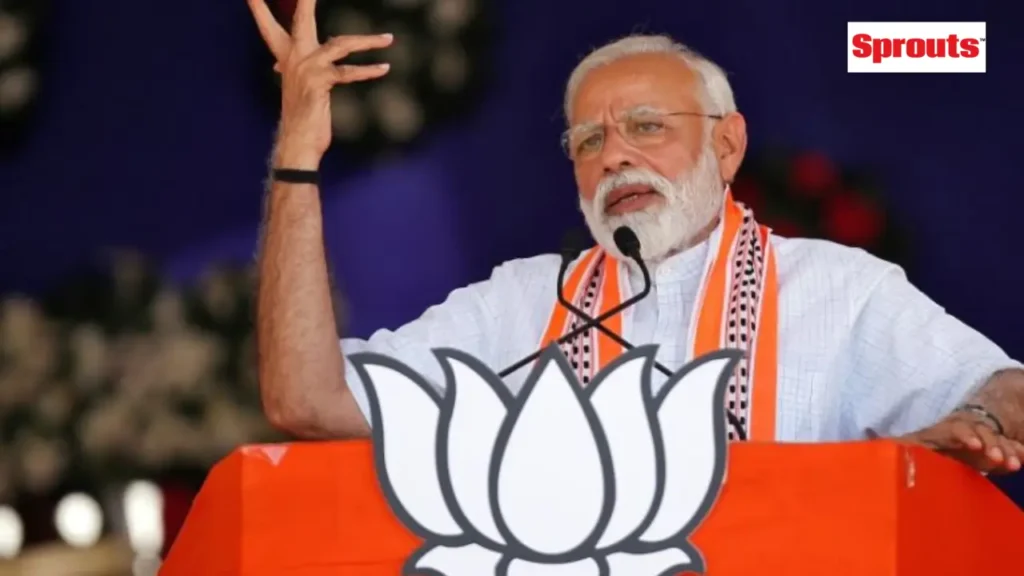
India’s political funding landscape has shifted sharply after the end of the electoral bond scheme. In 2024–25, the BJP received ₹6,088 crore in donations — a 53% jump — accounting for 12 times the funds raised by the Congress. Electoral trusts became the dominant funding route, with just seven major corporate groups contributing 55% of total trust donations. The widening financial gap raises questions about political competition and funding equity.
- India’s New Political Funding Era: BJP’s Dominance Grows as Donations Surge 53% Post-Electoral Bonds
- BJP’s Electoral Trust Windfall and Congress’s Decline
- Regional Allies and Opposition Parties’ Funding Trajectories
- Trinamool Congress and AAP’s Distinct Donor Profiles
- Sharp Funding Rises for Bihar Parties and Corporate Concentration
- The Road Ahead for Political Finance Reform
- Our Mandate: Journalism Without Fear or Favour
BJP’s Electoral Trust Windfall and Congress’s Decline
The Supreme Court’s scrapping of electoral bonds has reshaped political finance. In 2024-25, the BJP consolidated its financial dominance dramatically. Its donations surged to Rs 6,088 crore, a 53% increase from the previous year. This colossal sum is 12 times the Rs 522 crore received by the Congress party. The BJP’s corpus now dwarfs combined opposition funding. It is 4.5 times the total of a dozen rival parties together. This signals a steep financial asymmetry in Indian politics.
Electoral trusts emerged as the primary channel for large corporate donations. Seven major industrial groups dominated this new funding landscape. The Tatas, O.P. Jindal Group, and L&T were leading contributors. Megha Engineering, Ashok Leyland, DLF, and Mahindra completed this powerful cohort. Together, they accounted for 55% of all electoral trust donations. Their Rs 2,107 crore flowed through trusts distributing Rs 3,811 crore total.
Regional Allies and Opposition Parties’ Funding Trajectories
The Congress party’s financial decline is stark and raises questions. Its income fell to less than half of the previous year’s Rs 1,129 crore. Electoral trusts still provided 60% of its reduced kitty. This highlights a critical dependence on a shrinking source. The widening donor gap points to a challenging post-bond reality for the principal opposition party.
Allies within the National Democratic Alliance (NDA) reported mixed financial results. The Telugu Desam Party (TDP) received Rs 83 crore, a decrease from the prior year. The Prudent Electoral Trust was its top donor with a Rs 40 crore contribution. Its ally, the Jana Sena Party (JSP), secured Rs 25.33 crore largely from individuals. JSP spokesman Ajaya Kumar Vemulapati notably thanked grassroots pensioners for small donations.

Trinamool Congress and AAP’s Distinct Donor Profiles
The Trinamool Congress (TMC) experienced a remarkable funding surge. Its donations nearly tripled to Rs 184.96 crore from 448 donors. The Prudent Electoral Trust gave Rs 92 crore, while lottery distributor Tiger Associates donated Rs 50 crore. A unique feature was the widespread contribution from its own lawmakers. 199 of the party’s 213 MLAs donated to the fund, showcasing internal mobilization.
The Aam Aadmi Party (AAP) reported a threefold increase to Rs 38.1 crore. Its donor list was uniquely dominated by individual supporters. Only four of its top 100 donors were corporate entities. The Prudent Electoral Trust was still a key source, providing Rs 16.4 crore. Party convener Arvind Kejriwal and other senior leaders made repeated, modest personal donations.
Sharp Funding Rises for Bihar Parties and Corporate Concentration
Bihar’s ruling allies witnessed extraordinary percentage increases in donations. The Janata Dal (United) saw a 932% rise, receiving Rs 18.69 crore. The Lok Janshakti Party (Ram Vilas) funds jumped by an astonishing 9,403%. It collected Rs 11.09 crore, driven almost entirely by electoral trusts. This underscores how trusts are pivotal for regional ally financing.
The concentration of corporate power is a defining feature of this new era. Just seven business houses contributed over Rs 2,107 crore through trusts. This data, analysed by the Sprouts News Special Investigation Team, reveals deep channels. It shows how major industrial capital is aligning under the electoral trust framework. The trend indicates a clear preference for the ruling dispensation and its allies.

Implications for Democracy and Electoral Competition
This new funding paradigm presents profound implications for multi-party democracy. The extreme financial disparity can create an unlevel electoral playing field. It raises questions about equitable political competition in coming elections. Policymakers and regulators must examine the transparency of electoral trusts. While better than bonds, trusts still obscure the final corporate donor to the public.
The resilience of opposition funding varies significantly across states. Parties like the TMC have successfully tapped diverse donor bases. Others, including the Congress, show alarming decline. The system is shaping a politics where financial muscle is intensely concentrated. This first full year without electoral bonds has set a clear, impactful precedent.
Also Read: Mumbai Man Loses ₹27 Lakh in UAE Police Impersonation Scam.
The Road Ahead for Political Finance Reform
The 2024-25 contribution reports mark a definitive shift in political funding. Electoral trusts are now the cornerstone of big-money donations in India. The data reveals the overwhelming flow of these funds to one pole of politics. This consolidation was evident during the recent Lok Sabha election period.

The Sprouts News analysis confirms a worrying democratic deficit. A healthy democracy requires robust debate between adequately resourced rivals. The current trajectory suggests a move away from that ideal. Citizens, civil society, and the Election Commission must demand greater transparency. The final link between corporate donor and political party must be illuminated for public scrutiny.
Our Mandate: Journalism Without Fear or Favour
Unmesh Gujarathi leads the investigative team at Sprouts News. Our mission is to relentlessly question government overreach and expose corruption. We serve no master but the public interest.
You will find no appeasement of corrupt politicians here. You will find no paid news. This commitment separates us from the pack.
We fundamentally oppose the advertorial culture and compromised editorial policies seen in publications like the Times of India, the Indian Express, Mid-Day, and others. Where others blur lines, we draw them clearly.
Our brand is built on one principle: accountability. To you, the reader. Nothing more, nothing less.