

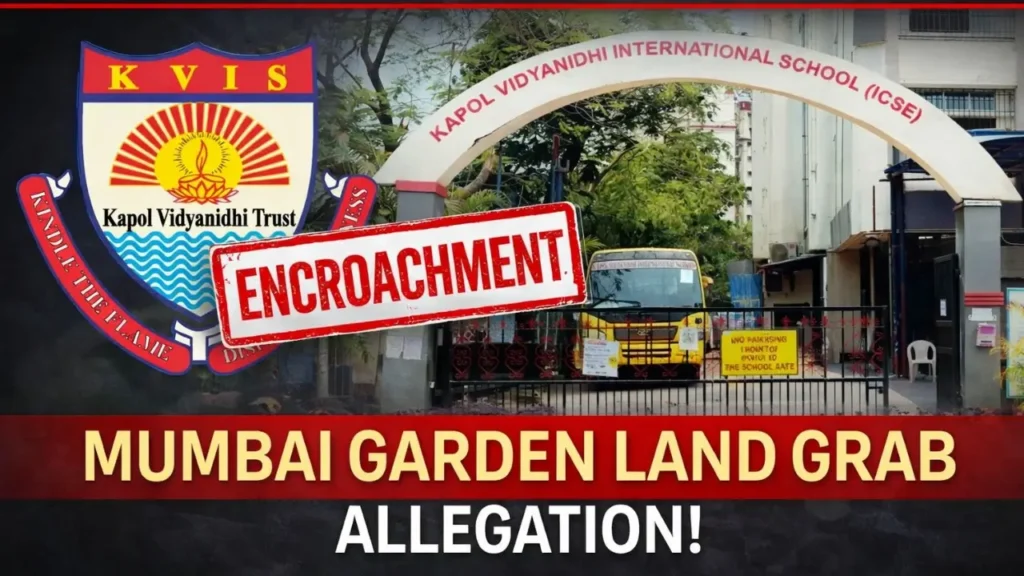
BMC Garden Encroachment in Kandivali Sparks Mumbai Public Land Protection Debate
The BMC garden encroachment issue in Kandivali West has sparked a wider debate on protection of Mumbai’s public green spaces. Garden Plot 106, reserved as a public garden, was given to Kapol Vidyanidhi Trust only for maintenance under a caretaker agreement. Civic records show alleged unauthorised concretisation over the years, reducing open space access. The BMC Garden Department issued a notice in January 2026 asking removal of violations. Residents and activists say delayed enforcement highlights serious gaps in urban governance and protection of scarce recreational land in Mumbai’s suburbs.
- BMC Garden Encroachment in Kandivali Sparks Mumbai Public Land Protection Debate
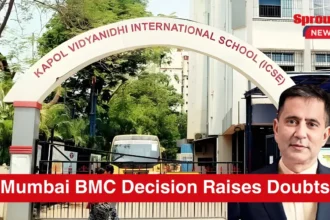
- The trust operates Kapol Vidyanidhi International School and Kapol Global Academy
- BMC Garden Encroachment and Compliance Failures Raise Urban Governance Concerns
- Why Kandivali Garden Encroachment Matters Amid Mumbai Open Space Crisis?
- Readers’ Appeal
BMC garden encroachment in Kandivali has triggered a fresh civic controversy, raising serious questions about public land protection, municipal enforcement failures, and alleged misuse of caretaker permissions in suburban Mumbai.
The dispute centres on Garden Plot 106 in Mahavir Nagar, Kandivali West, officially reserved for public Garden under the jurisdiction of the Brihanmumbai Municipal Corporation, India’s richest civic authority.
Official records show that the plot was entrusted to Kapol Vidyanidhi Trust strictly for maintenance purposes under a caretaker arrangement, without granting any ownership rights or permanent construction permissions.
View the related govt document – click here
The trust operates Kapol Vidyanidhi International School and Kapol Global Academy
Municipal guidelines governing caretaker agreements clearly prohibit permanent structures, concretisation, or any activity restricting public access, ensuring that reserved gardens remain open and accessible to citizens at all times.
However, civic documents reviewed during an ongoing scrutiny indicate that significant portions of the garden were allegedly concretised in phases, reducing green cover and altering the intended recreational character.
Residents claim that over time, the garden gradually lost its original identity as an open public space, with physical changes limiting access for children, senior citizens, and daily visitors.
The BMC Garden Department issued a formal notice dated 21 January 2026 directing the trust to remove unauthorised concretisation reportedly carried out initially in 2008 and later expanded during 2021.
Officials acknowledged that the alleged violations span nearly two decades, highlighting serious concerns over monitoring failures and delayed enforcement within municipal departments responsible for safeguarding public lands.

Civic activists say the case is particularly concerning because Kandivali already faces a severe shortage of accessible open spaces, making every reserved garden crucial for urban environmental balance.
Also Read: JJTU Among 10 Rajasthan Universities Under Fake Degree Probe.
BMC Garden Encroachment and Compliance Failures Raise Urban Governance Concerns
This is not the first time irregularities at Plot 106 have been flagged, as earlier municipal notices issued in 2017 cited unauthorised construction activities beyond permitted caretaker responsibilities.
Those communications also reportedly pointed to possible commercial usage of sections of the garden, which is strictly prohibited under BMC regulations governing reserved recreational land across Mumbai.
Urban planning experts say such cases reveal systemic enforcement weaknesses, where caretaker permissions meant for maintenance are gradually expanded into functional control over public assets.
A senior Mumbai based planning consultant explained that caretaker arrangements often become long term informal occupation if civic monitoring remains inconsistent or administrative accountability mechanisms weaken.
Under Mumbai’s Development Control and Promotion Regulations, reserved gardens and playgrounds enjoy protected status, and any permanent alteration requires formal approvals rarely granted to private entities.
Despite these protections, records indicate that enforcement action did not accelerate even after fresh notices regarding commercial activity were reportedly issued on 9 August 2023.
Residents of Mahavir Nagar say fencing, paving, and structural modifications slowly reduced usable open space, depriving neighbourhood communities of essential recreational and social infrastructure.

Many locals believe the gradual transformation went unchecked despite formal documentation, reflecting deeper structural challenges in Mumbai’s public land management systems.
The Sprouts News Special Investigation Team reviewed civic records showing repeated written acknowledgements of violations, yet meaningful corrective action remained delayed for extended periods.
Related News: Kapol School Harassment Case: NBWs Issued Against Principal.
Related News: Kandivali School OC Scam Exposed: BMC Playground Fraud.
Related News: School Management in Kandivali Amasses Illicit Wealth.
Why Kandivali Garden Encroachment Matters Amid Mumbai Open Space Crisis?
Urban policy analysts warn that the Kandivali garden encroachment reflects a broader pattern affecting public gardens, playgrounds, and recreational lands across India’s financial capital.
Mumbai ranks among the lowest globally in per capita open space availability, intensifying the importance of preserving every legally reserved green zone within the city’s urban planning framework.
Environmental experts emphasise that loss of green cover directly impacts air quality, heat regulation, and public health, especially in densely populated suburbs like Kandivali.
Legal specialists note that prolonged inaction in encroachment cases often complicates enforcement, as delays create legal ambiguities and reduce the effectiveness of future corrective measures.

They add that caretaker agreements must remain strictly regulated, as misuse can erode public trust and create precedents encouraging similar practices elsewhere in Mumbai.
The latest BMC notice presents an opportunity for corrective action, but its success will depend on consistent compliance monitoring and transparent administrative follow through.
Failure to restore the garden could expose the civic body to allegations of selective enforcement, raising wider questions about governance standards and accountability in public land protection.
Urban governance experts argue that restoring Plot 106 to its original condition would demonstrate institutional commitment to safeguarding community spaces and enforcing planning regulations.
Citizen groups have begun demanding accountability reports, seeking clear timelines for restoration, removal of unauthorised structures, and penalties for violations affecting public property.
As Mumbai continues rapid vertical expansion, planners stress that protecting horizontal green spaces remains essential for climate resilience, liveability, and sustainable urban development.
The Kandivali case may ultimately reshape how caretaker permissions are granted, monitored, and enforced, influencing future public land governance policies across India’s commercial capital.
Readers’ Appeal
“Fearless journalism plays a crucial role in bringing truth before the public. Unmesh Gujarathi and his team have consistently highlighted serious allegations of scams and financial irregularities in the public interest. In connection with the present matter, allegations have been raised against certain the Trustys and directors, including Alka P. Vora, Paresh T. Vora, Hemant J. Sanghvi, Pravin P. Sanghvi, and Vipul J. Mody. These allegations require thorough scrutiny by the concerned authorities.
Citizens who have relevant information, documents, or evidence related to this matter are encouraged to come forward. Your identity will be respected as per journalistic ethics and legal norms. If you wish to share information in the public interest, please contact 9322755098. Collective awareness and responsible reporting are essential to ensure transparency and accountability in society.”