

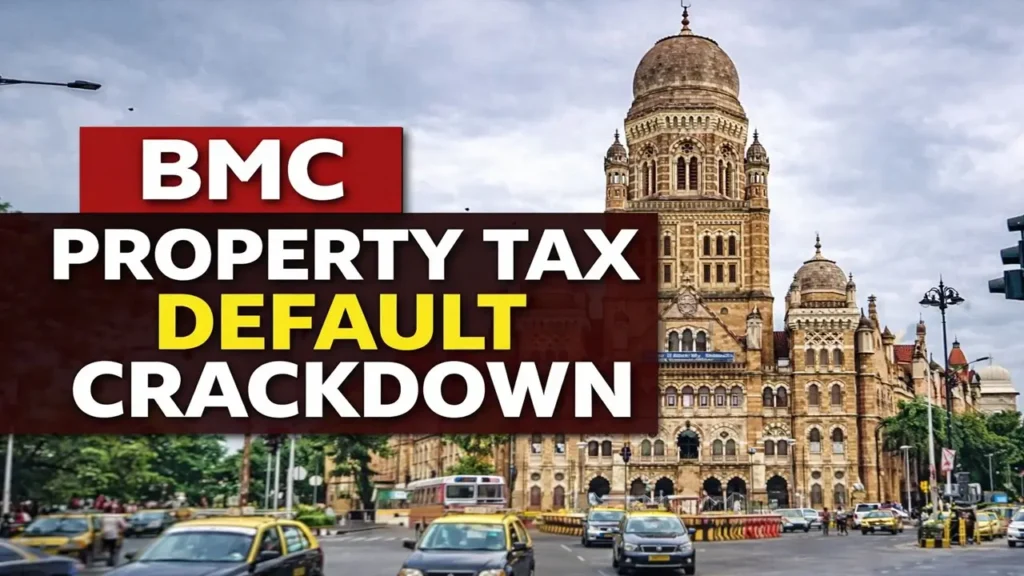
The BMC property tax recovery drive has intensified after attachment notices were issued to several major Mumbai defaulters with arrears running into crores. Raghuvanshi Mills Limited alone reportedly owes over ₹140 crore. Civic officials have warned that movable assets may be seized and properties auctioned under the Mumbai Municipal Corporation Act if dues remain unpaid. The action signals a stricter approach to protecting municipal revenue and ensuring financial discipline.
BMC Property Tax Default Crackdown: Attachment Notices Issued to Major Mumbai Defaulters
The BMC has issued attachment notices to major Mumbai property tax defaulters, including companies with arrears exceeding ₹140 crore. Authorities warn of asset seizure and auction under the Mumbai Municipal Corporation Act, signalling a stricter recovery drive to protect civic revenue and financial stability.
The BMC property tax default crackdown has intensified after the Brihanmumbai Municipal Corporation issued attachment notices to several high value property owners over multi crore arrears.
Civic officials confirmed that properties may face seizure and eventual auction if outstanding tax dues are not cleared within the prescribed recovery timeline.
Among the prominent entities named in municipal records is Raghuvanshi Mills Limited from G South ward, with arrears reportedly exceeding ₹140 crore.
Other major defaulters include Rajhans Associates, Ashapadara Developers, Sumer Buildcorp Private Limited, DBS Realty, SD Corporation and Galaxy Corporation.
Individual dues in several cases run into tens of crores, reflecting a significant revenue gap for Mumbai’s civic administration.
Officials stated that repeated reminders were issued before invoking attachment proceedings under the Mumbai Municipal Corporation Act.
The civic body has relied on Section 203 to serve notices on property owners who failed to pay despite having the financial capacity.
Additional Municipal Commissioner Ashwini Joshi directed assessment and collection departments to escalate action against persistent defaulters.

The notices warn that movable assets within the premises may be seized under Sections 204, 205 and 206 if dues remain unpaid.
If recovery efforts fail at that stage, the properties themselves may be auctioned to recover tax liabilities and penalties.
Mumbai Property Tax Recovery Process and Legal Provisions Explained
Under municipal rules, property owners must clear annual tax demands within ninety days of receiving official bills.
The BMC follows a phased recovery mechanism beginning with personal follow ups and demand letters before issuing a final twenty one day notice.
Only after this statutory period expires does the civic body initiate coercive measures such as attachment and seizure.
Municipal revenue officials argue that enforcement has become necessary due to a widening gap between assessed property tax and actual collections.
Mumbai’s property tax forms a crucial revenue stream that funds road maintenance, public hospitals, sanitation services and disaster management infrastructure.
Delayed or unpaid taxes directly affect civic budgeting, especially in a city managing ageing infrastructure and climate resilience demands.
Experts in urban governance observe that commercial and industrial property defaults create disproportionate fiscal stress compared to residential arrears.
The current action signals a stricter compliance regime aimed at restoring financial discipline among large corporate and institutional property holders.
Civic authorities have also urged citizens to use online payment facilities available on the BMC portal to avoid penalties.
While smaller taxpayers often face swift penalties, enforcement against large entities has historically drawn scrutiny over selective recovery patterns.
Also Read: Armait House Tax row in Sapgaon Panchayat raises legal doubt.
Why the BMC Property Tax Default Crackdown Matters for Mumbai’s Fiscal Health?
Mumbai’s expanding skyline masks persistent revenue challenges faced by the civic administration.
Property tax contributes a significant share of the municipal budget, and high value arrears can distort projected financial planning.
Urban economists note that non payment by large entities may encourage a culture of delayed compliance among smaller taxpayers.
Transparent enforcement, therefore, becomes essential not only for revenue recovery but also for maintaining public trust.
Legal experts caution that attachment proceedings must follow due process to withstand judicial scrutiny if challenged.
The Mumbai Municipal Corporation Act provides the statutory framework, yet procedural adherence determines enforceability.
Officials maintain that attachment is not punitive but a statutory mechanism to safeguard public funds.
They argue that equal enforcement across sectors strengthens the credibility of municipal governance.
With infrastructure projects and public service commitments expanding, the BMC cannot afford prolonged revenue stagnation.
Financial analysts estimate that recovering even a fraction of the listed arrears could significantly ease budgetary pressures.
The civic body has indicated that further rounds of notices may follow if compliance does not improve in coming months.
For Mumbai’s taxpayers, the crackdown underscores a broader message that property tax obligations are enforceable liabilities, not negotiable contributions.
As enforcement actions unfold, the effectiveness of recovery efforts will shape both municipal finances and the city’s administrative reputation.
If you are facing injustice or have credible information regarding corruption, fraud, or misuse of public funds, you may reach out to Unmesh Gujarathi and his investigative team. All communications will be handled with professionalism and confidentiality.