

Bombay High Court Reaffirms Ban: Padma Awards, Bharat Ratna Are Not Titles For Name Prefixes
The Bombay High Court has firmly reiterated that India’s highest civilian honours—Padma Awards and the Bharat Ratna—are not titles and cannot be used as name prefixes or suffixes. Justice Somasekhar Sundaresan cited the Supreme Court’s 1995 Constitution Bench ruling and stressed mandatory compliance under Article 141. The court corrected a writ petition’s cause title, reinforcing that ceremonial honours hold no legal status as titles in judicial proceedings. This stern reminder came during a recent writ petition hearing, underscoring a three-decade-old Supreme Court mandate.
- Bombay High Court Reaffirms Ban: Padma Awards, Bharat Ratna Are Not Titles For Name Prefixes
- The Legal Precedent: Revisiting The 1995 Supreme Court Ruling
- Understanding The Misuse: Awards Versus Titles In India
- Broader Implications For Awardees, Media, And Public Discourse
- Historical Context And Notable Exceptions To The Rule
- The Path Forward: Ensuring Nationwide Compliance
- The Paid Awards Racket: How Media Houses Honour Criminals for a Price
- The Modus Operandi: Buying Legitimacy with a Trophy
- Complicit Media Houses and Questionable Honorees
- The Fraudster Network: From Fake Doctorates to Police Arrests
- The Magazine That Never Was: An ID Card Scam
- Mocking the Law and High-Profile Complicity
- The Fight for Accountability and Public Trust
Justice Somasekhar Sundaresan made the observation while presiding over the case. He took direct exception to how a party was named in the cause title. The petitioner was described as “Padma Shree Dr Sharad M. Hardikar,” a 2014 award recipient. The court deemed this description legally impermissible in official proceedings.
The Legal Precedent: Revisiting The 1995 Supreme Court Ruling
Justice Sundaresan anchored his directive in a landmark ruling. He invoked a five-judge Constitution Bench decision of the Supreme Court from 1995. That bench had categorically clarified the nature of these civilian awards. It declared that honours like Padma Shri or Bharat Ratna are not titles.
Therefore, they must not be used as prefixes or suffixes to awardees’ names. This ruling was delivered nearly thirty years ago. Yet, its adherence remains inconsistent across public and legal spheres. The Bombay High Court’s intervention highlights this enduring gap in compliance.
The judge emphasised the binding nature of the Supreme Court’s ruling. Strict compliance is mandatory under Article 141 of the Indian Constitution. This article establishes the law declared by the Supreme Court as binding on all courts. The directive leaves no room for personal discretion or ceremonial usage.
“I need say nothing more than to direct that the parties shall ensure compliance,” the order stated. It further instructed courts to also ensure this law is followed in all proceedings. This reinforces the judiciary’s role in upholding the ruling’s integrity. It moves the mandate from a guideline to an enforceable legal standard.
Understanding The Misuse: Awards Versus Titles In India
The distinction between an “award” and a “title” is constitutionally significant. British-era honours like “Sir” or “Lord” were formal titles of nobility. India’s civilian awards, instituted after independence, are meant solely as recognitions of merit. They confer no title and hold no legal status as part of one’s name.
This policy was established to eradicate traces of colonial hierarchy. It aligns with the fundamental principles of equality among citizens. Despite this, the practice of using “Padma Shri” or “Bharat Ratna” before names persists. It is commonly seen in media biographies, official invitations, and public events.
Such misuse, though often unintended, undermines the constitutional spirit. The Bombay High Court’s notice serves as a corrective to this habitual error. It specifically targets its use within the formal justice system. If the legal apparatus errs, it sets a problematic precedent for public perception.
The case involving Dr. Sharad M. Hardikar, an orthopaedic surgeon, became the catalyst. While his accolades are noteworthy, the law requires their separation from his name in official contexts. This Sprouts News Special Investigation Team finds such lapses are common in lower court filings.
Broader Implications For Awardees, Media, And Public Discourse
The court’s order has immediate implications for all Padma and Bharat Ratna awardees. They must refrain from attaching the honour to their names in legal or official documents. This applies to biodata, letterheads, and any formal application. The directive also squarely addresses media houses and publishing entities.
Journalistic style guides often mistakenly permit using the award as a prefix. Editors and content creators must now revise these internal guidelines. Accurate reporting should state, “Dr. Sharad Hardikar, a Padma Shri awardee,” for instance. The award follows the name as a separate descriptor, not an integrated title.
For policymakers and institutions, this is a call for stricter internal audits. Government portals, awardee directories, and ceremonial protocols require review. Public relations teams handling awardees’ engagements must be educated. The goal is systemic change to honour the award’s intent without breaching law.
This judicial stance also protects the awards’ sanctity from potential commercial misuse. Preventing the award from becoming part of a name stops its use for undue influence. It cannot be leveraged to imply special legal standing or privilege. The honour remains a celebrated achievement, not a tool for distinction in formal affairs.
Historical Context And Notable Exceptions To The Rule
The 1995 Supreme Court case, Union of India vs. Naveen Jindal, is the cornerstone. It dealt broadly with the use of national emblems and honours. The Constitution Bench’s observations on Padma awards were a key part of its judgment. This ruling has been cited sporadically over the years in various high courts.
However, enforcement has relied largely on specific judicial reminders. The Ministry of Home Affairs (MHA), which administers the awards, issues guidelines. These guidelines explicitly prohibit using the award as a prefix or suffix. Yet, no stringent punitive measures for non-compliance are widely publicised.
An interesting exception exists for certain historical awards. Pre-independence titles like “Rai Bahadur” or “Khan Bahadur” are governed by different rules. Additionally, military awards like Param Vir Chakra or Ashok Chakra are treated differently. They are permitted to be used as recognisable prefixes, given their distinct nature.
This contrast underscores the specific philosophy behind civilian awards. The Bombay High Court’s order is a timely reinforcement of this democratic principle. It comes amid a growing national conversation on legacy, recognition, and constitutional values.
The Path Forward: Ensuring Nationwide Compliance
The onus for compliance now extends beyond the immediate parties in the case. All Indian courts must scrutinise cause titles and legal documents before them. Registry officials may need training to flag such descriptions during filing. This would prevent improper titles from entering the judicial record initially.
Bar Councils across states can issue advisories to practising advocates. Lawyers drafting petitions must ensure their clients’ names are presented correctly. Educational institutes and protocol departments must also update their formal communication standards. A unified effort is required to standardise practice nationally.
Ultimately, this reaffirmation by the Bombay High Court is a lesson in constitutional civics. It reminds the nation that its highest civilian honours are accolades of service, not symbols of status. Upholding this distinction is crucial to preserving their true meaning and value in India’s democracy.
As Justice Sundaresan concluded, the law declared by the Supreme Court is clear. The directive for strict compliance is now unequivocally reiterated. It remains to be seen how effectively this guidance permeates public and official discourse. Sprouts News analysis indicates this judicial nudge could spur wider institutional action.
The Paid Awards Racket: How Media Houses Honour Criminals for a Price
A disturbing trend is undermining the value of public recognition in India. Prestigious award ceremonies are being exposed as paid platforms that whitewash criminals and corrupt figures. This lucrative business, enabled by prominent media houses, misleads the public and damages trust in genuine achievement.
Investigative journalist Unmesh Gujarathi and the Sprouts News Investigation Team (SIT) have consistently exposed this racket. Their investigations reveal how scamsters buy credibility through media-backed trophies. These paid felicitations are not isolated incidents but a systemic “image-washing” industry.
The Modus Operandi: Buying Legitimacy with a Trophy
The scheme is straightforward: individuals or entities pay significant sums to event organisers. In return, they receive a trophy at a glamorous ceremony hosted by a known media brand. The presence of senior politicians at these events provides unwarranted legitimacy to the recipients.
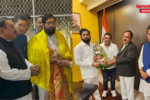
For fraudsters, this is a calculated marketing investment. The award is followed by digital campaigns, newspaper photos, and videos that mask their criminal backgrounds. This manufactured credibility is then used to mislead investors and the public, enabling further fraud.
Complicit Media Houses and Questionable Honorees
Sprouts News investigations have repeatedly named major media groups in this ecosystem. Companies like the Times Group, Lokmat, Pudhari, Mid-Day, and Navbharat have been linked to events where bogus entrepreneurs are honoured for money.
The recipients of these paid awards are deeply troubling. They include:
Financial Scamsters:
Like Khush Chaturvedi, an accused in a ₹3.48 crore investment fraud who was honoured while absconding from police.
Corrupt Politicians and Officials:
Former Maharashtra Governor Bhagat Singh Koshyari allegedly felicitated underworld operatives and corrupt figures.
Fake Achievers:
Individuals involved in academic fraud and selling fake PhDs have also been platformed.
This practice transforms public ceremonies into tools of deception, eroding trust and endangering honest entrepreneurship.
The Fraudster Network: From Fake Doctorates to Police Arrests
A key figure in this corrupt ecosystem is Pawan Kumar Bhoot, proprietor of the Police Public Press Magazine. His operations exemplify the racket’s brazen nature and its alarming connections to law enforcement.
Selling Fake Accolades: Bhoot has been a central figure in selling bogus PhD degrees on behalf of non-existent institutions like the ‘American East Coast University’. He organised award functions where participants reportedly paid ₹11,000 per award.
A Recent Arrest: In a significant development, the Vidhana Soudha Police in Bengaluru arrested Bhoot in December 2024. He was apprehended at a hotel while organizing an award function and faces charges in a ₹20 lakh cheque bounce case pending since 2021.
Also Read: ₹100+ Crore Trading Scam Hits Maharashtra Teachers.
The Magazine That Never Was: An ID Card Scam
Beyond fake awards, Bhoot runs another deceptive scheme involving his Police Public Press Magazine. Investigations reveal this “magazine” primarily operates as a front for selling identity cards.
Selling Suspicious Credentials:
Instead of regular journalism, Bhoot’s business model focuses on selling press accreditation cards. These ID cards are purchased by individuals seeking the legitimacy and access associated with a press credential.
Violating Publication Rules: The magazine rarely, if ever, produces a substantive printed publication as required by press regulations. At times, only a flimsy online copy is produced to create a facade of legality. This practice is a clear violation of the norms governing genuine publications.
Documents Under Scrutiny: The authenticity and purpose of these documents are highly suspicious. Authorities are urged to investigate the issuance of these IDs, which could be misused for unauthorized access or impersonation.
Mocking the Law and High-Profile Complicity
Following his arrest, Bhoot allegedly made a brazen remark to reporters: “What can the court do to me? I’m not going to pay. I live in Delhi, and no law or police will arrest me there”. This case highlights systemic enforcement failures, as police took over three years to execute court-issued warrants against him.
Bhoot is part of a network where fraudsters like Kalyanji Jana have similarly infiltrated official circles, distributing fake Dadasaheb Phalke awards to Mumbai Police officers. The police’s official social media account even shared these counterfeit honours.
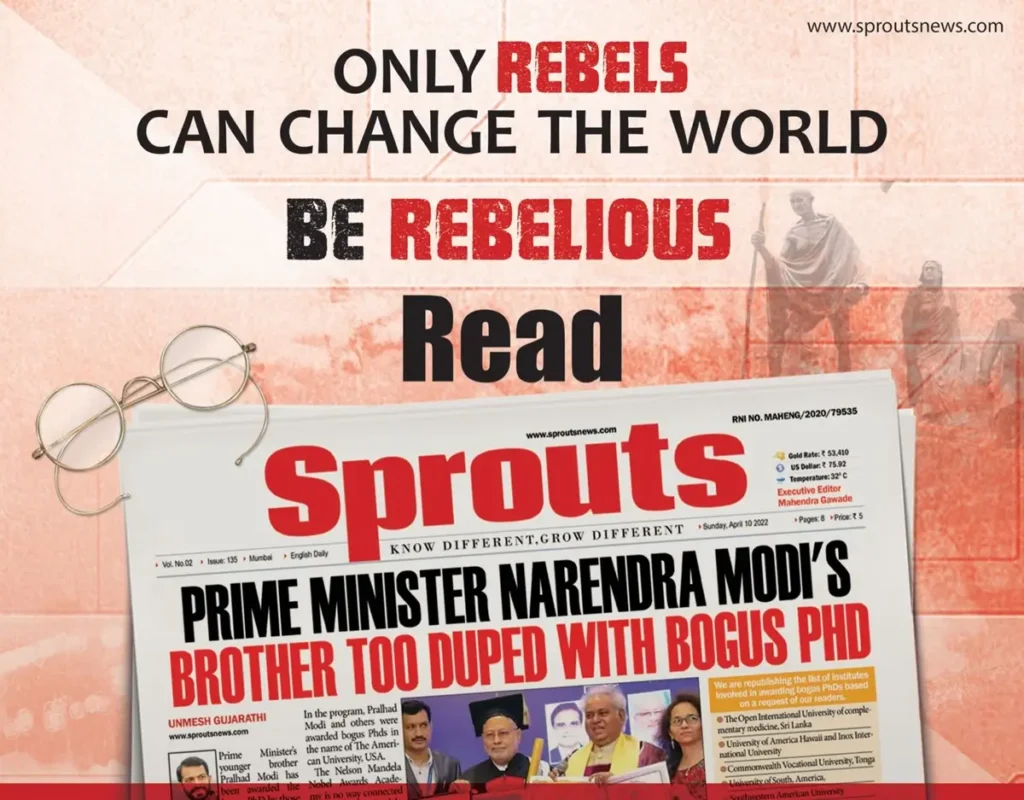
The scandal’s reach extends to national icons. The Sprouts News SIT has evidence that personalities from tennis star Leander Paes to singers Kumar Sanu have accepted fake honours. Most strikingly, Prahlad Damodardas Modi, brother of Prime Minister Narendra Modi, has been a chief guest at functions distributing bogus awards.
The Fight for Accountability and Public Trust
Unmesh Gujarathi, a veteran journalist with over 28 years of experience, leads the charge against this corruption. The work of his team has had real-world impact, such as the expulsion of a corrupt aide from the Raj Bhavan system following their exposure.
Their journalism underscores a deep moral and governance failure. It highlights the complicity of silent media outlets and the deliberate ignorance of political offices that lend their stature to these scams.
The paid awards racket is more than a scandal; it is a systemic assault on integrity. It replaces merit with money and honour with hypocrisy. As long as the business of selling trophies and fake IDs to the highest bidder continues, public trust in both media and genuine achievement will remain under threat.