

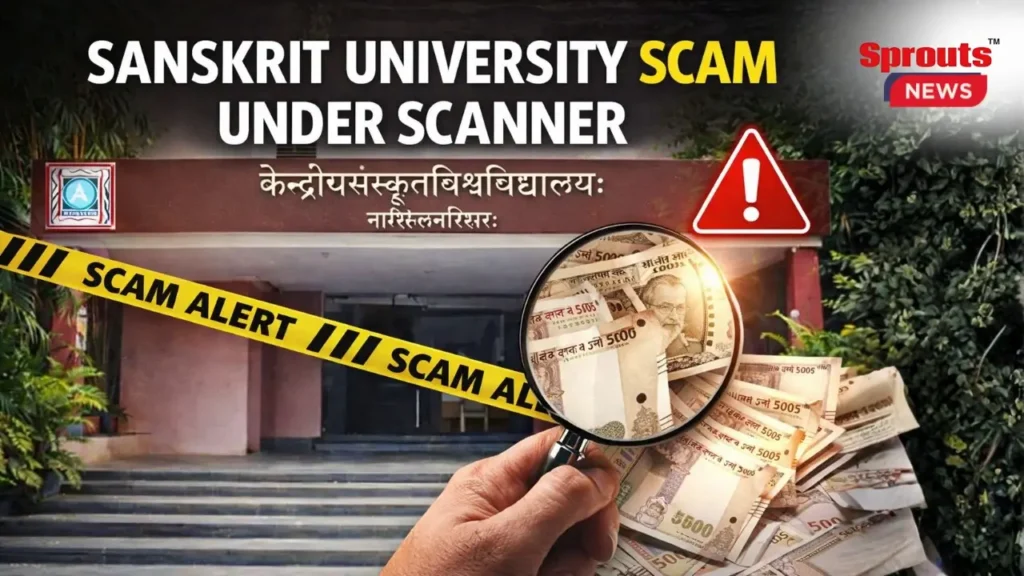
The Central Sanskrit University Nashik recognition controversy has raised concerns about the approval of teacher education programmes at the campus. A formal complaint sent to the Union Ministry of Education alleges possible irregularities in the recognition of the Integrated Teacher Education Programme and B.Ed courses. The complaint claims that infrastructure requirements and regulatory procedures under the National Council for Teacher Education may not have been properly followed. The issue has drawn attention from education experts who warn that any lapse in teacher training approvals could affect students and the credibility of higher education institutions across India.
- Central Sanskrit University Nashik Campus Recognition Controversy: Complaint Seeks Probe Into ITEP and B.Ed Programme Approval
- Allegations of Infrastructure Gaps and Degree Irregularities at Central Sanskrit University, Nashik Campus
- Questions Over Virtual Inspection, Laboratory Facilities and Faculty Strength
- Calls for Independent Probe by Ministry of Education and NCTE Oversight
- Readers’ Appeal: Speak Up Against Injustice
Central Sanskrit University Nashik Campus Recognition Controversy: Complaint Seeks Probe Into ITEP and B.Ed Programme Approval
Senior investigative journalist Unmesh Gujarathi has investigated the alleged irregularities linked to the Central Sanskrit University Nashik campus recognition process. His findings examine claims of regulatory violations, infrastructure misrepresentation, and governance lapses affecting the approval of teacher education programmes.
Central Sanskrit University Nashik recognition controversy has triggered fresh scrutiny after a formal complaint to the Union Ministry of Education alleged serious irregularities in the approval process for teacher training programmes.
The complaint seeks an independent inquiry into the recognition of Integrated Teacher Education Programme and Bachelor of Education courses at the Central Sanskrit University Nashik campus.
A whistleblower identifying himself as Mahesh Kulkarni (name changed to protect identity), whose name has been changed to protect identity, submitted the complaint to the Union Minister of Education in New Delhi.
The letter alleges misrepresentation of infrastructure, questionable inspection practices, and possible violations of statutory norms prescribed by the National Council for Teacher Education.
The allegations also name several senior officials including Central Sanskrit University Vice Chancellor Shrinivasa Varakhedi and NCTE Chairperson Professor Pankaj Arora in connection with the regulatory process.
Dr Harihar Sharan Tripathi, Regional Director associated with regulatory oversight, and Professor Nilabh Tiwari, Director of the Nashik campus, are also mentioned in the complaint.
According to the complainant, these alleged irregularities could undermine academic credibility and affect students enrolled in the teacher education programmes offered by the university.
Sources familiar with the matter say the complaint has been circulated to multiple authorities including the University Grants Commission and senior officials within the Ministry of Education.
Education experts say allegations involving teacher education programmes carry significant implications because NCTE approvals determine whether graduates can legally pursue teaching careers across India.
Allegations of Infrastructure Gaps and Degree Irregularities at Central Sanskrit University, Nashik Campus
The complaint claims the Nashik campus lacks essential infrastructure required under NCTE regulations for teacher education institutions.
According to the document, adequate classrooms, specialised laboratories, and academic facilities mandated under regulatory norms are reportedly unavailable on the campus.
Such infrastructure requirements are considered mandatory for institutions running teacher education programmes such as B.Ed and the Integrated Teacher Education Programme introduced under India’s National Education Policy.

Another serious allegation concerns claims of fraudulent issuance of B.Ed degrees reported by former students in November 2024.
The complaint states that these concerns were earlier reported in English language newspapers but no visible disciplinary or corrective action followed the reports.
The document further alleges that recognition originally granted to a Mumbai based institution was used as a basis to admit students at the Nashik campus.
Second year students were reportedly taught only once a week by a visiting faculty member travelling from Mumbai, raising concerns about the quality of academic instruction.
Students allegedly expressed dissatisfaction with the arrangement, claiming it did not meet the academic requirements expected from a recognised teacher education programme.
Higher education analysts say such allegations highlight the risk of regulatory loopholes being exploited during programme expansion across campuses.
Teacher education programmes operate under strict accreditation standards because graduates directly enter the school system and influence classroom teaching quality nationwide.
Questions Over Virtual Inspection, Laboratory Facilities and Faculty Strength
The complaint also raises concerns about the process followed during a virtual inspection conducted on 20 February 2026 for granting recognition to the Integrated Teacher Education Programme.
According to the complainant, the inspection lasted only two to three minutes and was conducted through a mobile camera without detailed academic verification.
The complaint alleges that no meaningful interaction occurred with faculty members or administrative officials during the inspection process.
Another allegation concerns the computer laboratory shown during the inspection, which reportedly displayed forty computers.
However, the complainant claims that only four functional computers actually exist on campus.
The complaint further states that chemistry, physics, and mathematics laboratories presented during the inspection allegedly belonged to another institution and were temporarily arranged.

Questions have also been raised about the building shown to inspectors during the virtual visit.
The complainant claims the premises are part of a shared educational complex and not an independent campus owned by Central Sanskrit University, New Delhi.
Hostel rooms were allegedly presented as classrooms while facilities belonging to other institutions were shown as university infrastructure.
Additionally, the complaint alleges that the B.Ed department lacks a functional laboratory despite showing one during inspection.
The appointment of laboratory staff is also claimed to be inconsistent with regulatory requirements set by NCTE.
Faculty strength has also been questioned in the complaint.
According to the document, the B.Ed programme currently operates without a regular Professor or Associate Professor.
The programme is reportedly managed by four Assistant Professors and three guest faculty members, raising questions about compliance with regulatory norms.
Experts say faculty requirements exist to ensure academic leadership and research supervision within teacher education programmes.
Also Read: ED Arrests Archana Kute in ₹2467 Crore Scam.
Calls for Independent Probe by Ministry of Education and NCTE Oversight
The complaint calls for an independent physical inspection of the Central Sanskrit University Nashik campus by a new expert committee.
It also urges authorities to examine the role of the virtual inspection team responsible for evaluating the programme’s eligibility for recognition.
If violations are confirmed, the complainant has requested strict disciplinary and legal action against responsible officials.

The letter also seeks immediate measures to protect the academic interests of students already enrolled in the programmes.
Students could face significant uncertainty if the recognition process is later found to have violated regulatory standards.
Copies of the complaint have reportedly been sent to the Joint Secretary for Language and Training in the Government of India.
The document has also been marked to the Chairperson of the University Grants Commission and senior officials of the National Council for Teacher Education.
According to the complainant, copies were also shared with national and regional media organisations to ensure transparency and public accountability.
A Sprouts News Special Investigation Team review of the complaint indicates that several allegations relate to regulatory compliance, infrastructure verification, and inspection procedures.
Education policy specialists say the Ministry of Education and NCTE may need to examine the matter carefully to maintain credibility in teacher education accreditation systems.
The controversy emerges at a time when India is expanding teacher education reforms under the National Education Policy.
Any irregularities in programme recognition could undermine trust in regulatory frameworks designed to safeguard academic quality.
Whether authorities initiate a formal investigation will determine the next phase of scrutiny surrounding the Central Sanskrit University Nashik recognition controversy.
Readers’ Appeal: Speak Up Against Injustice
If you have information about injustice, scams, corruption, or fraud affecting society, write to us. Share credible details with our newsroom confidentially on 9322755098.