

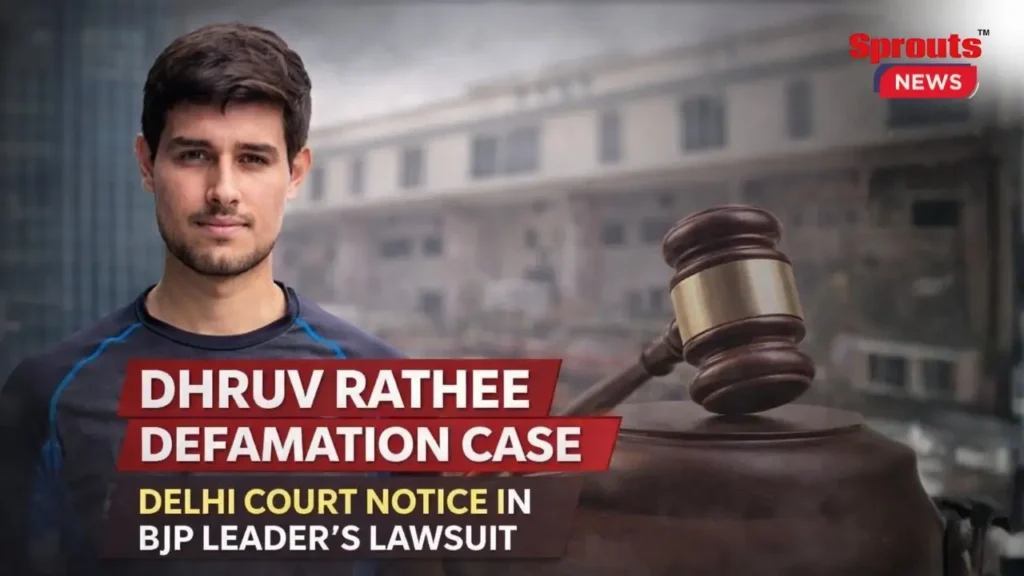
The Dhruv Rathee defamation case has entered a new procedural phase after a Delhi court issued a show cause notice to a notary linked to an affidavit filed by BJP spokesperson Suresh Nakhua. The court observed that the notary failed to appear despite repeated summons during hearings related to the lawsuit against YouTuber Dhruv Rathee. The dispute concerns alleged procedural defects in the affidavit submitted in the defamation proceedings. Judicial observations indicate concern over repeated delays and compliance issues. The case continues to draw attention because it involves political commentary, digital media content and legal standards governing defamation claims.
- Dhruv Rathee Defamation Case: Delhi Court Issues Show Cause Notice to Notary in BJP Leader Suresh Nakhua Lawsuit
- Defective Affidavit Controversy Intensifies in Dhruv Rathee Defamation Case
- Lawyers Argue Repeated Delays and Procedural Errors
- Court Imposes Costs and Sets Next Hearing in High Profile Defamation Suit
- Readers’ Appeal
Dhruv Rathee Defamation Case: Delhi Court Issues Show Cause Notice to Notary in BJP Leader Suresh Nakhua Lawsuit
A Delhi court issued a show cause notice to a notary linked to BJP leader Suresh Nakhua’s affidavit in his defamation case against YouTuber Dhruv Rathee. The court flagged repeated procedural errors and delays in the high profile lawsuit.
The Dhruv Rathee defamation case has taken a significant procedural turn after a Delhi court issued a show cause notice to a notary linked to an affidavit filed by BJP spokesperson Suresh Nakhua.
The development comes amid ongoing legal proceedings in the defamation lawsuit filed by Nakhua against YouTuber Dhruv Rathee, a case that has attracted wide attention due to its connection with political commentary and digital media.
District Judge Pritam Singh of a Delhi court issued the notice after observing that the notary who certified Nakhua’s affidavit had repeatedly failed to appear despite multiple summons.
The court noted that the notary, Suman Sharma, had several opportunities to join the proceedings but failed to do so even through video conferencing.
The judge stated that since the notary had not appeared despite repeated directions, a show cause notice would now be issued requiring an explanation within one week.
The court’s observation highlights growing judicial concern over compliance with procedural requirements in a case that has already witnessed multiple delays.
The dispute originates from a YouTube video uploaded by Dhruv Rathee, titled “My Reply to Godi Youtubers | Elvish Yadav | Dhruv Rathee,” which allegedly referred to Nakhua in a controversial context.
Nakhua, who serves as a spokesperson for the Mumbai unit of the Bharatiya Janata Party, argued that the video linked him to violent online trolls without factual basis.
According to his complaint, these remarks damaged his reputation and exposed him to public criticism and ridicule across digital platforms.
Defective Affidavit Controversy Intensifies in Dhruv Rathee Defamation Case
The present procedural dispute stems from problems identified in an affidavit submitted by Nakhua during earlier stages of the defamation proceedings.

During a hearing in September 2024, the court had pointed out defects in the affidavit filed by the BJP leader.
The judge directed Nakhua to submit a corrected affidavit after addressing the identified legal and procedural issues.
Subsequently, an amended affidavit was filed by Nakhua before the court.
However, the legal team representing Dhruv Rathee again pointed out multiple errors in the revised affidavit.
Because the affidavit had been certified by a notary, the court eventually decided to summon the notary public who had authenticated the document.
The purpose of the summons was to clarify procedural irregularities connected to the affidavit certification process.
However, the notary failed to appear before the court despite repeated summons issued during earlier hearings.
According to the court record, Suman Sharma initially cited a bone fracture as the reason for her absence from court proceedings.
At the latest hearing, the court was informed that the notary could not attend again because she was suffering from an eye related medical issue.
Documents including a hospital discharge summary were submitted to support the medical explanation.
However, the court observed that the medical record indicated she had been admitted and discharged on the same day, raising questions about the repeated absence.
Also Read: Unsafe Iron Syrup Found in Maharashtra Health Scheme.
Lawyers Argue Repeated Delays and Procedural Errors
Senior Advocate Satvik Varma, appearing for Dhruv Rathee, argued that the notary had been summoned three times but had not appeared before the court.
He informed the court that even messages and communication attempts had been made to ensure the notary’s presence.
According to Varma, repeated absence despite summons suggests that the court’s directions were being ignored.
Varma further argued that the plaintiff had made multiple errors in the affidavit filed before the court, raising questions about the credibility of the legal filings.
He also pointed out that the affidavit referred to the old Indian Evidence Act instead of the newly enacted Bharatiya Sakshya Adhiniyam, 2023, which replaced the earlier law.
Legal experts say such procedural mistakes can become significant when courts evaluate the validity of documents submitted in litigation.
Advocate Nakul Gandhi, also appearing for Rathee, argued that the notary appeared to be avoiding the court’s summons by repeatedly citing medical reasons.
The defence team further alleged that the case was witnessing delays caused by repeated requests for adjournments and procedural corrections.
During the latest hearing, a new advocate appeared on behalf of Suresh Nakhua, marking the third change in legal representation since the case began.
Rathee’s counsel argued that such developments could indicate attempts to prolong the legal proceedings.
Court Imposes Costs and Sets Next Hearing in High Profile Defamation Suit
The court granted the plaintiff one final opportunity to address the procedural issues, subject to the payment of ₹5,000 as litigation costs.
The judge clarified that the case would proceed with arguments on Order 7 Rule 11 of the Civil Procedure Code, which deals with the rejection of a plaint.
Rathee has filed an application requesting the court to dismiss the defamation suit on the grounds of repeated defective affidavits.
According to the application, a litigant who suppresses facts or repeatedly submits flawed documents should not receive judicial leniency.
Rathee’s counsel also informed the court that the ₹5,000 cost imposed during the previous hearing had not yet been paid by Nakhua.
During the latest proceedings, Nakhua attended the hearing through video conferencing, while his new counsel assured the court that the imposed cost would be paid.
Legal observers note that the court will now examine whether the procedural defects in the plaintiff’s filings are serious enough to affect the maintainability of the defamation case.
The court has scheduled the next hearing for July 15, when arguments will be heard on the application seeking rejection of the plaint.
A preliminary assessment by the Sprouts News Special Investigation Team indicates that the case highlights growing legal challenges surrounding defamation claims linked to digital media commentary and political speech.
With online platforms increasingly shaping public discourse, courts are likely to play a larger role in defining the legal boundaries of reputation, criticism, and free expression in the digital era.
Readers’ Appeal
“Truth needs courage, and courage begins with one voice.” Investigative journalist Unmesh Gujarathi and the Sprouts News team urge readers to report corruption or scams. Share confidential information at 9322755098 and support fearless journalism.