

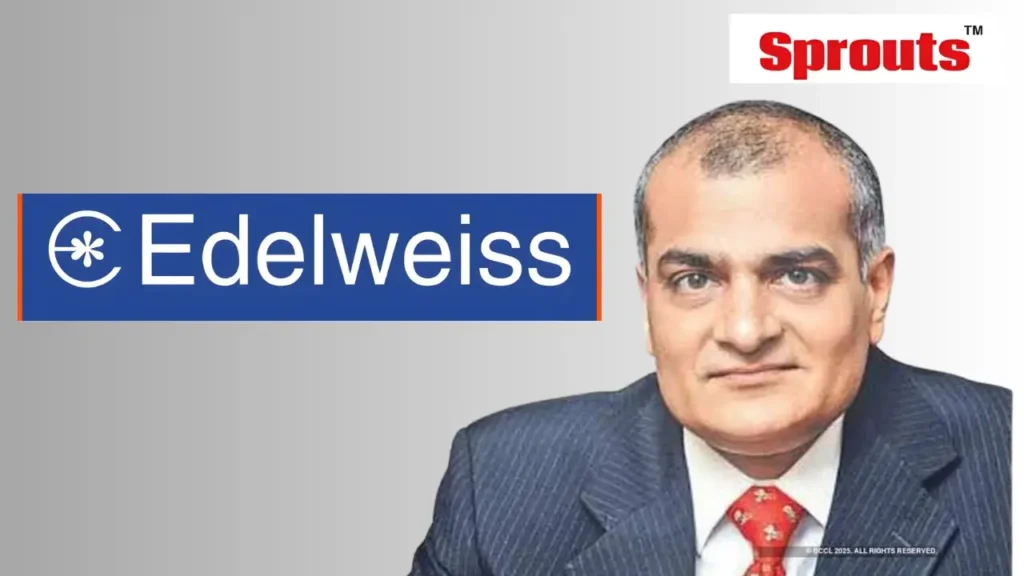
Edelweiss Faces Legal Scandal Over Non-Existent Court Case in Gag Attempt Against Media
A legal attempt by Edelweiss Asset Reconstruction Company to silence media scrutiny has unravelled after verification revealed the cited Bombay High Court filing does not exist. The ₹100-crore defamation notice warned of an urgent gag order, but official court records show no such interim application was filed or listed. The episode raises serious concerns about procedural integrity, legal ethics, and corporate intimidation tactics against investigative journalism.
- Edelweiss Faces Legal Scandal Over Non-Existent Court Case in Gag Attempt Against Media
- A Legal Notice Built on a Phantom Filing
- Demands for Censorship and a Pattern of Overreach
- Systemic Governance Failures and Regulatory Scrutiny
- A History of Litigation Against Critics
- Broader Implications for Media Freedom and Accountability
- Edelweiss’s Legal and Regulatory Controversies: A Chronology of Corporate Scrutiny
An attempt to silence reporting with a ₹100-crore suit unravels after a key court document was found to be absent from official records.
In a stunning revelation, a legal offensive by Edelweiss Asset Reconstruction Company Limited (ARC) to stifle investigative journalism has collapsed. The company’s bid for an ex-parte gag order, citing a ₹100-crore defamation suit, fell apart when verification showed the referenced court filing does not exist. This incident exposes a severe breach of legal ethics and raises urgent questions about corporate attempts to intimidate the media. The Sprouts News Special Investigation Team (SIT) has verified these findings through official Bombay High Court records.
A Legal Notice Built on a Phantom Filing
On 18 November 2025, advocate Gaurav Sharma of ASG Partners emailed a notice on behalf of Edelweiss ARC. It claimed Interim Application (L) No. 35288/2025 would be heard for urgent orders the next morning. The notice warned that failure to appear could result in ex-parte relief against the media outlet. However, a check of the Bombay High Court’s official portal revealed no trace of this application. The “Connected Matters” section for the related suit showed zero linked interim applications. Consequently, the hearing could not have been listed, rendering the legal threat procedurally baseless.
Demands for Censorship and a Pattern of Overreach
The interim application sought sweeping punitive measures. These included the removal of published articles, blocking of social media posts, and disclosure of analytics data. It also demanded a forced apology and a prohibition on future reporting about Edelweiss. These demands followed investigative reports alleging serious misconduct by the company. The reports questioned affidavits filed under the SARFAESI Act and raised allegations about forged assignment deeds. This is not an isolated incident. Previously, another Edelweiss lawyer sent a defamation notice lacking proper authorization, which was later abandoned.
Systemic Governance Failures and Regulatory Scrutiny
This legal controversy unfolds against a backdrop of intense regulatory action against the Edelweiss Group. The company’s governance has been questioned by multiple authorities.
• Reserve Bank of India (RBI) Action:
In May 2024, the RBI banned Edelweiss ARC from acquiring stressed assets due to “evergreening” of loans. The central bank cited serious lapses, including misvalued security receipts and bypassed KYC norms. Though the ban was later lifted, it severely damaged the company’s regulatory standing.
• Securities and Exchange Board of India (SEBI) Penalties:
In August 2025, SEBI fined two Edelweiss alternative investment funds ₹61.42 lakh. The regulator barred senior officials for one year for failing to disclose conflicts of interest and misrepresenting facts. Earlier, in October 2024, SEBI fined Edelweiss Asset Management and its CEO for breaching mutual fund rules.
• Criminal and Legal Entanglements:

The group faces a police FIR for abetment of suicide following the death of art director Nitin Desai, which names Chairman Rashesh Shah. Furthermore, the Punjab and Haryana High Court has allowed a perjury enquiry to proceed against Edelweiss ARC officials.
A History of Litigation Against Critics
Edelweiss has a established pattern of using defamation suits against critics. In 2020, it filed a $100 million (approximately ₹750 crore) lawsuit against global rating agency Moody’s. The company alleged Moody’s published an incorrect report with “malicious intent” to damage its brand and share price. Legal experts note that while corporations can sue to protect reputation, such actions risk a “chilling effect” on free speech and legitimate financial analysis. The Delhi High Court has previously criticised attempts to sue analysts, warning they deter genuine scrutiny in the public interest.
Broader Implications for Media Freedom and Accountability
The attempt to invoke a non-existent court case represents a dangerous escalation. It moves beyond aggressive litigation into the realm of potentially misleading the court and intimidating journalists. For a financial group already under the scrutiny of regulators, courts, and investigative agencies, this incident damages its credibility further. The involved advocate and firm now face potential scrutiny, with the affected media organisation examining remedies, including a complaint to the Bar Council.
This case underscores a critical battle for accountability. It highlights the mechanisms large financial institutions may employ to silence reporting on matters of significant public interest. The collapse of this gag attempt on procedural grounds reveals the strength of transparent legal verification. It also reinforces the essential role of investigative journalism in holding powerful entities to account, especially when other regulatory mechanisms are already in motion.
Edelweiss Group Chairman Rashesh Shah and the company’s legal team did not respond to requests for comment from Sprouts News prior to publication.
Also Read: Krystal Integrated Services Fined ₹55 Lakh Over Hostel Meals.
Edelweiss’s Legal and Regulatory Controversies: A Chronology of Corporate Scrutiny
The Edelweiss Group’s troubles extend far beyond a single legal misstep. Its subsidiary, Edelweiss Asset Reconstruction Company (ARC), has been embroiled in a series of high-profile controversies involving India’s top regulators and the courts.
A Pattern of Regulatory Rebukes
The group’s conduct has drawn censure from multiple financial authorities, indicating deep-seated governance issues.
• Reserve Bank of India (RBI) Action:

In a severe move in May 2024, the RBI banned Edelweiss ARC from acquiring financial assets. The central bank accused the group of using structured transactions to “evergreen” stressed loans, essentially disguising bad debt by moving it between its own entities. It also cited misvaluation of security receipts and bypassing of KYC norms. The RBI stated that the group had failed to take “meaningful corrective action” despite prolonged engagement.
• Securities and Exchange Board of India (SEBI) Penalties:
The market regulator has penalized Edelweiss multiple times. In August 2025, SEBI fined two Edelweiss alternative investment funds ₹61.42 lakh and barred senior officials for a year for failing to disclose conflicts of interest and misrepresenting facts. Earlier, in October 2024, SEBI fined Edelweiss Asset Management and its CEO for breaching mutual fund rules by exceeding investment limits.
• Income Tax and Trading Probes:
The group has also faced searches by the Income Tax Department. Furthermore, its affiliate Nuvama Wealth was searched in July 2025 as part of a broader probe into expiry-day trading manipulation.
Legal Entanglements: From Courts to Criminal Allegations
Beyond regulators, Edelweiss faces serious allegations in judicial forums and police complaints.
• The Nitin Desai Tragedy:
Following the suicide of renowned art director Nitin Desai in August 2023, an FIR was filed accusing Edelweiss of abetment. Desai’s final notes blamed the group for relentless harassment over loans. The FIR names Chairman Rashesh Shah and other senior executives.
• Property Seizure and Perjury Allegations:

A major flashpoint occurred in Patiala in July 2024. Journalist Kanwar Manjit Singh accused Edelweiss ARC of forcibly seizing his company’s premises using forged documents and false affidavits under the SARFAESI Act. He filed a ₹5 crore defamation suit and a perjury complaint. In July 2025, the Punjab & Haryana High Court refused to shield Edelweiss, allowing the perjury enquiry to proceed—potentially exposing top officials to criminal proceedings.
• A History of Legal Overreach:
This incident aligns with a pattern noted by media investigations. Earlier, another Edelweiss lawyer sent a defamation notice to a journalist that lacked proper authorisation and was later abandoned. This context makes the recent failed gag attempt, built on a non-existent court filing, appear part of a broader strategy.
• The Bigger Picture: Systemic Issues in the ARC Sector
Analysts note that the issues at Edelweiss ARC reflect broader concerns within the asset reconstruction industry in India.
In a May 2024 speech, an RBI Deputy Governor publicly warned that some ARCs were acting as conduits to evergreen bad loans, questioned their business model, and highlighted problems with valuations and related-party transactions. The RBI’s subsequent crackdown and new stringent regulations for ARCs, effective from January 2025, were framed against this backdrop.
For the Edelweiss Group, once celebrated as a pillar of modern Indian finance, these repeated controversies now form a defining chapter in its history. The convergence of regulatory penalties, criminal allegations, and courtroom challenges paints a picture of an institution under severe and sustained scrutiny.