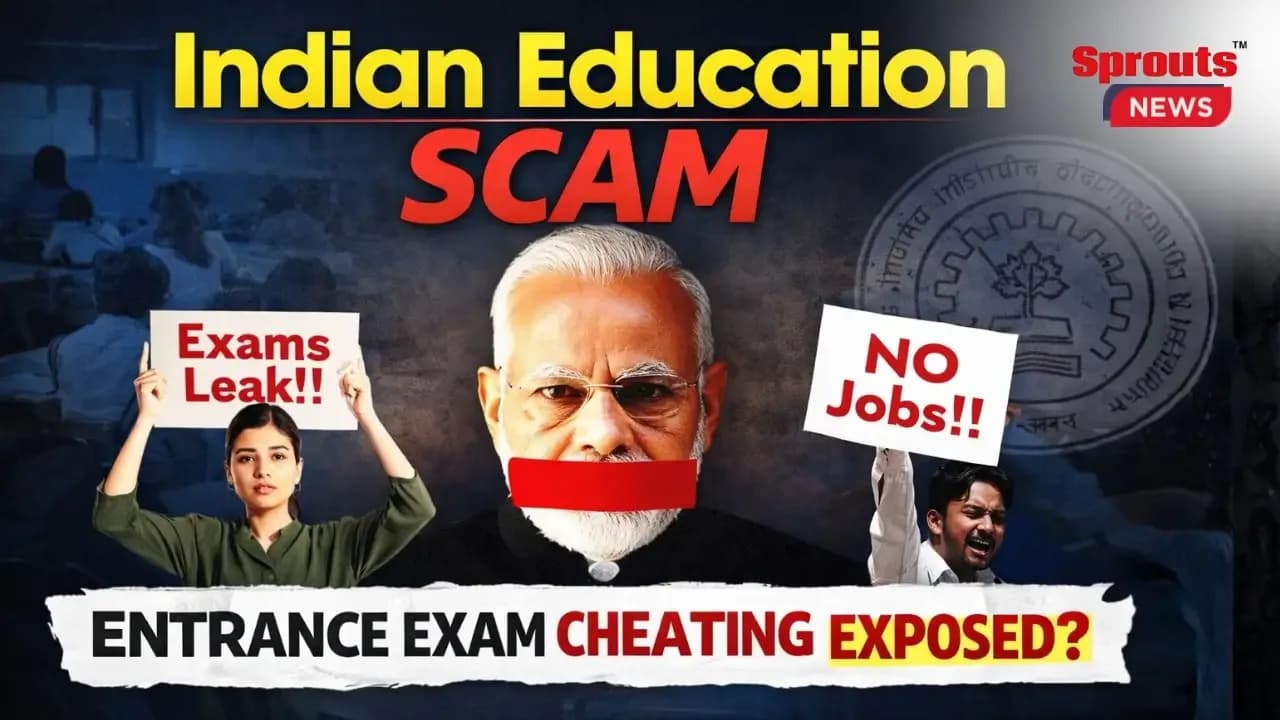
The India AI Impact Summit 2026 controversy began after a robotics claim made by Galgotias University was found to involve a commercially available product rather than an original innovation. The incident led to public backlash and raised wider concerns about research authenticity and oversight at national platforms. The episode has reopened debate around fake universities, inflated rankings and weak regulatory enforcement in India’s higher education system. Experts say the focus on metrics and branding may be overtaking genuine academic excellence, affecting India’s global credibility in research and innovation.
India AI Impact Summit 2026 Controversy: Galgotias University Claim Sparks National Education Integrity Debate
India AI Impact Summit 2026 controversy has ignited a wider debate on academic credibility after claims made by Galgotias University drew national scrutiny during a high profile artificial intelligence showcase.
At the summit, a faculty member from the university told Doordarshan that a robotic dog named Orion had been developed at its centre of excellence.
Subsequent verification revealed that the robot was a commercially available Chinese manufactured product, not an original research innovation developed within the institution.
The claim quickly triggered backlash across social media platforms, with experts, technologists and students questioning how such assertions passed institutional oversight at a national event.
Organisers reportedly asked the university to vacate its pavilion, an embarrassment that overshadowed India’s attempt to position itself as a credible global artificial intelligence hub.
This episode has moved beyond one institution. It has reopened fundamental questions about research authenticity, regulatory vigilance and incentive structures across India’s higher education ecosystem.
Fake Universities, Research Rankings and Regulatory Gaps in Indian Higher Education
The controversy coincides with mounting concerns about academic integrity in India. Recently, the University Grants Commission identified 32 fake universities operating across 12 states.
The number has increased from 20 to 32 within two years, raising concerns about regulatory enforcement and student protection in metropolitan as well as semi urban regions.
Instead of aggressive prosecution, authorities issued advisories urging parents and students to remain cautious while verifying institutional credentials before seeking admission.
Education analysts argue that the root problem lies in ranking driven incentives. Institutional autonomy, expansion approvals and online programme permissions are often linked to performance metrics.
According to data highlighted by Maheshwer Peri, several private universities claim research and patent outputs exceeding those of all Indian Institutes of Technology combined.
Five private institutions reportedly show research scores above 90, while the prestigious Indian Institute of Science records 51.9 in comparable metrics.
Such disparities have prompted calls for independent audits of patent filings, peer reviewed publications and data submitted for national rankings.
Reports in global science publications have also pointed to rising research retractions and peer review manipulation, signalling that the problem is neither isolated nor trivial.
Peri further alleged that even premier institutes may under report sanctioned admissions to inflate placement percentages and faculty student ratios.
If these patterns are accurate, they reflect systemic distortions rather than isolated lapses. The pursuit of metrics may be overtaking the pursuit of genuine academic excellence.
Internship Certificate Fraud, AICTE Regulations and Technical Education Pressures
At the technical education level, internship requirements have reportedly created a parallel market for fabricated experience certificates.
The All India Council for Technical Education mandates internships after alternate semesters but does not require institutions to arrange them directly.
With an estimated 15 to 20 lakh students entering technical programmes annually, demand for certificates often exceeds verified industry opportunities.
This imbalance has allegedly led to companies emerging solely to issue internship documents for a fee, undermining employability standards.
When credentials become transactional, employers struggle to differentiate between genuine industry exposure and paper based compliance.
Education governance experts argue that regulatory design must align incentives with quality assurance rather than checklist completion.
Also Read: Rooh Afza VAT Verdict by SC Brings 4 Percent Tax Relief.
Primary Education Crisis, Sarva Shiksha Abhiyan and Demographic Risk
Concerns are not limited to universities. Foundational schooling faces structural challenges affecting literacy and long term human capital formation.
Launched in 2000, Sarva Shiksha Abhiyan aimed to universalise elementary education and reduce literacy deficits nationwide.
Two decades later, parliamentary data cited by Peri indicates that approximately 93,000 government schools have closed over the past decade.
Overall enrolment has reportedly fallen by 2.41 crore students, even as India’s population has grown during the same period.
The Annual Survey of Education Report 2024 found that fewer than half of Class 5 students can read a Class 2 level text.
In Uttar Pradesh, police recently uncovered allegations that textbooks meant for free distribution were sold as scrap instead of reaching students.
Such incidents, coupled with scholarship irregularities in other states, raise questions about leakage in schemes designed for low income families.
If foundational literacy weakens while higher education chases rankings, India risks producing graduates with fragile academic foundations.
The Sprouts News Special Investigation Team observes that the Galgotias controversy symbolises a larger accountability challenge within the education sector.
India’s ambition to lead in artificial intelligence, biotechnology and advanced manufacturing depends not merely on infrastructure but on credible institutions.
When research claims, patents and enrolment figures become instruments for securing benefits rather than reflecting reality, competence erodes silently.
For policymakers, regulators and academic leaders, the message is clear. Integrity must precede innovation if India seeks sustainable progress towards Viksit Bharat.
Readers’ Appeal
If you have credible information, documents or first hand evidence related to academic fraud, fake universities, inflated rankings or education scams, we urge you to come forward.
Senior investigative journalist Unmesh Gujarathi is closely tracking these developments. You may confidentially share verified inputs on 9322755098. Your identity will be protected. Public accountability begins with informed citizens.