

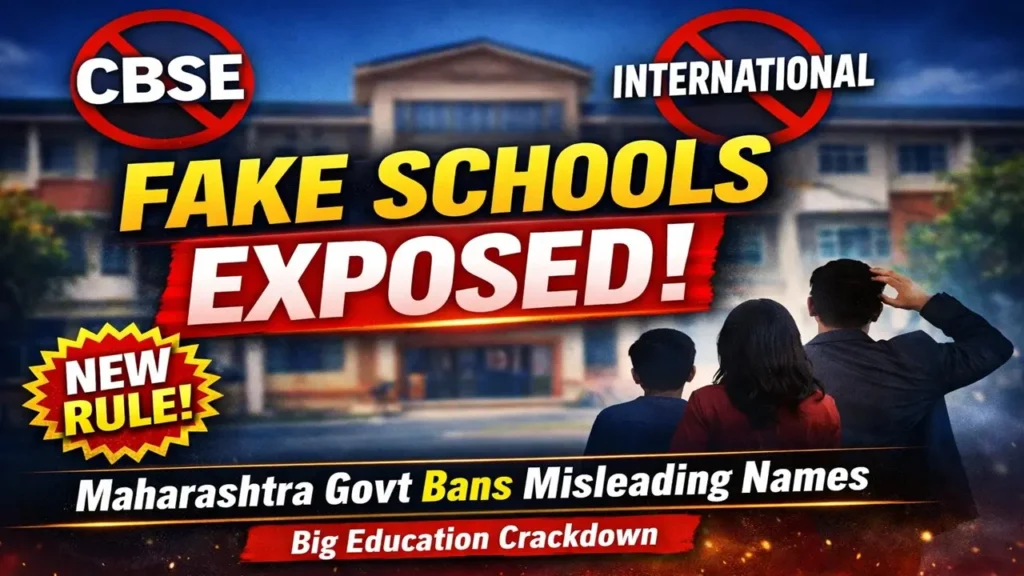
The Maharashtra government has introduced a school naming rule to prevent institutions from using terms like “CBSE”, “international”, or “English Medium” without official recognition. The directive applies to both new and existing schools and aims to reduce misleading branding practices that can confuse parents and students. Authorities will enforce compliance during approval and renewal processes, ensuring that school names accurately reflect affiliations and instructional standards. The move highlights the state’s focus on transparency, regulatory oversight, and protecting stakeholders from misinformation in the education sector.
- Maharashtra Schools are now not allowed to use ‘International’ and “CBSE” or ‘global’ in name unless they meet the eligibility criteria without official affiliation.
- Directive targets misleading school branding practices
- Maharashtra bans the school naming rule that applies to new and existing institutions
- Legal clarity and the role of education authorities
- Existing schools face compliance during the renewal process
- Broader implications for parents, students, and education transparency
- What happens next as enforcement begins
Maharashtra Schools are now not allowed to use ‘International’ and “CBSE” or ‘global’ in name unless they meet the eligibility criteria without official affiliation.
Maharashtra has barred schools from using terms like “international” and “CBSE” without official recognition, citing misleading practices. The directive applies to new and existing schools, with enforcement linked to approval renewals to ensure transparency and protect parents and students.
The Maharashtra education department has directed schools to drop misleading terms like “international” and “CBSE” from their names unless officially recognised, citing concerns over parent and student confusion.
Maharashtra school naming rule has come into focus after the state education department barred institutions from using terms like “international”, “global”, “CBSE”, or “English Medium” without formal recognition or affiliation.
The directive, issued by the Directorate of Education on December 15, highlights growing concerns that several schools across Maharashtra were using such terms despite lacking approval, potentially misleading parents and students.
Directive targets misleading school branding practices
According to the circular, multiple institutions were found branding themselves as “international” or “CBSE” schools without being affiliated to recognised boards such as the Central Board of Secondary Education (CBSE).
In some cases, even Marathi-medium schools were reportedly using “English Medium” in their names, raising questions about transparency and accuracy in representing the medium of instruction to prospective parents.
Shriram Panzade, Joint Director of Secondary and Higher Secondary Education, said such terminology creates a false impression of global presence or official board affiliation, which is legally incorrect.

Maharashtra bans the school naming rule that applies to new and existing institutions
The Maharashtra school naming rule is not limited to new proposals but also extends to existing institutions currently operating under potentially misleading names across different districts in the state.
Officials confirmed that in December alone, at least 11 school proposals were returned at the divisional level with instructions to revise names before approval could be granted.
Education officers have been directed to scrutinise applications carefully, including checking the school’s name, board affiliation, and medium of instruction to ensure compliance with the new directive.
Legal clarity and the role of education authorities
As per the directive, local education authorities must verify whether institutions have legitimate affiliations before allowing them to use specific terms associated with recognised educational boards or international standards.
Shriram Panzade emphasised that words like “CBSE” refer specifically to a central government-established board, and misuse of such terms could mislead stakeholders and violate regulatory norms.
If a school name is found to be misleading during the approval process, officials will require the institution to change it before granting permission to operate or expand.
Also Read: Maharashtra Wins 17 Medals at National Skill Competition.

Existing schools face compliance during the renewal process
While there is no direct legal provision to force immediate name changes, authorities have outlined a compliance mechanism linked to the periodic approval renewal process under the Right to Education Act.
An education officer noted that schools will be required to revise their names when applying for renewal, which is mandatory every three years, ensuring gradual enforcement of the rule.
This approach allows the department to regulate naming practices without disrupting ongoing academic operations while still addressing concerns about misleading institutional branding.
Broader implications for parents, students, and education transparency
The move is seen as an effort to improve transparency in the education sector, where branding often influences parental decisions regarding school admissions and perceived quality of education.
By restricting the use of terms like “international” and “CBSE”, the government aims to ensure that school names accurately reflect their affiliations and instructional standards, reducing misinformation.
Experts suggest that clearer naming conventions could also help parents make more informed decisions and prevent financial or educational risks associated with misleading institutional claims.
What happens next as enforcement begins
Authorities are expected to continue reviewing school proposals and monitoring compliance across Maharashtra, with education officers playing a key role in implementing the directive at the local level.

As reported by Sprouts News, the directive signals a broader push toward regulatory accountability in school education, particularly in areas where branding and affiliation claims intersect with public trust.
Going forward, schools seeking approval or renewal will need to align strictly with official guidelines, marking a significant shift in how educational institutions present themselves to the public.
Investigative journalist Unmesh Gujarathi has reported on alleged irregularities and fraud linked to the case. Individuals with relevant information or potential leads can also share details with the team at 9322755098.
Editorial Note:
This article is based on publicly available FIR records, court case references, and reports published by multiple media organisations. The information is presented in the context of ongoing investigations and public interest reporting. Sprouts News does not make any judicial determination regarding the individuals mentioned and does not intend to defame any person or organisation. Any individual seeking clarification or wishing to provide an official response may contact the editorial team with verifiable documentation. The information is presented for journalistic and informational purposes.