

Maharashtra Medical Procurement Scam Raises Questions Over Accountability and Governance
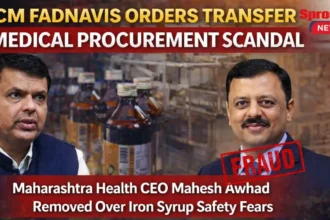
Allegations of a ₹700 crore medical procurement scam in Maharashtra have raised serious concerns about transparency and governance. Despite orders for an inquiry, delays continue while public hospitals face medicine shortages. Critics point to conflicts of interest, tender manipulation, and weak oversight within the health department. With the procurement authority functioning under the Chief Minister’s supervision, questions are growing over accountability and timely corrective action in the state’s public health system.
- Maharashtra Medical Procurement Scam Raises Questions Over Accountability and Governance
- Probe Delay Deepens Doubts Over Maharashtra Health Department Integrity
- Chief Minister’s Oversight Role Under Scrutiny in Procurement Controversy
- Medicine Shortages Hit Rural Hospitals Amid Tender Irregularities
- How Procurement Fixing Allegedly Enabled ₹105 Crore Windfall
- Revised Schedule M Condition Raises Competition Concerns
- Calls Grow for Independent Investigation and Immediate Action
- Whistleblower Brings Procurement Scam to Light
Maharashtra medical procurement scam allegations involving medicine purchases worth ₹700 crore have triggered serious concerns within administrative and political circles, raising questions about transparency, accountability, and governance failures at the highest levels.
Instead of swift corrective action, mounting evidence suggests delays, silence, and procedural manoeuvres aimed at suppressing scrutiny, even as public hospitals struggle with shortages of essential medicines across districts and rural regions.
Despite the gravity of the allegations, a month has passed without the submission of an official inquiry report, intensifying suspicion that institutional mechanisms are being deliberately stalled.
What has drawn sharper criticism is the perceived indifference of the Chief Minister’s Office, despite the Maharashtra Medical Goods Procurement Authority operating directly under its administrative oversight.
Probe Delay Deepens Doubts Over Maharashtra Health Department Integrity
On December 30, 2025, the Public Health Department formally ordered an internal inquiry, directing officials to submit an objective report within ten days, citing serious procurement irregularities.
These instructions were issued by Health Department Deputy Secretary Chandrakant Vibhute, yet the inquiry remains incomplete, violating timelines and fuelling allegations of deliberate delay.
Governance experts note that failure to meet mandated inquiry deadlines often indicates attempts to manage outcomes rather than establish accountability through transparent investigation.
The controversy deepens as officials facing corruption allegations were reportedly tasked with preparing or influencing the very inquiry meant to examine their conduct.

This arrangement has been widely criticised as a conflict of interest, undermining procedural fairness and weakening public trust in administrative oversight systems.
Also Read: Trump Epstein Files Spark Fresh Debate on Elite Power.
Chief Minister’s Oversight Role Under Scrutiny in Procurement Controversy
The Maharashtra Medical Goods Procurement Authority is chaired by Chief Minister Devendra Fadnavis, placing direct political responsibility on the state’s highest executive office.
Allegations suggest preferred contractors gained undue financial advantages amounting to nearly ₹105 crore through manipulated procurement decisions under this authority’s supervision.
More concerning is that the Chief Executive Officer accused of altering GST calculations and waiving administrative charges was reportedly granted inquiry authority.
Such decisions have prompted questions over whether senior-level protection is insulating key officials from accountability, thereby weakening institutional checks and balances.
Observers warn that unchecked procurement irregularities risk eroding governance credibility, particularly when public health budgets are involved.
Medicine Shortages Hit Rural Hospitals Amid Tender Irregularities
Tender number E-215 has remained stalled for over five months, disrupting supply chains and causing acute shortages of essential medicines across district and rural hospitals.

Healthcare workers report patients are forced to purchase medicines privately or go untreated, directly impacting economically vulnerable populations dependent on public healthcare systems.
Experts highlight that procurement delays of this scale indicate deeper structural manipulation rather than routine administrative inefficiency.
The prolonged tender process has raised alarms about whether procurement policy is being subordinated to contractor interests rather than public health needs.
How Procurement Fixing Allegedly Enabled ₹105 Crore Windfall
Investigators point to two key mechanisms allegedly used to inflate contractor profits during the tender process, resulting in substantial losses to the public exchequer.
First, medicines initially tendered under an 18 percent GST regime were later taxed at five percent, yet procurement prices were not correspondingly reduced.
Regulatory norms required prices to fall by 13 percent, but procurement continued at inflated rates, generating excess margins for selected suppliers.
Second, a mandatory two percent administrative fee previously charged to suppliers was entirely waived, further increasing contractor profitability.
Together, these decisions allegedly resulted in a 15 percent direct financial benefit, translating to approximately ₹105 crore in undue gains.

Revised Schedule M Condition Raises Competition Concerns
Procurement procedures were further narrowed through the sudden enforcement of Revised Schedule M certification requirements during the tender process.
Following a pre tender meeting, suppliers were asked on October 6, 2025, to disclose certification status, enabling authorities to identify non compliant bidders.
Within ten days, the certification was made mandatory, effectively excluding the majority of bidders and leaving only 15 to 20 favoured suppliers eligible.
Policy analysts argue this move severely restricted competition and may constitute criminal manipulation of procurement rules.
Calls Grow for Independent Investigation and Immediate Action
There is rising demand for an independent probe by the Industries, Energy and Finance Department or direct intervention by the Anti Corruption Bureau.
Experts insist the CEO must be immediately removed pending investigation to prevent evidence tampering and protect the integrity of any future inquiry.
As pressure mounts, the episode has become a critical test of political accountability, public health governance, and institutional credibility in Maharashtra.
The coming weeks will determine whether corrective action restores public confidence or reinforces fears of systemic impunity within state administration.
Whistleblower Brings Procurement Scam to Light
Unmesh Gujarathi, an Indian investigative journalist, has played a key role in exposing the alleged procurement scam. Readers with information related to the case may contact AAP via WhatsApp at 9322755098.