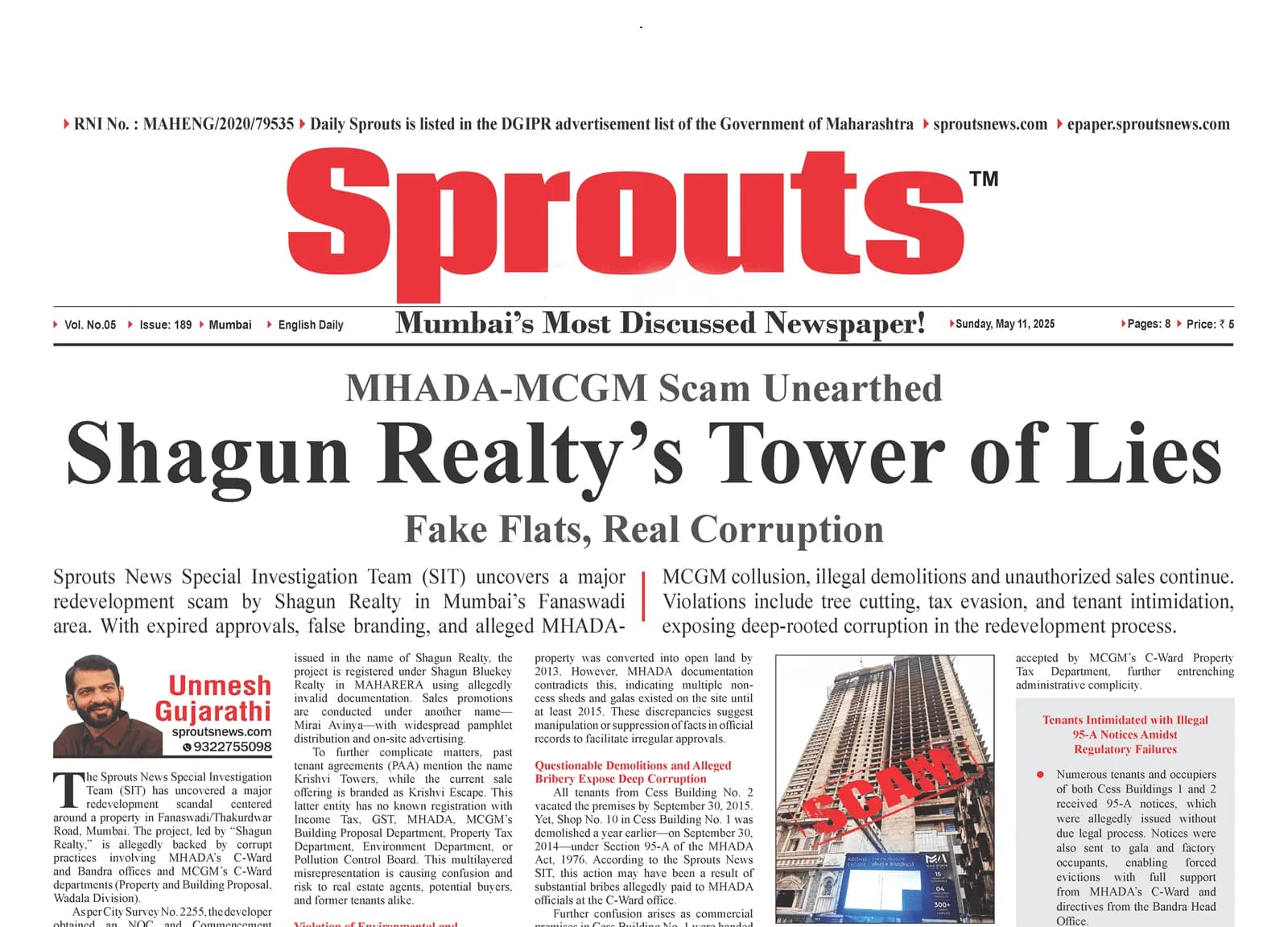
Malshej Ghat Turns Hazardous Again
• Malshej Ghat: Millions Spent, Safety Ignored
• Where Are the Crash Barriers? PWD Under Fire
• No Drainage, No Wall, No Safety—Just Promises
Gopal Pawar
Sprouts News Exclusive
Malshej Ghat, a popular monsoon destination in Maharashtra, is once again turning hazardous due to landslides, poor maintenance, and government inaction. Despite crores spent on development, safety measures remain inadequate. A floating glass bridge project remains stalled, while debris and crumbling roads put thousands of travelers at constant risk.
Despite repeated warnings and a tragic history, Maharashtra’s scenic Malshej Ghat continues to be a death trap during monsoons. A fresh debris fall near the MTDC premises on July 15, 2025, has triggered alarms once again. The 12–14 km stretch between Savarne and Junnar along NH-61 is becoming increasingly dangerous due to poor maintenance, crumbling protective barriers, and the absence of proper signage.
Drivers face severe challenges navigating pothole-ridden roads during rains. The lack of reflective road markings makes night travel extremely risky, while overgrown vegetation and missing directional signs turn navigation into a nightmare. Adding to the danger, wire meshes have been installed at inappropriate locations, causing loose rocks and mud to accumulate on the road—leading to frequent traffic blocks.
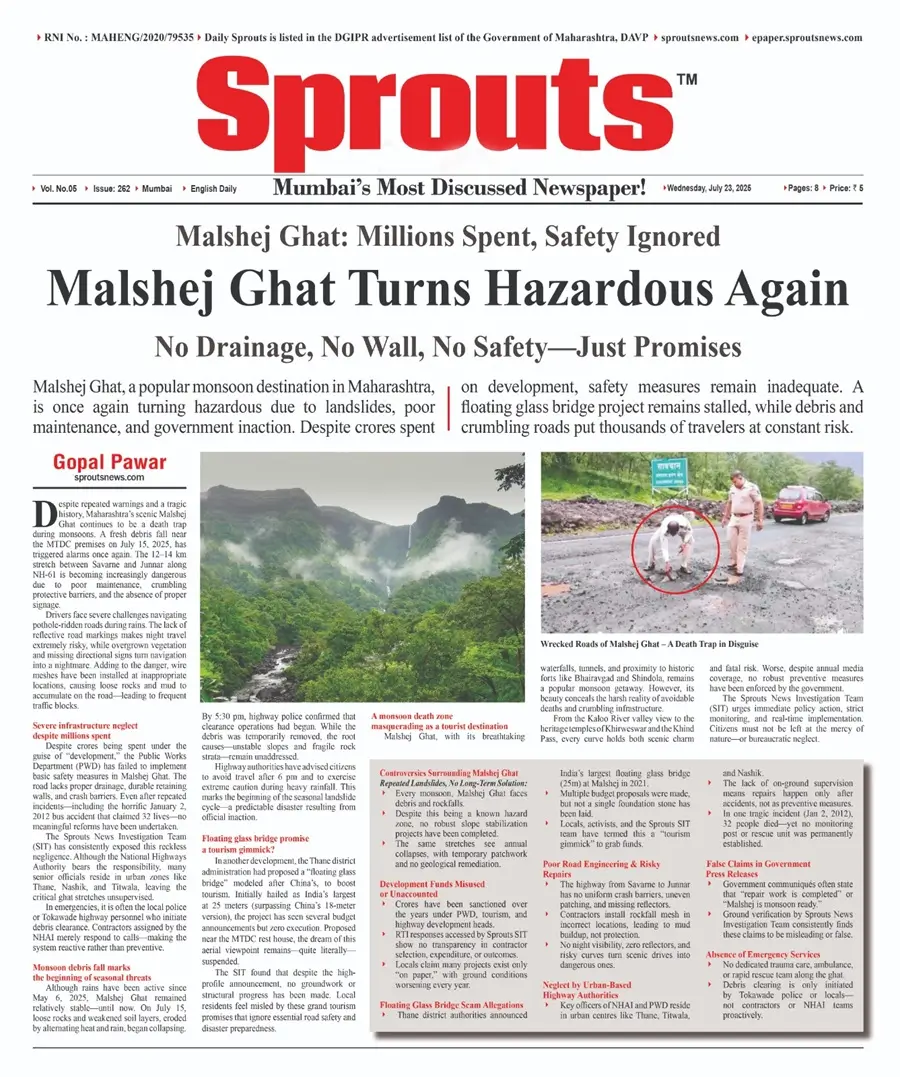
Click Here To Download the News Attachment
[audio mp3="https://sproutsnews.com/wp-content/uploads/2025/07/Malshej-Ghat-Turns-Hazardous-Again.mp3"][/audio]
Malshej Ghat: Severe infrastructure neglect despite millions spent
Despite crores being spent under the guise of “development,” the Public Works Department (PWD) has failed to implement basic safety measures in Malshej Ghat. The road lacks proper drainage, durable retaining walls, and crash barriers. Even after repeated incidents—including the horrific January 2, 2012 bus accident that claimed 32 lives—no meaningful reforms have been undertaken.
The Sprouts News Investigation Team (SIT) has consistently exposed this reckless negligence. Although the National Highways Authority bears the responsibility, many senior officials reside in urban zones like Thane, Nashik, and Titwala, leaving the critical ghat stretches unsupervised.
In emergencies, it is often the local police or Tokawade highway personnel who initiate debris clearance. Contractors assigned by the NHAI merely respond to calls—making the system reactive rather than preventive.
Monsoon debris fall marks the beginning of seasonal threats
Although rains have been active since May 6, 2025, Malshej Ghat remained relatively stable—until now. On July 15, loose rocks and weakened soil layers, eroded by alternating heat and rain, began collapsing. By 5:30 pm, highway police confirmed that clearance operations had begun. While the debris was temporarily removed, the root causes—unstable slopes and fragile rock strata—remain unaddressed.
Highway authorities have advised citizens to avoid travel after 6 pm and to exercise extreme caution during heavy rainfall. This marks the beginning of the seasonal landslide cycle—a predictable disaster resulting from official inaction.
Floating glass bridge promise a tourism gimmick?
In another development, the Thane district administration had proposed a “floating glass bridge” modeled after China’s, to boost tourism. Initially hailed as India’s largest at 25 meters (surpassing China’s 18-meter version), the project has seen several budget announcements but zero execution. Proposed near the MTDC rest house, the dream of this aerial viewpoint remains—quite literally—suspended.
The SIT found that despite the high-profile announcement, no groundwork or structural progress has been made. Local residents feel misled by these grand tourism promises that ignore essential road safety and disaster preparedness.
A monsoon death zone masquerading as a tourist destination
Malshej Ghat, with its breathtaking waterfalls, tunnels, and proximity to historic forts like Bhairavgad and Shindola, remains a popular monsoon getaway. However, its beauty conceals the harsh reality of avoidable deaths and crumbling infrastructure.
From the Kaloo River valley view to the heritage temples of Khirweswar and the Khind Pass, every curve holds both scenic charm and fatal risk. Worse, despite annual media coverage, no robust preventive measures have been enforced by the government.
The Sprouts News Investigation Team (SIT) urges immediate policy action, strict monitoring, and real-time implementation. Citizens must not be left at the mercy of nature—or bureaucratic neglect.
Controversies Surrounding Malshej Ghat
Repeated Landslides, No Long-Term Solution
•Every monsoon, Malshej Ghat faces debris and rockfalls.
•Despite this being a known hazard zone, no robust slope stabilization projects have been completed.
•The same stretches see annual collapses, with temporary patchwork and no geological remediation.
Development Funds Misused or Unaccounted
•Crores have been sanctioned over the years under PWD, tourism, and highway development heads.
•RTI responses accessed by Sprouts SIT show no transparency in contractor selection, expenditure, or outcomes.
•Locals claim many projects exist only “on paper,” with ground conditions worsening every year.
Floating Glass Bridge Scam Allegations
•Thane district authorities announced India’s largest floating glass bridge (25m) at Malshej in 2021.
•Multiple budget proposals were made, but not a single foundation stone has been laid.
•Locals, activists, and the Sprouts SIT team have termed this a “tourism gimmick” to grab funds.
Also Read: Godrej Air Buyers Fume as Delays Persist in Gurugram Project.
Poor Road Engineering & Risky Repairs
•The highway from Savarne to Junnar has no uniform crash barriers, uneven patching, and missing reflectors.
•Contractors install rockfall mesh in incorrect locations, leading to mud buildup, not protection.
•No night visibility, zero reflectors, and risky curves turn scenic drives into dangerous ones.
Neglect by Urban-Based Highway Authorities
•Key officers of NHAI and PWD reside in urban centres like Thane, Titwala, and Nashik.
•The lack of on-ground supervision means repairs happen only after accidents, not as preventive measures.
•In one tragic incident (Jan 2, 2012), 32 people died—yet no monitoring post or rescue unit was permanently established.
False Claims in Government Press Releases
•Government communiqués often state that “repair work is completed” or “Malshej is monsoon ready.”
•Ground verification by Sprouts News Investigation Team consistently finds these claims to be misleading or false.
Absence of Emergency Services
•No dedicated trauma care, ambulance, or rapid rescue team along the ghat.
•Debris clearing is only initiated by Tokawade police or locals—not contractors or NHAI teams proactively.