

Mira Bhayandar ₹800 Crore Waste Scandal: Probe Reveals Double Rates in Contract
• Unmesh Gujarathi Exposes ₹800 Crore MBMC Waste Management Scam
• Mapping the Daily 500-Tonne Waste Challenge
• The Smoking Gun: Inflated Per-Tonne Rates Exposed
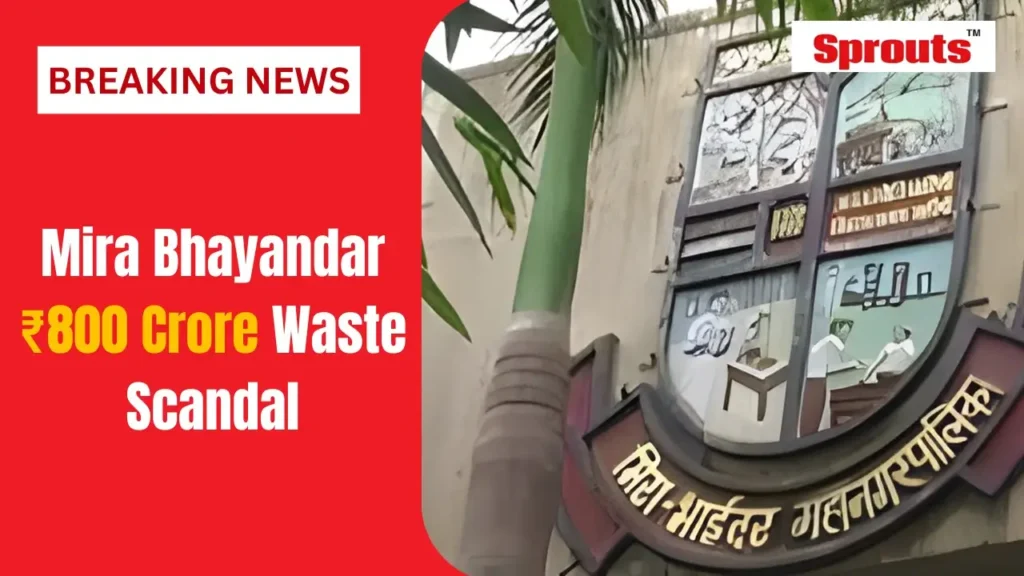
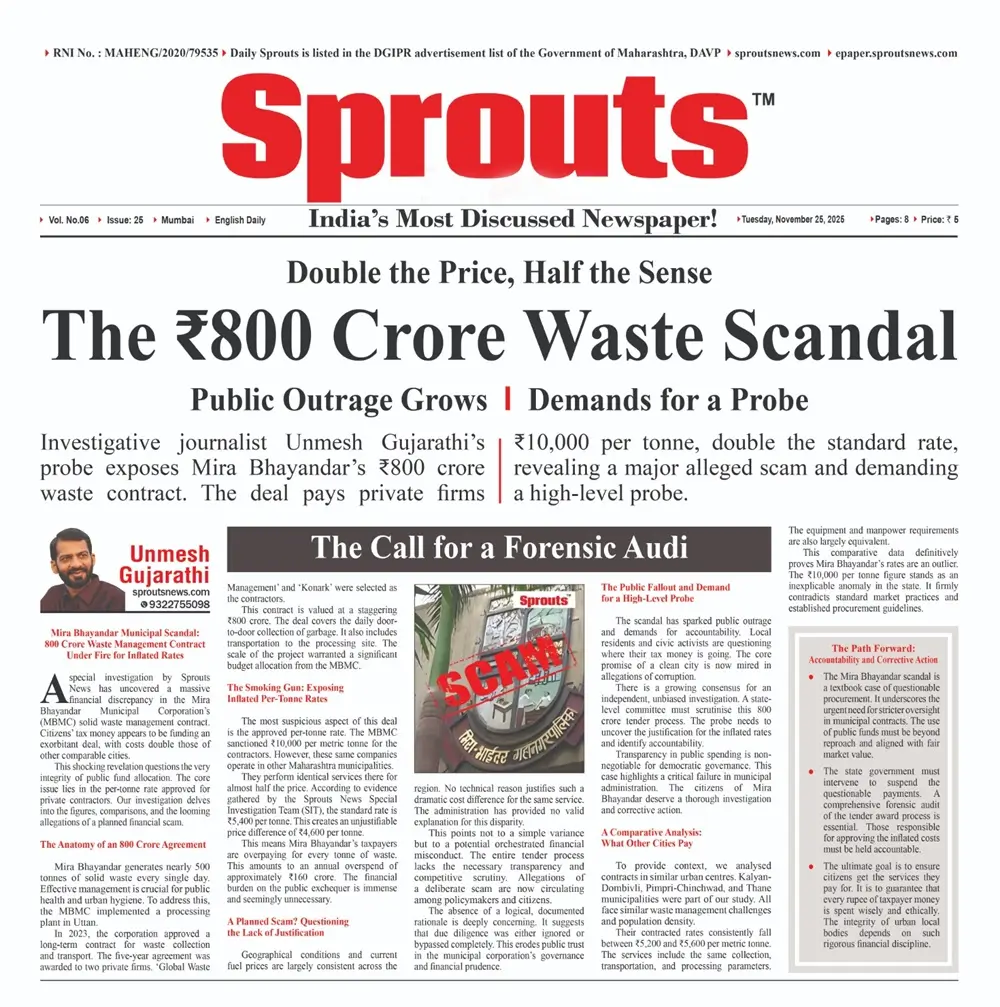
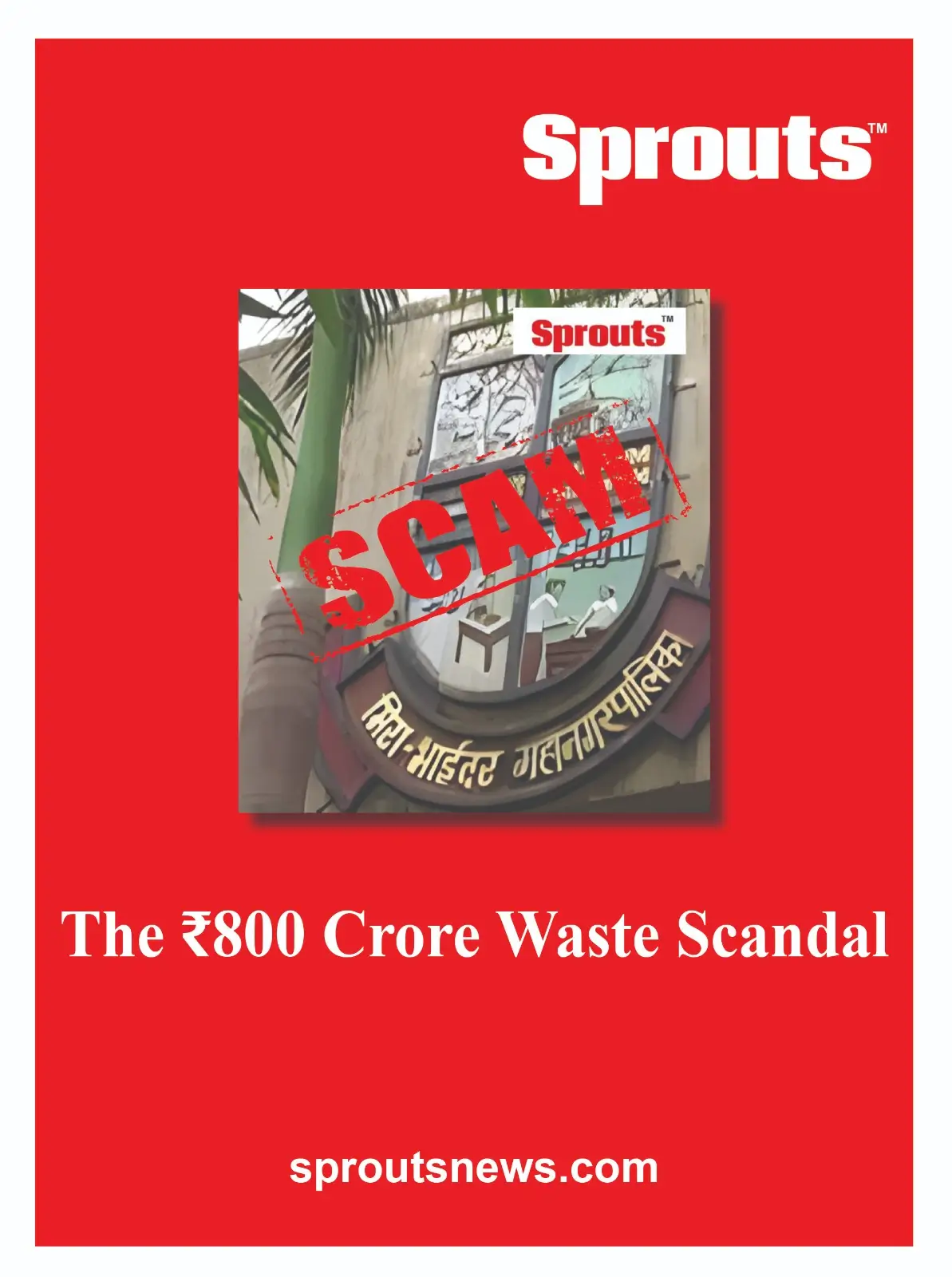
A major financial scandal has emerged in the Mira Bhayandar Municipal Corporation, where a Sprouts News journalist Unmesh Gujarathi’s probe exposes reveals that the ₹800 crore waste management contract pays private firms an inflated ₹10,000 per tonne—nearly double the rates in similar municipal bodies. With Mira Bhayandar generating 500 tonnes of waste daily, the inflated contract raises serious concerns of systemic corruption, political collusion, and misuse of public funds. The revelations have triggered widespread calls for an independent, high-level inquiry.
- Mira Bhayandar ₹800 Crore Waste Scandal: Probe Reveals Double Rates in Contract
- • Unmesh Gujarathi Exposes ₹800 Crore MBMC Waste Management Scam
- • Mapping the Daily 500-Tonne Waste Challenge
- • The Smoking Gun: Inflated Per-Tonne Rates Exposed
- Mira Bhayandar Municipal Scandal: 800 Crore Waste Management Contract Under Fire for Inflated Rates
- The Anatomy of an 800 Crore Agreement
- The Smoking Gun: Exposing Inflated Per-Tonne Rates
- A Planned Scam? Questioning the Lack of Justification
- The Public Fallout and Demand for a High-Level Probe
- A Comparative Analysis: What Other Cities Pay
- The Path Forward: Accountability and Corrective Action
Click Here To Download the News Attachment
Mira Bhayandar Municipal Scandal: 800 Crore Waste Management Contract Under Fire for Inflated Rates
A special investigation by Sprouts News has uncovered a massive financial discrepancy in the Mira Bhayandar Municipal Corporation’s (MBMC) solid waste management contract. Citizens’ tax money appears to be funding an exorbitant deal, with costs double those of other comparable cities.
This shocking revelation questions the very integrity of public fund allocation. The core issue lies in the per-tonne rate approved for private contractors. Our investigation delves into the figures, comparisons, and the looming allegations of a planned financial scam.
The Anatomy of an 800 Crore Agreement
Mira Bhayandar generates nearly 500 tonnes of solid waste every single day. Effective management is crucial for public health and urban hygiene. To address this, the MBMC implemented a processing plant in Uttan.
In 2023, the corporation approved a long-term contract for waste collection and transport. The five-year agreement was awarded to two private firms. ‘Global Waste Management’ and ‘Konark’ were selected as the contractors.

This contract is valued at a staggering ₹800 crore. The deal covers the daily door-to-door collection of garbage. It also includes transportation to the processing site. The scale of the project warranted a significant budget allocation from the MBMC.
The Smoking Gun: Exposing Inflated Per-Tonne Rates
The most suspicious aspect of this deal is the approved per-tonne rate. The MBMC sanctioned ₹10,000 per metric tonne for the contractors. However, these same companies operate in other Maharashtra municipalities.
They perform identical services there for almost half the price. According to evidence gathered by the Sprouts News Special Investigation Team (SIT), the standard rate is ₹5,400 per tonne. This creates an unjustifiable price difference of ₹4,600 per tonne.
This means Mira Bhayandar’s taxpayers are overpaying for every tonne of waste. This amounts to an annual overspend of approximately ₹160 crore. The financial burden on the public exchequer is immense and seemingly unnecessary.
Also Read: ₹100Crore Mumbai Church Land Deal Sparks Transparency Demand.
A Planned Scam? Questioning the Lack of Justification
Geographical conditions and current fuel prices are largely consistent across the region. No technical reason justifies such a dramatic cost difference for the same service. The administration has provided no valid explanation for this disparity.

This points not to a simple variance but to a potential orchestrated financial misconduct. The entire tender process lacks the necessary transparency and competitive scrutiny. Allegations of a deliberate scam are now circulating among policymakers and citizens.
The absence of a logical, documented rationale is deeply concerning. It suggests that due diligence was either ignored or bypassed completely. This erodes public trust in the municipal corporation’s governance and financial prudence.
The Public Fallout and Demand for a High-Level Probe
The scandal has sparked public outrage and demands for accountability. Local residents and civic activists are questioning where their tax money is going. The core promise of a clean city is now mired in allegations of corruption.
There is a growing consensus for an independent, unbiased investigation. A state-level committee must scrutinise this 800 crore tender process. The probe needs to uncover the justification for the inflated rates and identify accountability.
Transparency in public spending is non-negotiable for democratic governance. This case highlights a critical failure in municipal administration. The citizens of Mira Bhayandar deserve a thorough investigation and corrective action.

A Comparative Analysis: What Other Cities Pay
To provide context, we analysed contracts in similar urban centres. Kalyan-Dombivli, Pimpri-Chinchwad, and Thane municipalities were part of our study. All face similar waste management challenges and population density.
Their contracted rates consistently fall between ₹5,200 and ₹5,600 per metric tonne. The services include the same collection, transportation, and processing parameters. The equipment and manpower requirements are also largely equivalent.
This comparative data definitively proves Mira Bhayandar’s rates are an outlier. The ₹10,000 per tonne figure stands as an inexplicable anomaly in the state. It firmly contradicts standard market practices and established procurement guidelines.
The Path Forward: Accountability and Corrective Action
The Mira Bhayandar scandal is a textbook case of questionable procurement. It underscores the urgent need for stricter oversight in municipal contracts. The use of public funds must be beyond reproach and aligned with fair market value.
The state government must intervene to suspend the questionable payments. A comprehensive forensic audit of the tender award process is essential. Those responsible for approving the inflated costs must be held accountable.
The ultimate goal is to ensure citizens get the services they pay for. It is to guarantee that every rupee of taxpayer money is spent wisely and ethically. The integrity of urban local bodies depends on such rigorous financial discipline.