

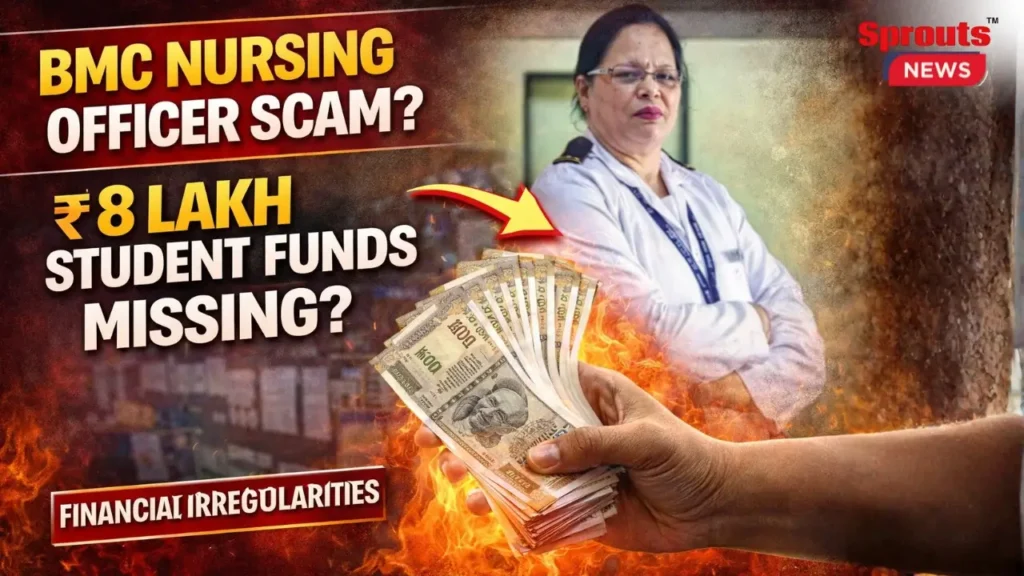
The BMC nursing superintendent’s financial irregularities case has come under scrutiny after allegations of over ₹8 lakh mismanagement linked to student funds collected between 2013 and 2017. Complaints and inquiry inputs suggest delays in deposits, incomplete records, and weak financial controls under the tenure of Chhaya Satamkar. The issue has raised broader concerns about transparency, accountability, and audit mechanisms within Mumbai’s public health education system. Authorities and stakeholders are examining whether institutional safeguards were adequate to protect student funds and ensure compliance with established financial procedures.
- BMC Nursing Superintendent ₹8 Lakh Financial Irregularities Case: Allegations Against Chhaya Satamkar Raise Questions on Student Funds and Governance
- Student Fee Collections, Missing Funds, and Chhaya Satamkar’s Role Under Scanner
- Inquiry, TNAI Role, and Findings Highlight Administrative Gaps
- Impact on Students and Ethical Concerns in Nursing Education
- Administrative Silence, Accountability Questions, and Governance Concerns
- Why This Case Matters for Public Trust and Institutional Reform
BMC Nursing Superintendent ₹8 Lakh Financial Irregularities Case: Allegations Against Chhaya Satamkar Raise Questions on Student Funds and Governance
The BMC nursing superintendent’s financial irregularities case involving Chhaya Satamkar highlights alleged mismanagement of ₹8 lakh student funds, exposing administrative lapses, weak oversight, and raising serious concerns over transparency, accountability, and the future of nursing students in Mumbai.
BMC nursing financial irregularities case has surfaced as a serious governance concern in Mumbai, with allegations of over ₹8 lakh fund mismanagement involving Chhaya Satamkar, impacting nursing students and institutional accountability.
The controversy is linked to the Brihanmumbai Municipal Corporation (BMC) Health Department, where financial collections from students between 2013 and 2017 are under scrutiny for alleged irregular handling and delayed deposits.
According to complaints and internal references, the issue highlights not just financial discrepancies but deeper systemic lapses affecting transparency, student welfare, and regulatory oversight in public health education institutions.
Student Fee Collections, Missing Funds, and Chhaya Satamkar’s Role Under Scanner
Records indicate that during 2013 to 2017, nursing students deposited fees under multiple categories, including training, academic requirements, and institutional charges collected by administrative authorities.
Financial data suggests that total collections during this period amounted to approximately ₹8,08,400, raising serious concerns about how these funds were managed and whether official accounting norms were followed.
Allegations suggest that under the tenure of Chhaya Satamkar, then nursing superintendent, funds were not deposited within stipulated timelines, leading to suspicion of financial irregularities and administrative negligence.
Experts highlight that such lapses in publicly funded institutions reflect weak internal controls, especially when funds collected from economically vulnerable students are involved in essential education and certification processes.
The issue gains further importance as nursing education is directly linked to public healthcare delivery, making financial integrity within such institutions critical for maintaining trust and professional standards.

Inquiry, TNAI Role, and Findings Highlight Administrative Gaps
An inquiry reportedly conducted through the Trained Nurses Association of India (TNAI) examined the financial practices and procedural compliance during the relevant period, bringing several discrepancies into focus.
Sources indicate that the inquiry committee included key office bearers such as Anita Deykar and Vandana Nirgude, along with other senior representatives associated with the Maharashtra branch oversight.
Preliminary findings reportedly pointed towards delayed fund deposits, incomplete records, and a lack of timely reconciliation of student payments, indicating lapses in monitoring and compliance enforcement mechanisms.
Observers note that when multiple administrative levels are involved, accountability often becomes diluted, leading to situations where financial discrepancies remain unaddressed for extended periods.
The case raises broader concerns about how institutional audits are conducted and whether periodic financial verification systems are robust enough to detect such irregularities at an early stage.
Impact on Students and Ethical Concerns in Nursing Education
The alleged irregularities have directly affected nursing students, many of whom depend on timely financial processing for certification, training continuity, and eligibility for employment opportunities.
Any delay or mismanagement in student funds can disrupt academic progression, particularly in professional courses where regulatory compliance and documentation are essential for career advancement.
Students have reportedly raised concerns about transparency, claiming that the lack of clarity regarding fund utilisation has created uncertainty about their academic and financial security.
Experts emphasise that institutions handling healthcare education must adhere to higher ethical standards, as lapses not only impact students but also indirectly affect the quality of future healthcare professionals.

Also Read: Nashik Astrologer Rape Case: 58 Videos, Probe Widens.
Administrative Silence, Accountability Questions, and Governance Concerns
Despite the seriousness of the allegations, there appears to be limited public communication from authorities, raising concerns about transparency and responsiveness within the Brihanmumbai Municipal Corporation (BMC) framework.
Stakeholders are demanding a detailed financial audit and administrative inquiry to determine accountability and ensure recovery of any misused funds if allegations are substantiated.
The role of supervisory authorities is also under question, as such irregularities typically require oversight at multiple administrative levels, including verification, approval, and audit processes.
Policy experts argue that without timely intervention, such cases risk becoming systemic issues, weakening public confidence in government-run education and healthcare institutions.
Why This Case Matters for Public Trust and Institutional Reform
This case highlights critical governance challenges within public institutions, particularly where financial management, student welfare, and administrative accountability intersect in sensitive sectors like healthcare education.
Experts suggest that digitisation of financial systems, real-time audits, and stricter compliance frameworks are essential to prevent recurrence of similar cases across Maharashtra.
If proven, the allegations could set a precedent for stricter disciplinary action against financial misconduct and trigger policy reforms in educational governance structures.
The case also underlines the importance of transparency and proactive communication in maintaining trust among students, parents, and the broader public.

Investigation Status and Next Steps
At present, the matter remains under review by relevant authorities, and findings are subject to verification through formal inquiry processes and supporting documentation.
No final conclusions have been reached, and responsibility will be determined based on evidence, institutional records, and legal scrutiny.
As the investigation progresses, the outcome is expected to influence future policy decisions regarding financial accountability and governance reforms in Maharashtra’s public education system.
Readers’ Appeal:
Senior investigative journalist Unmesh Gujarathi continues to expose issues related to corruption, governance failures, and public interest concerns.
If you have any documents, evidence, or information related to such matters, you are encouraged to share them confidentially on 9322755098.
Editorial Note:
This article is based on publicly available FIR records, court case references, and reports published by multiple media organisations. The information is presented in the context of ongoing investigations and public interest reporting. Sprouts News does not make any judicial determination regarding the individuals mentioned and does not intend to defame any person or organisation. Any individual seeking clarification or wishing to provide an official response may contact the editorial team with verifiable documentation. The information is presented for journalistic and informational purposes.