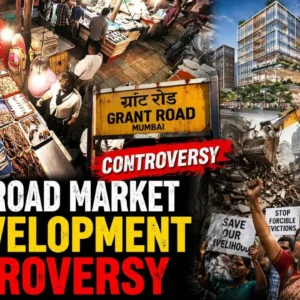



NCLT insolvency proceedings are increasingly being used by large real estate companies to acquire stalled projects and prime land in Mumbai. With many real estate firms under insolvency, big developers now see this legal route as a way to secure valuable land at lower costs. This trend is reshaping redevelopment, affecting homebuyers, lenders, and the future balance of power in Mumbai’s property market.
- Big Corporates Gain Prime Land Through NCLT Insolvency Route in Mumbai
- Insolvency Proceedings Reshape Mumbai Real Estate Market
- Oberoi Realty, Naman Developers, Lodha Group Enter NCLT Arena
- Homebuyers, Banks Push for Faster Resolution
- JP Infratech and Neptune Developers Cases Set Precedents
- Why This Matters for Mumbai and India?
- Unmesh Gujarathi Investigates the Insolvency Land Acquisition Scam
Big Corporates Gain Prime Land Through NCLT Insolvency Route in Mumbai
Major Mumbai real estate firms Oberoi Realty, Naman Developers, Lodha Group, JP Infratech and Neptune Developers are using National Company Law Tribunal insolvency processes to acquire stalled projects and prime land, reshaping redevelopment, homebuyer recovery, and dominance in property markets.
Big corporate real estate developers are acquiring prime land parcels in Mumbai through insolvency proceedings under the National Company Law Tribunal, reshaping the city’s redevelopment and distressed asset landscape.
The National Company Law Tribunal process, commonly known as NCLT insolvency resolution, is increasingly becoming a strategic acquisition route for large developers targeting stalled or bankrupt real estate projects.
According to data available on the NCLT portal, a significant share of insolvency cases involves real estate firms, many of which hold land in premium Mumbai locations once considered commercially inaccessible.
Mumbai’s land scarcity has forced major developers to explore alternative acquisition mechanisms, and insolvency proceedings now offer a legally sanctioned pathway to secure strategically located properties at competitive valuations.
This shift has major implications for homebuyers, lenders, and policymakers, as insolvency outcomes determine ownership, project revival, and financial recovery across India’s urban real estate sector.
Insolvency Proceedings Reshape Mumbai Real Estate Market
Data from the National Company Law Tribunal shows that as of December 2023, nearly 9,707 companies undergoing insolvency proceedings were linked directly to the construction and real estate sector.
Out of these, proposals were submitted for acquiring assets of approximately 1,756 distressed companies, reflecting the scale of investor interest in insolvent real estate entities nationwide.

Notably, 376 resolution proposals have already received approval, while several others remain under judicial scrutiny, according to disclosures on the NCLT website.
In Mumbai, stalled housing projects located in prime zones have drawn attention from large real estate groups seeking long term land banks through insolvency resolutions.
Developers view these assets as undervalued opportunities, particularly when redevelopment potential outweighs legacy liabilities inherited during insolvency takeovers.
Oberoi Realty, Naman Developers, Lodha Group Enter NCLT Arena
Prominent developers including Oberoi Realty, Naman Developers, and Lodha Group have actively participated in insolvency resolution processes involving Mumbai based projects.
These companies have submitted bids or appeared before the tribunal to acquire land parcels attached to distressed or non performing real estate ventures.
Industry insiders confirm that Mumbai’s premium localities such as Juhu, Santacruz, Chembur, and central suburbs have seen heightened insolvency driven acquisition activity.
Several proposals involve redevelopment of stalled residential towers, mixed use projects, or commercial assets once locked due to financial mismanagement or funding collapse.
Also Read: Fake Disability Certificate Allegations at MUHS.

Homebuyers, Banks Push for Faster Resolution
Financial institutions and homebuyers have increasingly approached the National Company Law Tribunal seeking recovery or project completion through structured insolvency frameworks.
Under the Insolvency and Bankruptcy Code, homebuyers are recognised as financial creditors, enabling them to participate in resolution decisions affecting stalled housing projects.
Sprouts News Legal experts note that buyers often accept partial recovery, sometimes between 60 and 80 percent, to ensure project revival rather than prolonged litigation.
According to Dilip Inkar, senior insolvency lawyer and former NCLT counsel, resolution approval depends on feasibility, creditor consensus, and long term project viability.
JP Infratech and Neptune Developers Cases Set Precedents
High profile insolvency cases such as JP Infratech and Neptune Developers have set precedents for how stalled mega housing projects can be resolved through structured tribunal intervention.
In Mumbai, Neptune Developers projects in Kalyan and Navi Mumbai were resolved through approved plans involving asset transfers worth approximately ₹321 crore.
Similarly, JP Infratech’s long pending insolvency significantly influenced judicial interpretation of homebuyer rights within the Insolvency and Bankruptcy Code framework.
These cases demonstrate how insolvency proceedings can realign ownership, unlock stuck land assets, and restore market confidence under regulatory supervision.

Why This Matters for Mumbai and India?
The growing reliance on insolvency mechanisms for land acquisition reflects deeper structural issues within India’s real estate financing ecosystem.
For Mumbai, this trend could redefine redevelopment patterns, concentration of land ownership, and market dominance of large real estate conglomerates.
Policymakers may face pressure to reassess safeguards for homebuyers, smaller developers, and cooperative housing societies impacted by insolvency led consolidation.
According to the Sprouts News Special Investigation Team, transparency in insolvency bidding and post acquisition compliance will be critical to prevent speculative land hoarding.
As India’s urban land becomes scarcer, the National Company Law Tribunal will continue shaping the future of real estate ownership, accountability, and redevelopment strategy.
Unmesh Gujarathi Investigates the Insolvency Land Acquisition Scam
Investigative journalist Unmesh Gujarathi has closely examined the misuse of insolvency mechanisms to corner prime urban land, exposing patterns of regulatory loopholes, financial manipulation, and systemic abuse. If you are aware of similar scams or frauds, feel free to call us on 9322755097.