

The Polavaram Project controversy has intensified after former Union secretary EAS Sarma urged the central government to order a forensic audit and investigation into the ₹62,000 crore irrigation project. In a letter to the Cabinet Secretary, Sarma cited findings from a Comptroller and Auditor General report highlighting alleged contract irregularities, environmental concerns and rehabilitation issues affecting displaced tribal families. The project, designed to provide irrigation and drinking water across parts of Andhra Pradesh, has been under construction for over two decades. Experts say the allegations raise wider questions about transparency, compliance and oversight in large public infrastructure projects.
- Polavaram Project Controversy: Former IAS Officer EAS Sarma Seeks CBI and ED Probe into ₹62,000 Crore Irrigation Project
- Polavaram National Project: Purpose, Cost Escalation and Environmental Concerns
- Tribal Displacement and Rehabilitation Concerns
- Contract Irregularities and Technical Failures Highlighted in Audit
- Structural Damage and Engineering Concerns in Polavaram Construction
- Demand for Forensic Audit and Central Investigation
Polavaram Project Controversy: Former IAS Officer EAS Sarma Seeks CBI and ED Probe into ₹62,000 Crore Irrigation Project
Former Union Secretary EAS Sarma has urged the Centre to order a forensic audit and CBI-ED investigation into the ₹62,000 crore Polavaram irrigation project, citing CAG findings of contract irregularities, environmental violations, structural damage and unresolved rehabilitation of over one lakh displaced tribal families.
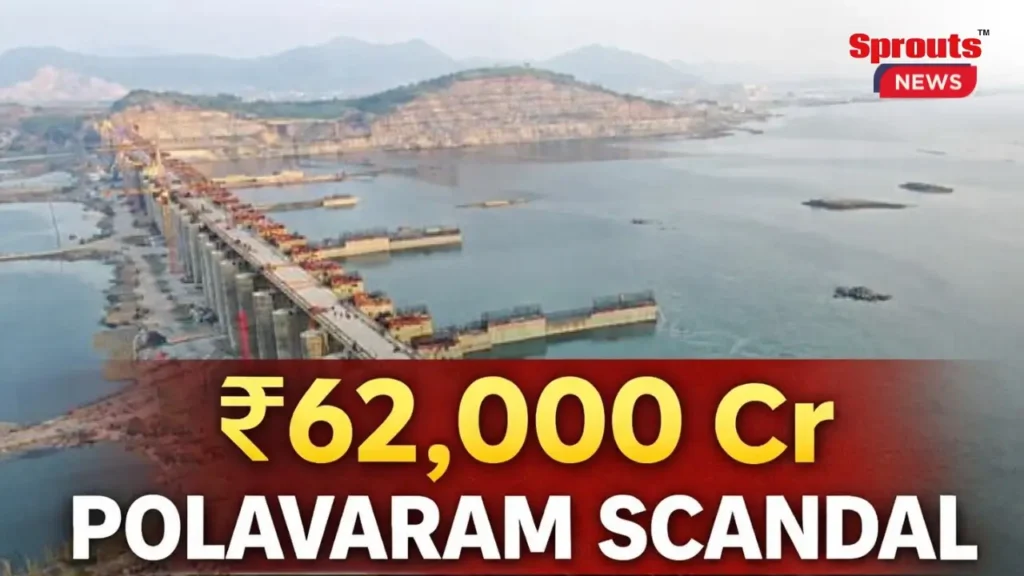
The Polavaram multipurpose irrigation project controversy has intensified after former Union government secretary EAS Sarma demanded a forensic audit and criminal investigation into the massive dam project in Andhra Pradesh.
In a strongly worded letter addressed to Cabinet Secretary T. V. Somanathan, Sarma urged the government to initiate an independent probe by the Central Bureau of Investigation and the Enforcement Directorate.
The former civil servant cited findings from the Comptroller and Auditor General CAG report No. 4 of 2025, which allegedly exposes serious financial, administrative and technical irregularities spanning more than two decades.
According to Sarma, the Polavaram project has evolved into a troubling example of governance failure involving environmental violations, contractor irregularities and alleged neglect of tribal rehabilitation obligations.
The irrigation project, which has consumed more than ₹62,000 crore of public funds, remains under scrutiny for possible violations of environmental law and rehabilitation policies meant to protect displaced communities.
Sarma described the project as a disturbing illustration of how large infrastructure initiatives can drift away from regulatory oversight while benefiting contractors and political interests.
He called for a comprehensive forensic audit to determine how such massive public expenditure occurred without adequate compliance with environmental and rehabilitation regulations.
Polavaram National Project: Purpose, Cost Escalation and Environmental Concerns
The Polavaram dam project was originally conceived as a major irrigation and drinking water initiative on the Godavari River in Andhra Pradesh.
The project aims to irrigate approximately 2.91 lakh hectares of agricultural land and provide drinking water to several towns and villages in the region.
Construction began more than two decades ago with the objective of strengthening irrigation infrastructure and improving water security for the state’s farming communities.
Following the bifurcation of Andhra Pradesh in 2014, Section 90 of the Andhra Pradesh Reorganisation Act designated Polavaram as a National Project.
This status placed the responsibility for project regulation, environmental approvals and rehabilitation compliance under the supervision of the Union government.

However, Sarma’s letter alleges that despite two decades of project execution, mandatory environmental clearance requirements have not been fully met.
He noted that more than ₹25,000 crore has already been spent, largely through contractor payments, even though critical regulatory approvals remain unresolved.
The estimated project cost has now crossed ₹62,000 crore, with experts warning that further delays and design modifications could push the financial burden even higher.
Such cost escalation, combined with regulatory lapses, has raised questions among policy experts regarding transparency in the implementation of large public infrastructure projects.
Tribal Displacement and Rehabilitation Concerns
One of the most sensitive aspects of the Polavaram project involves the displacement of tribal communities living in areas expected to be submerged by the dam reservoir.
The project is expected to submerge 373 tribal habitations across 222 revenue villages, affecting regions located in Andhra Pradesh as well as neighbouring Odisha and Chhattisgarh.
According to official estimates cited by Sarma, approximately 106,006 tribal families are expected to be displaced as a result of the reservoir expansion.
However, the CAG report indicates that only around 11 percent of these families have been relocated to rehabilitation colonies even after two decades of project activity.
Government guidelines require that rehabilitation and resettlement must precede major construction activities, ensuring displaced families receive housing and livelihood support before displacement occurs.
Field surveys referenced in the audit report allegedly found that even families who were relocated received incomplete or substandard benefits.
Housing units constructed under the rehabilitation programme were reportedly found to be structurally weak and lacking basic sanitation facilities.
In several cases, the prescribed land for land compensation policy was not implemented, leaving displaced tribal families without sustainable livelihood options.
Sarma cited audit findings suggesting that benefits intended for affected families may have been diverted to unrelated individuals, raising concerns about potential misuse of rehabilitation funds.

He warned that thousands of tribal families continue to live in extremely difficult conditions despite constitutional protections under the Fifth Schedule, which safeguards the rights of tribal communities.
Also Read: Matheran Tourism Development Gains Fresh Attention.
Contract Irregularities and Technical Failures Highlighted in Audit
The CAG report referenced in Sarma’s letter also identifies several irregularities in the way project contracts were awarded and managed.
According to the audit findings, certain contracts were allegedly awarded through nomination rather than competitive bidding, raising questions about transparency in procurement practices.
Tender conditions were reportedly modified during the selection process in ways that may have favoured specific contractors.
In some cases, contracts were awarded to single bidders through procedures that appeared inconsistent with established government procurement rules.
The audit also noted that contractors received interest free advances and revolving funds, which may have resulted in financial losses for the government.
Bank guarantees submitted by contractors reportedly did not cover the entire duration of contract obligations and were not invoked before contract termination in certain cases.
Sarma argued that such procedural lapses indicate a systemic breakdown of accountability mechanisms within the project’s administrative structure.
The audit report also raises concerns about the influence of political decision making over technical recommendations during critical stages of project execution.
Structural Damage and Engineering Concerns in Polavaram Construction
Technical deviations from planned construction schedules reportedly created additional engineering risks within the project infrastructure.
According to the audit findings, delays in completing the spillway and spill channel forced floodwaters to flow through gaps in temporary structures known as cofferdams.
This situation reportedly resulted in damage to partially constructed components including the diaphragm wall, a critical structure designed to control water seepage.

The absence of a contractor responsible for managing flood mitigation during key stages of construction reportedly aggravated the situation.
By March 2023, rectification work on the damaged diaphragm wall had still not been completed, raising questions about long term structural safety.
Infrastructure experts note that ignoring engineering protocols in large dam projects can significantly increase both financial costs and safety risks.
Demand for Forensic Audit and Central Investigation
In his communication to the Cabinet Secretary, Sarma framed six key questions regarding the accountability of political leaders and government officials involved in the project.
He asked whether authorities should be held responsible for allowing massive public expenditure without environmental compliance or adequate rehabilitation safeguards.
The letter also questioned whether contractor irregularities and structural failures should trigger criminal investigation under existing anti corruption laws.
Sarma further raised the possibility that financial benefits granted to contractors could involve potential violations requiring scrutiny under money laundering regulations.
His central demand is for a comprehensive forensic audit of the Polavaram project, followed by a detailed investigation by the CBI and the Enforcement Directorate.
Such an investigation, he argued, would help determine individual accountability and restore public confidence in large infrastructure governance.
Observers say the issue highlights broader challenges faced by India’s public infrastructure sector, including transparency, environmental compliance and protection of vulnerable communities.
The controversy surrounding the Polavaram irrigation project is therefore likely to remain a critical governance issue as authorities review the concerns raised in the letter.
Unmesh Gujarathi, an investigative journalist, invites readers and whistleblowers to share information related to scams, financial frauds or corruption cases. Information can be shared confidentially on 9322755098 to support investigative reporting in the public interest.