


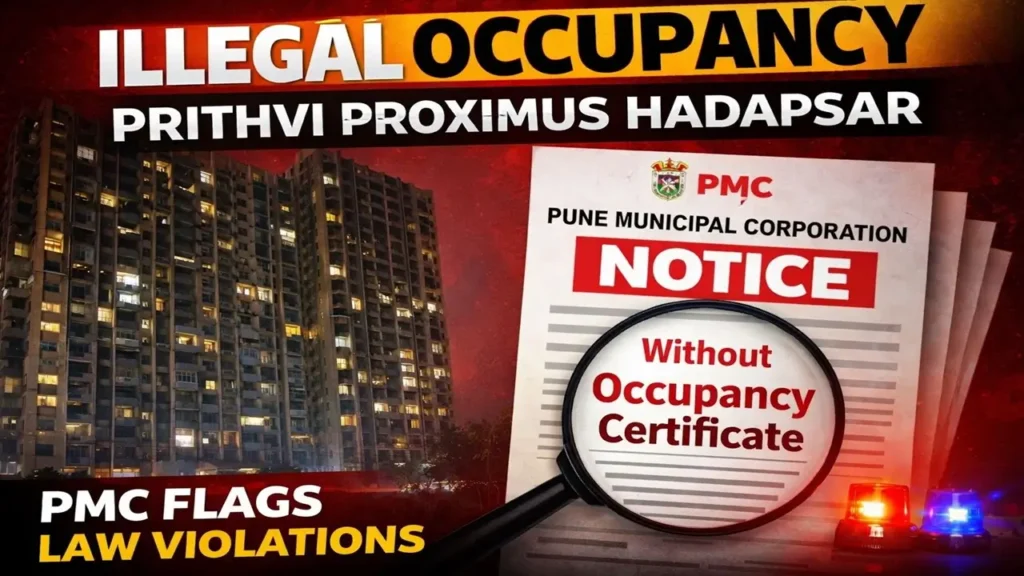
The Pune Municipal Corporation has issued a notice to Prithvi Proximus Hadapsar over alleged illegal occupancy without an Occupancy Certificate. Civic officials found that flats were occupied despite missing mandatory approvals like OC and Completion Certificate. The action follows a formal complaint and preliminary verification by PMC. Experts warn that such practices affect fire safety, civic services, and buyer rights, raising wider concerns about housing compliance in fast growing Pune suburbs.
PMC Notice on Prithvi Proximus Hadapsar Flags Illegal Occupancy Without OC, Raises Wider Housing Compliance Concerns
Senior journalist Unmesh Gujarathi and his investigative team exposed systemic regulatory failures and alleged irregularities in urban governance, revealing how administrative lapses, delayed enforcement, and weak oversight enabled unauthorised practices, prompting legal scrutiny and renewed accountability across note-worthy public institutions.
The Pune Municipal Corporation notice on Prithvi Proximus Hadapsar has triggered renewed scrutiny over illegal occupancy, exposing how residential buildings enter use without mandatory approvals, undermining urban safety, planning discipline, and buyer protections.
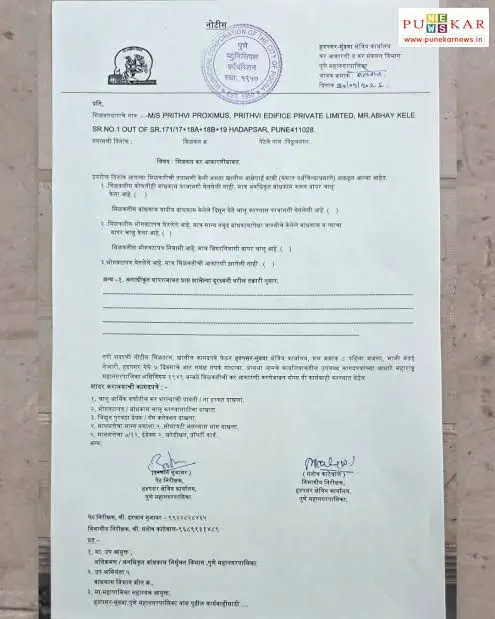
Issued on 31 January 2026, the notice by the Hadapsar ward office of the Pune Municipal Corporation seeks explanations for unauthorised occupation of a residential project lacking statutory certification.
Civic officials confirmed that flats inside the Prithvi Proximus complex were allegedly occupied despite the absence of an Occupancy Certificate, a prerequisite under municipal building regulations before lawful residential use.
The action followed a formal complaint alleging that the developer permitted possession without securing either a Completion Certificate or an Occupancy Certificate, both essential safeguards within Maharashtra’s urban governance framework.
Authorities stated that preliminary verification supported the complaint’s claims, prompting issuance of a notice to the developer and associated parties demanding clarification and documentary compliance within stipulated timelines.
Urban planners warn that such violations compromise fire safety, sanitation approvals, and structural accountability, placing residents at risk while weakening enforcement credibility across rapidly expanding suburban zones like Hadapsar.

Prithvi Proximus Hadapsar Real Estate Compliance Under PMC and MahaRERA Lens
Prithvi Proximus is located at Sadesatra Nali in Hadapsar, constructed on land bearing Survey Numbers 171, 17, 18A, 18B, and 19, a zone witnessing intense residential development pressure.
Land ownership records indicate the plot belongs to Abhay Pandharinath Kele, while development responsibilities rest with Prithvi Edifice Private Limited, a registered real estate entity operating within Pune district.
The project holds registration under MahaRERA with number P52100021774, requiring adherence to declared timelines, approvals, and possession conditions disclosed to homebuyers.
Experts note that MahaRERA registration does not substitute municipal clearances, and possession without Occupancy Certificate remains illegal regardless of registration status or construction progress milestones.
Civic officials emphasised that continued occupation without certification violates municipal law, potentially attracting penalties, service disconnections, and legal proceedings under the Maharashtra Municipal Corporation Act.
Housing activists argue that buyers often face pressure to occupy homes early, unaware that lack of Occupancy Certificate restricts legal ownership rights, insurance validity, and access to permanent civic amenities.

The PMC clarified that further steps depend on the developer’s response, documentary submissions, and on-site verification to assess whether violations are procedural lapses or deliberate non compliance.
Also Read: Mandakini Jagtap Land Scam Puts Pune Records in Question.
Supreme Court Precedent and Legal Consequences for Developers
The complaint cited a landmark judgment by the Supreme Court of India in Dharmendra Sharma versus Agra Development Authority, reinforcing strict illegality of possession without Completion Certificate.
The ruling clearly states that possession granted without completion approval holds no legal validity, strengthening municipal authority to act against unauthorised occupation irrespective of buyer consent.
Legal experts say the precedent empowers civic bodies nationwide to curb premature occupancy practices that bypass safety audits, environmental clearances, and infrastructure readiness certifications.
In the Prithvi Proximus case, PMC has demanded explanations on why the building was used without Occupancy Certificate and under whose authority residents were allowed possession.
The notice further seeks justification on why penal action should not be initiated under municipal law, signalling potential escalation if explanations fail statutory scrutiny.

According to officials, penalties may include fines, sealing of premises, or prosecution, depending on findings, while residents could face service disruptions until compliance is achieved.
From a policy perspective, the case highlights enforcement gaps where rapid housing demand collides with regulatory oversight limitations in Pune’s expanding eastern corridor.
Sprouts News Special Investigation Team notes that similar notices have increased across Pune, indicating tighter compliance enforcement amid rising citizen complaints and judicial oversight.
For homebuyers, the episode reinforces the importance of verifying Occupancy Certificate status before possession, regardless of assurances from developers or partial approvals.
As PMC evaluates responses, the outcome may influence future regulatory action, signalling whether municipal authorities will adopt firmer deterrence against illegal occupancy across Pune’s real estate sector.
The Prithvi Proximus notice ultimately raises a larger question on accountability, asking whether urban development will prioritise lawful completion or continue normalising risk through delayed enforcement.