A special court in Mohali has sentenced retired Indian Air Force Junior Warrant Officer Dara Singh and his associate Gurdarshan Singh to three years’ rigorous imprisonment in a money laundering case linked to a 2008 cocaine seizure. The court convicted both men under the Prevention of Money Laundering Act and fined them ₹5,000 each. The prosecution case followed the recovery of 1.23 kg of cocaine and two cheques worth ₹10 lakh. Their separate NDPS convictions remain under challenge before the Punjab and Haryana High Court.
Retired Air Force Officer Convicted in Cocaine-Linked Money Laundering Case
A special court here has found former Indian Air Force (IAF) Junior Warrant Officer Dara Singh and his associate Gurdarshan Singh guilty in a money laundering case about a 2008 seizure of cocaine, and sentenced them to three years in jail under the Prevention of Money Laundering Act.
A special court in Mohali on Thursday awarded three years' rigorous imprisonment to retired Indian Air Force officer Dara Singh and his associate Gurdarshan Singh in a money laundering case under the Prevention of Money Laundering Act (PMLA).
Both were convicted on September 3 by Special Judge Hardip Singh in a prosecution linked to the seizure of cocaine in Punjab in 2008. The court also imposed a fine of Rs 5,000 on each of the convicts.
According to court documents, Dara Singh, 80, spent 29 years in the Indian Air Force before retiring as a Junior Warrant Officer. His co-accused Gurdarshan Singh is aged 77.
The court also directed that any period of detention already undergone by the convicts would be set off against the substantive sentence. Both men had been on bail for years during the proceedings.
2008 Cocaine Seizure Led to NDPS and PMLA Proceedings
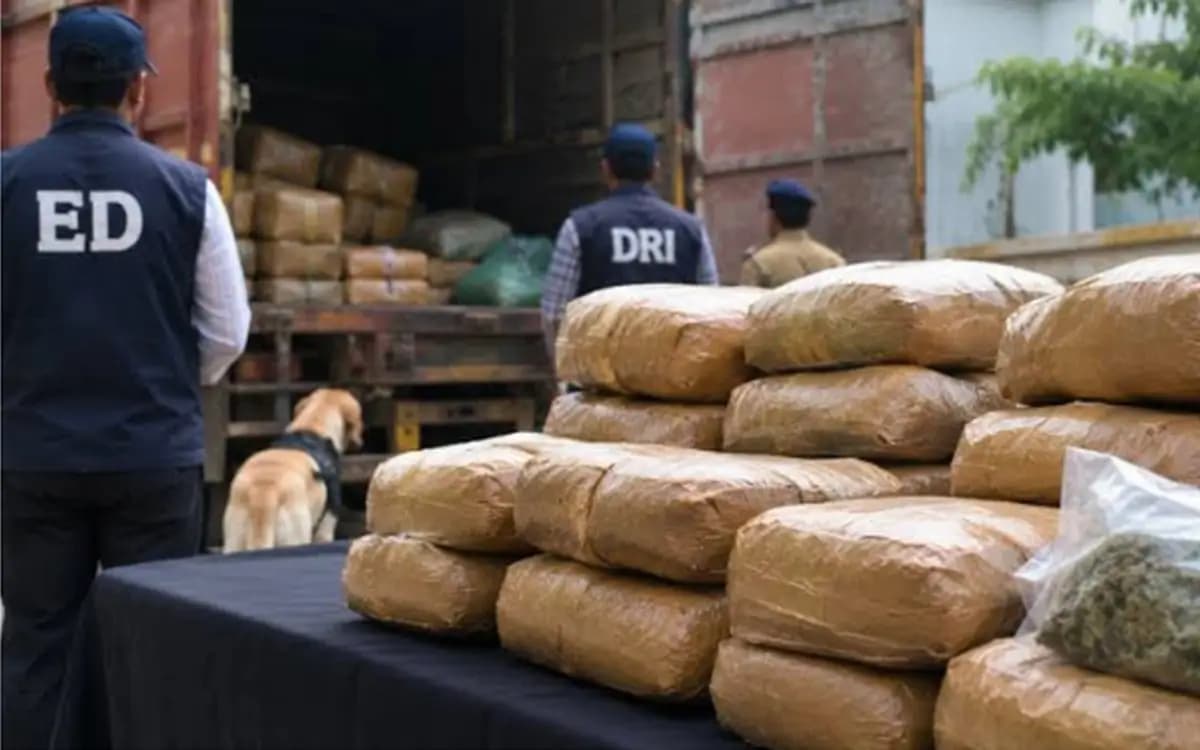
The case dates back to August 2008 when the police in SAS Nagar (Mohali) had allegedly recovered 1.23 kg of cocaine valued at about Rs 50 lakh at that time.
Investigators also seized two bank cheques amounting to Rs 10 lakh. The prosecutors claimed that Dara Singh had given the cheques to Gurdarshan Singh to buy the contraband substance.
The seizure was followed by prosecution under the Narcotic Drugs and Psychotropic Substances (NDPS) Act. In March 2015, a trial court found both defendants guilty in the narcotics case.
Local media reports then said Dara Singh and Gurdarshan Singh were sentenced to 12 years’ imprisonment each under the NDPS Act. The conviction, however, remains under challenge.
Dara Singh, later reemployed by the Punjab Technical Education Board and worked for nine years, challenged the conviction before the Punjab and Haryana High Court.
The High Court later stayed the sentence in the NDPS case. That appeal is still outstanding. The latest ruling is only on the separate money laundering prosecution.
Also Read: Trump Administration Launches Video Games Promoting Deportation Agenda.
Enforcement Directorate Case and Court’s Findings
The Enforcement Directorate registered a case under PMLA in October 2019 and filed a chargesheet in October 2022 treating the seized cocaine and recovered cheques as proceeds of crime.
During the proceedings, defense counsel argued that the narcotics and the cheques were not proceeds of crime, as no drug money was allegedly generated or exchanged.
The Enforcement Directorate, in turn, countered that the definition of “property” under the PMLA covers property used in the commission of a scheduled offense, irrespective of whether profits were made or not.
In dismissing the defense arguments, the court found that the cheques were directly linked to the dealings of the accused and thus constituted proceeds of crime under the law.
In its judgment, the court noted that the cheques were a result of transactions between Dara Singh and Gurdarshan Singh and the defense arguments were liable to be thrown out.
The court further recorded and convicted both accused that both accused had committed an offense defined under Section 3 of the PMLA and punishable under Section 4.
Plea for Leniency and Broader Legal Implications
During sentencing, the convicts pleaded for leniency on the grounds of their old age, health concerns, family responsibilities, and that the original police case was a false registration.
However, despite such submissions, the court imposed rigorous imprisonment for a period of three years and the statutory fine prescribed under the Prevention of Money Laundering Act.
As per Sprouts News' understanding, the PMLA conviction is separate from the pending appeal in the Punjab and Haryana High Court against the earlier NDPS conviction.
The case illustrates how Indian authorities can undertake parallel proceedings for narcotics offenses and alleged money laundering where assets or instruments are connected to a scheduled offense.
The latest PMLA judgment is a major milestone in the long-running prosecution. Future legal developments will determine the status of the underlying NDPS conviction pending final adjudication of the High Court appeal.