
Sunetra Pawar’s entry into active politics has sparked debate across Maharashtra. While critics call it dynasty politics, supporters see continuity during a period of political change. The discussion highlights how political responsibility often moves within families that have shaped public life for decades. With no legal bar on such participation, the issue raises deeper questions about power transfer, stability, and how democracy balances legacy with accountability.
Show Must Go On Politics Maharashtra Power Shift and the Sunetra Ajit Pawar Question
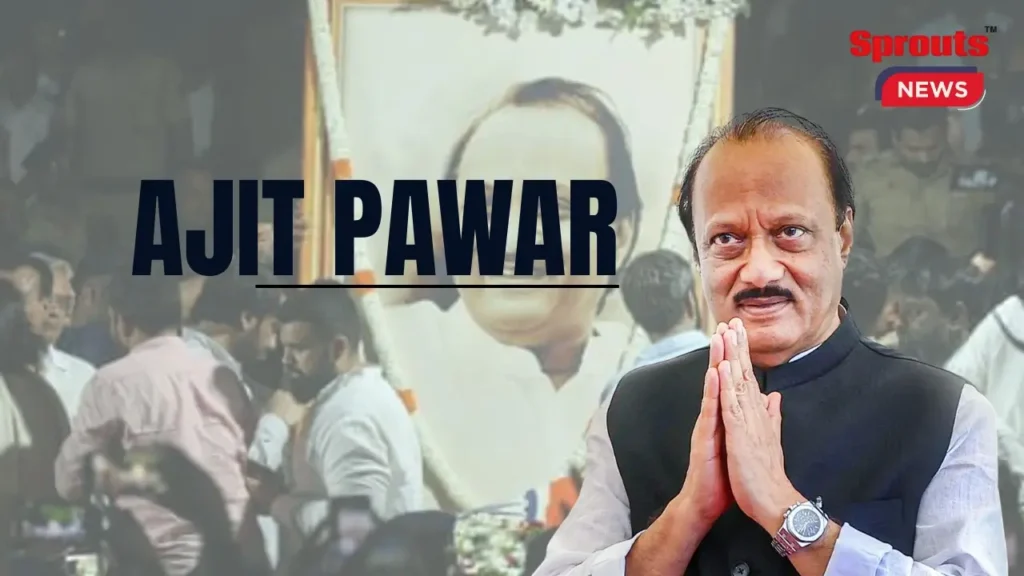
The phrase show must go on politics has returned to Maharashtra’s public discourse after Sunetra Pawar stepped into an active political role following Ajit Pawar’s dramatic exit from the political spotlight.
Sunetra Pawar is a senior political figure by association and experience, yet her emergence has triggered an intense debate on dynasty politics, political continuity, and the unwritten rules governing succession in Indian democracy.
At the heart of this discussion lies a simple but uncomfortable question why does political responsibility transferred within a family provoke outrage when political inheritance has long shaped Maharashtra’s power structures.
Critics argue that Sunetra Pawar symbolises dynastic entitlement, while supporters insist she represents continuity, stability, and institutional memory in a state often shaken by sudden political realignments.
From a constitutional standpoint, there is no bar on a spouse or family member assuming political responsibility, provided democratic procedures are followed and public accountability remains intact.
Those invoking dynasty politics selectively overlook how political grooming often begins at home, especially within families deeply embedded in public life for decades.
Sunetra Pawar’s political awareness did not begin overnight. As a member of the Pawar household, she has observed electoral strategy, governance challenges, and coalition management at close quarters for years.
The idea that she lacks political understanding underestimates the informal education that long term political families inevitably impart, especially in a state as politically sophisticated as Maharashtra.
Also Read: Epstein Files and Anil Ambani Links Raise Hard Questions.
Maharashtra Politics Dynastic Debate and Power Continuity
The controversy also exposes deeper anxieties within Maharashtra politics, where legacy leadership both inspires loyalty and breeds internal suspicion.
Sharad Pawar’s towering presence has always divided opinion, praised for strategic brilliance and criticised for shifting positions when political equations demand recalibration.
Over decades, he has mastered the art of remaining relevant, whether during party splits, alliance negotiations, or moments of personal and political crisis.
His public comments ahead of Sunetra Pawar’s oath ceremony added another layer of confusion, particularly among party workers seeking clarity and reassurance.
By addressing internal family differences in public forums, Sharad Pawar inadvertently widened speculation, allowing narratives to spiral unchecked across social media platforms.
This mirrors earlier episodes where firm declarations were made before formal investigations or processes had even begun, shaping public perception prematurely.
In political communication, clarity stabilises cadres, while ambiguity unsettles them. Maharashtra politics has witnessed how confusion often benefits strategic repositioning.
Observers note that when conviction fails to persuade, confusion can delay dissent, buying time for leadership to recalibrate alliances and messaging.
However, such tactics also carry risks, especially in an era of instant digital amplification and reduced tolerance for perceived manipulation.
The current debate has less to do with Sunetra Pawar’s capability and more to do with unresolved tensions within the Pawar political ecosystem.
Political Implications Governance Expectations and Public Accountability
For citizens, the real issue is governance impact rather than family dynamics. Maharashtra faces economic stress, agrarian concerns, urban infrastructure demands, and administrative fatigue.
Any leader stepping into responsibility will be judged not by lineage but by responsiveness, decision making, and commitment to public welfare.
Sunetra Pawar’s entry places her under sharper scrutiny, requiring visible engagement beyond symbolic presence to establish independent political credibility.
Future implications hinge on whether she chooses to remain a transitional figure or evolves into an assertive policymaker shaping social and administrative outcomes.
The broader lesson for Indian politics is that dynasty debates cannot substitute performance based evaluation, especially when democratic legitimacy flows from constitutional processes.
As Sprouts News Special Investigation Team observes, public discourse often conflates moral discomfort with procedural illegitimacy, creating noise rather than meaningful accountability.
Maharashtra’s political history shows that leadership acceptance ultimately depends on results delivered, not narratives constructed during moments of transition.
The show must go on argument resonates because governance cannot pause for ideological purity tests or internal family disagreements.
In the coming months, political stability, administrative continuity, and policy direction will determine whether this transition strengthens or weakens public trust.
For now, the spotlight remains on Sunetra Pawar, not as a symbol of dynasty, but as a test case for how inherited political capital is converted into public service in modern India.