Supreme Court Rooh Afza VAT Verdict: Fruit Drink Classification Brings 4 Percent Tax Relief
The Supreme Court has ruled that Sharbat Rooh Afza qualifies as a fruit drink under the Uttar Pradesh VAT Act, attracting 4 percent tax instead of 12.5 percent. The Bench set aside the Allahabad High Court order and held that the product falls under Entry 103 covering fruit drinks. The Court clarified that food safety standards cannot automatically determine fiscal classification unless specifically mentioned in tax law. The verdict provides relief to the manufacturer and sets a precedent on how taxing statutes must be interpreted based on legislative language.
Supreme Court Rooh Afza VAT verdict has delivered a decisive ruling on product classification, holding that Sharbat Rooh Afza qualifies as a fruit drink under state tax law.
The judgment confirms that the beverage concentrate will attract 4 percent VAT instead of 12.5 percent under the residuary category.
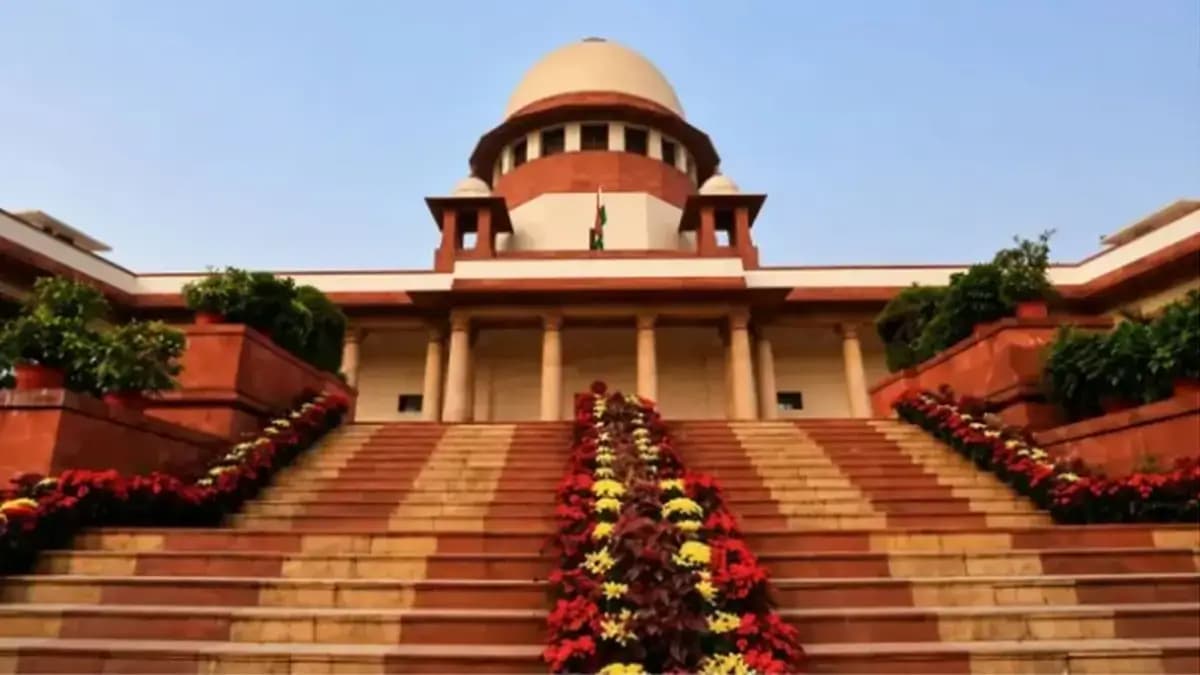
A Bench of Justice BV Nagarathna and Justice R Mahadevan set aside the earlier decision of the Allahabad High Court.
The dispute arose under the Uttar Pradesh Value Added Tax Act, 2008, which governs classification of goods for state taxation.
The Court held that Sharbat Rooh Afza falls within Entry 103 of Schedule II, Part A of the Act.
That entry covers processed or preserved fruits and includes fruit squash, fruit drink and fruit juice.
The ruling applies to the assessment period between January 1, 2008 and March 31, 2012.
The manufacturer, M/s Hamdard Wakf Laboratories, had paid VAT at 4 percent during those years.
Tax authorities later treated the product as an unclassified item under Schedule V, taxing it at 12.5 percent.
The Commercial Tax Tribunal and the Allahabad High Court upheld that higher classification.
The matter eventually reached the Supreme Court through Special Leave Petitions in Hamdard Wakf Laboratories v Commissioner of Commercial Tax.
VAT Classification Dispute: Fruit Drink vs Residuary Entry Under UP VAT Act
The core issue was whether Rooh Afza should be taxed as a fruit drink or as an unclassified commodity.
Entry 103 does not define fruit drink in technical terms nor prescribe any minimum fruit content.
The Revenue relied on the common parlance test, arguing that consumers perceive Rooh Afza as sharbat rather than fruit juice.
Authorities also cited manufacturing licences describing the product as non fruit syrup containing around 10 percent fruit juice.
The Food Safety and Standards Authority of India had clarified that fruit syrup requires at least 25 percent fruit juice.
Since Rooh Afza contains about 10 percent fruit juice, officials argued it could not qualify as fruit drink.
The Supreme Court rejected that reasoning, stating that regulatory standards do not automatically control fiscal classification.
It emphasised that a taxing statute must be interpreted on its own language and legislative intent.
Regulatory frameworks operate in domains of safety and quality, not tax categorisation, unless expressly incorporated.
The Bench observed that Entry 103 is inclusive in character and deliberately broad in scope.
The use of the word including expands the category rather than restricts it.
In absence of a quantitative threshold, courts cannot read a rigid percentage requirement into the statute.
Essential Character Test and Burden of Proof in Fiscal Law
The Court analysed the composition of the product in detail before reaching its conclusion.
Rooh Afza contains around 80 percent invert sugar syrup, 8 percent pineapple juice and 2 percent orange juice.
While sugar forms the bulk by volume, the flavour and beverage identity arise from fruit components and distillates.
The Bench applied the essential character test to determine classification under fiscal law.
It held that classification must follow the component that confers the product’s distinctive beverage identity.
Mechanical reliance on numerical predominance of sugar syrup would therefore be misplaced.
The Court further noted that the burden of proving classification under the residuary entry lies on the Revenue.
Tax authorities had relied mainly on licence nomenclature without producing trade surveys or market evidence.
No consumer studies were placed on record to show that Rooh Afza is not understood as fruit based beverage.
In fiscal jurisprudence, residuary entries are meant for items that cannot reasonably fit within specific entries.
The Court reiterated that if a product can reasonably fall within a specific entry, residuary classification is impermissible.
Also Read: Solar Krushi Urja Vahini 2.0 ₹122 Crore Fraud in Maharashtra.
Wider Impact on Indirect Tax Jurisprudence and Beverage Industry
The judgment also noted that other States had taxed Rooh Afza under fruit based entries at concessional rates.
Although not binding, such consistent classification carries evidentiary value in assessing commercial understanding.
By setting aside the High Court ruling, the Supreme Court restored the concessional 4 percent VAT rate.
It directed consequential relief, including refund or adjustment of excess tax collected.
The verdict is significant for manufacturers facing similar disputes over beverage concentrates and processed foods.
It strengthens the principle that specific entries must be preferred over residuary categories in tax statutes.
For policymakers, the ruling underscores the importance of clarity in drafting tax schedules.
For businesses, it provides assurance against arbitrary reclassification that can disrupt pricing and compliance planning.
As indirect taxation continues to evolve, the decision may guide interpretation under future state and national tax regimes.
The Supreme Court has thus reaffirmed that fiscal certainty depends on statutory language, evidentiary burden and fair interpretation rather than narrow labelling.
Readers’ Appeal
If you have credible information, documents, or insider inputs related to tax disputes, regulatory decisions, or corporate classification matters, connect confidentially with senior investigative journalist Unmesh Gujarathi on 9322755098. Your identity will be strictly protected in larger public interest.