

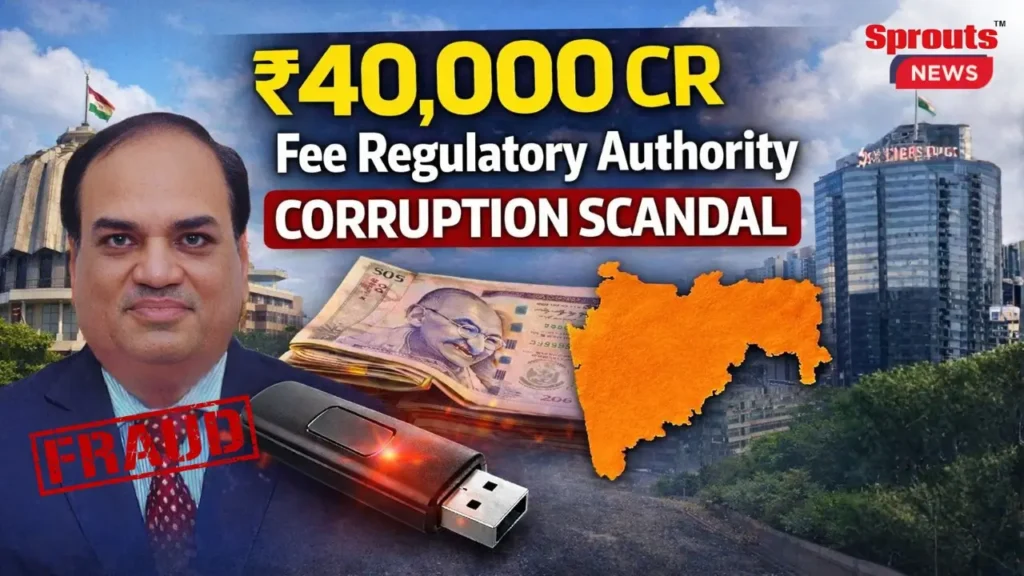
Allegations linked to Maharashtra’s Fee Regulatory Authority have triggered strong debate in the state Assembly after an MLA claimed to present documentary evidence stored in a pen drive. The authority regulates tuition fees for professional colleges including engineering, medical and management institutes. Lawmakers raised concerns that irregularities in the fee approval process may have allowed inflated tuition fees over several years, increasing financial pressure on students and families. The issue has drawn attention to transparency and accountability within the professional education regulatory system, with calls for a detailed investigation into how fee approvals were granted.
- ₹40,000 Crore Fee Regulatory Authority Corruption Allegations Rock Maharashtra Assembly After MLA Presents ‘Pen Drive Evidence’
- Alleged Fee Regulatory Authority Corruption and Inflated College Fee Approvals
- ‘Pen Drive Evidence’ Claim Intensifies Debate Over Maharashtra Education Fee Scam
- Maharashtra Government Orders Judicial Probe Into Fee Regulatory Authority Allegations
- Financial Impact on Students and Government Scholarship Schemes
- Questions Over Regulatory Transparency and Oversight in Higher Education
- Administrative Concerns and Contract Staff Wage Issues
- Why the Fee Regulatory Authority Investigation Matters for Maharashtra Students
₹40,000 Crore Fee Regulatory Authority Corruption Allegations Rock Maharashtra Assembly After MLA Presents ‘Pen Drive Evidence’
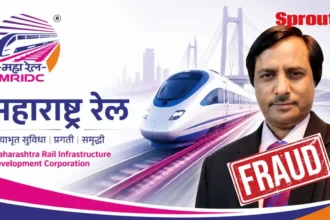
Investigative journalist Unmesh Gujarathi exposed the alleged Fee Regulatory Authority scam, highlighting serious irregularities affecting students. Sprouts News consistently raised the issue, demanding accountability, transparency, and justice for thousands of students burdened by inflated fees in Maharashtra’s professional education system.
The alleged ₹40,000 crore Fee Regulatory Authority corruption case has triggered a political storm in the Maharashtra Legislative Assembly after MLA Mahesh Shinde presented what he described as documentary evidence stored in a pen drive.
The issue centres on the Maharashtra Fee Regulatory Authority (FRA), the statutory body responsible for regulating tuition fees charged by professional education institutions including engineering, pharmacy, management, polytechnic and medical colleges.
During a calling attention motion in the Assembly, Shinde claimed that irregularities in the fee approval process had enabled institutions to inflate costs and secure higher fee approvals over several years.
According to the legislator, the alleged manipulation may have resulted in large-scale financial exploitation of students and misuse of public funds linked to government scholarship schemes.
The presentation of the pen drive inside the Assembly sparked intense debate among lawmakers and raised broader concerns about transparency in Maharashtra’s professional education regulatory framework.
Alleged Fee Regulatory Authority Corruption and Inflated College Fee Approvals
MLA Mahesh Shinde accused the Fee Regulatory Authority of approving several inflated fee hike proposals submitted by private professional colleges across Maharashtra.
He alleged that institutions submitted exaggerated expenditure records, false staffing details and questionable audit reports to justify higher tuition fees for thousands of students.
According to Shinde, the regulatory body allegedly approved many such proposals without conducting rigorous financial scrutiny or verification of the submitted documentation.
He told the Assembly that in several cases fees expected to remain near ₹75,000 per year were approved at around ₹1.5 lakh, doubling the financial burden on students and families.
The legislator further alleged that a portion of the increased fee amounts was diverted through irregular financial channels, raising suspicion of collusion between institutional management and regulatory officials.
Such allegations have drawn attention to the broader issue of regulatory oversight in India’s rapidly expanding private higher education sector.
Experts note that professional education fees often involve complex financial declarations submitted by colleges, which regulators must audit carefully before approving revisions.
‘Pen Drive Evidence’ Claim Intensifies Debate Over Maharashtra Education Fee Scam
The controversy escalated when Shinde informed the Assembly that he had compiled documentary evidence of the alleged corruption inside a digital pen drive.
According to his statement, the storage device contains documents linked to fee approvals, financial transactions, audit records and administrative correspondence connected to the regulatory process.
The MLA claimed the files may reveal a pattern of systematic manipulation in fee approval procedures over several years across multiple institutions.
Lawmakers across party lines demanded a transparent investigation after the presentation, highlighting the seriousness of the allegations.
Observers note that corruption allegations involving education regulators are particularly sensitive because professional college fees directly affect millions of students seeking technical and medical education.
The issue also has political implications because higher education policy and regulatory governance fall under the state government’s administrative oversight.
Maharashtra Government Orders Judicial Probe Into Fee Regulatory Authority Allegations
Responding to the Assembly debate, Higher and Technical Education Minister Chandrakant Patil acknowledged the gravity of the allegations raised during the session.
The minister announced that the state government would set up a high level inquiry committee headed by a retired High Court judge to examine the alleged irregularities in the Fee Regulatory Authority.
Patil stated that the government would also review criminal complaints registered in connection with certain educational trusts, including Koti Vidya Charitable Trust.
He assured legislators that if any institution is found guilty of collecting excess fees through fraudulent proposals, the money would be recovered from the concerned colleges.
The announcement of a judicial inquiry signals that the state government intends to examine both administrative and financial aspects of the allegations.
Investigations may involve scrutiny of regulatory decisions, financial statements submitted by colleges and audit reports associated with fee revision applications.
Financial Impact on Students and Government Scholarship Schemes
The allegations could have significant financial implications for students studying in Maharashtra’s professional education institutions.
Data cited during the Assembly debate indicates that around 1.5 lakh students enrolled in engineering colleges across Maharashtra in 2025 alone.
With the average annual tuition fee estimated near ₹1 lakh per student, engineering colleges collectively generate approximately ₹1,500 crore in first year tuition revenue every year.
If fee approvals were inflated through manipulated financial statements, the cumulative financial impact across several academic years could be extremely large.
When additional sectors such as polytechnic, pharmacy, management and medical education institutions are included, the alleged financial irregularities may reach tens of thousands of crores.
The issue becomes even more significant because a large portion of professional education fees is paid through government funded scholarship and reimbursement programmes.
Departments including Social Justice, Tribal Development and Minority Welfare transfer scholarship funds directly to colleges on behalf of eligible students.
If fee structures were artificially inflated, public funds allocated for scholarships may have indirectly contributed to the alleged financial irregularities.
Also Read: Fake Disability Certificate Row Shakes Medical Education.
Questions Over Regulatory Transparency and Oversight in Higher Education
The controversy has also revived long standing debates about transparency and accountability in higher education regulation.
Critics argue that the fee approval process must involve strict verification of institutional expenditure claims and employee records before approving tuition hikes.
Several education policy experts believe that weak oversight mechanisms can allow institutions to inflate operational costs, leading to higher fees for students.
The issue has also drawn attention to the leadership of the Fee Regulatory Authority.
Allegations raised during the Assembly discussion included questions regarding administrative decisions taken under FRA chairman and retired judge Vijay Achaliya.
Concerns reportedly include approval of disputed fee proposals, handling of complaints filed by students and possible administrative irregularities flagged in audit observations.
Reports have also referred to observations made in audits conducted by the Comptroller and Auditor General of India, which reportedly pointed out financial and procedural lapses.
These issues have intensified calls for a broader investigation into the functioning of the regulatory body over the past several years.
Administrative Concerns and Contract Staff Wage Issues
During the Assembly debate, Shinde also highlighted internal administrative concerns within the authority’s functioning.
He pointed out that certain contractual data entry operators working for the regulatory authority reportedly receive salaries as low as ₹10,000 per month.
The legislator argued that such employment conditions raise questions about staffing policies and institutional management within the authority.
He also claimed that the alleged irregularities may extend across at least 19 districts of Maharashtra, indicating the potential scale of the issue.
Why the Fee Regulatory Authority Investigation Matters for Maharashtra Students
The alleged ₹40,000 crore FRA corruption case has now become a major public policy issue in Maharashtra.
Students, parents, education activists and teachers’ organisations have started closely following the developments surrounding the proposed inquiry.
Many stakeholders believe that the investigation could expose structural weaknesses in the regulatory framework governing professional education fees.
According to sources tracking the issue, Sprouts News Special Investigation Team had previously reported on concerns related to fee regulation and administrative transparency within the authority.
If the judicial inquiry confirms any irregularities, it could lead to significant regulatory reforms, financial recovery actions and possible legal proceedings against responsible institutions or officials.
For Maharashtra’s higher education system, the outcome of this investigation may determine how tuition fees are regulated and monitored in the years ahead.
Readers with information, documents, or experiences related to this issue are encouraged to share details confidentially with our team. Your inputs can help strengthen the investigation and ensure accountability. Contact or share information with Sprouts News at 9322755098.