

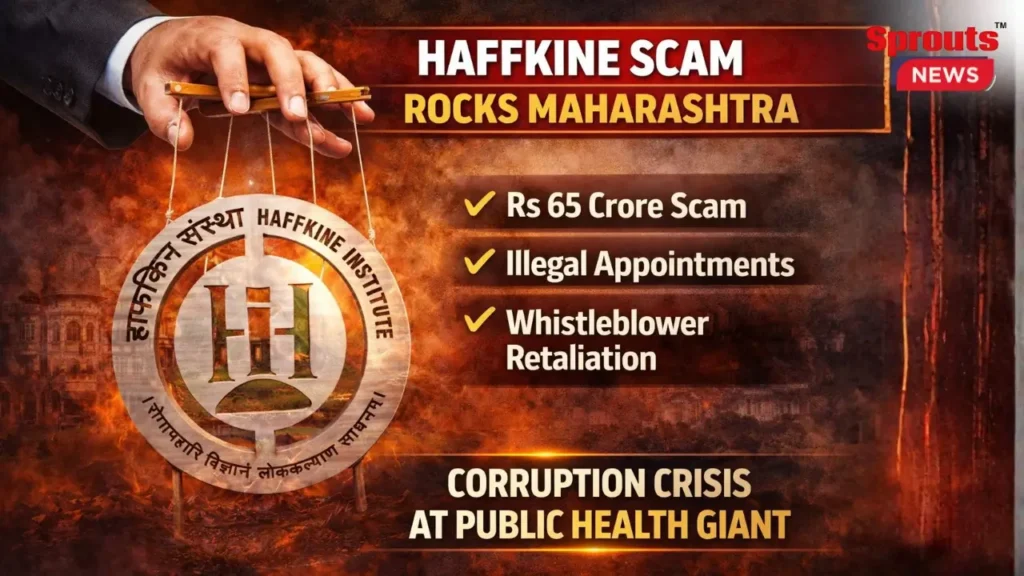
The Haffkine Biopharmaceutical Corporation controversy has raised serious concerns over governance and accountability in Maharashtra’s public health system. Allegations include a ₹65 crore procurement irregularity, illegal appointments, and inaction on anti-corruption findings. Complaints and reports suggest possible lapses in financial oversight and administrative decision-making. Experts warn that such issues in a key state-run vaccine and drug manufacturing body could impact transparency, public trust, and health preparedness. The developments have prompted calls for stronger regulatory checks, timely investigations, and accountability mechanisms to safeguard public resources.
- Haffkine Biopharmaceutical Corporation controversy: Corruption allegations, illegal appointments raise serious governance concerns in Maharashtra
- Alleged Rs 65 crore drug procurement scam and financial irregularities in Haffkine
- Illegal promotions, ACB findings ignored, and the DPT vaccine seed controversy
- Whistleblower action, legislative attention, and governance paralysis
- Why this matters: Public health risks and institutional credibility at stake
- Readers’ Appeal: Raise Your Voice for Transparency
Haffkine Biopharmaceutical Corporation controversy: Corruption allegations, illegal appointments raise serious governance concerns in Maharashtra
The Haffkine Biopharmaceutical Corporation faces serious allegations of corruption, illegal appointments, and ignored anti-corruption findings, raising concerns over governance, public health risks, and accountability, while government inaction and whistleblower suppression further deepen the institutional crisis in Maharashtra.
The Haffkine Biopharmaceutical Corporation controversy has triggered fresh debate over governance failures in Maharashtra’s public health institutions, with allegations of corruption, illegal appointments, and administrative inaction surfacing repeatedly in recent months.
The state-owned Haffkine Bio Pharmaceutical Corporation Limited, once regarded as the backbone of vaccine production and public health preparedness, is now under scrutiny for alleged financial irregularities and misuse of authority.
Multiple complaints, legislative interventions, and activist reports indicate a pattern of systemic lapses rather than isolated incidents, raising questions about institutional accountability and regulatory oversight across Maharashtra’s health administration framework.
Alleged Rs 65 crore drug procurement scam and financial irregularities in Haffkine
One of the most serious allegations involves a reported Rs 65 crore drug procurement irregularity flagged by social activist Vijay Kumbhar, who has consistently tracked public spending anomalies in state agencies.
According to available information, funds that remained unused for years were suddenly deployed, followed by hurried purchase orders, reportedly timed around administrative transfers, intensifying suspicions of procedural manipulation and possible collusion.
Experts in public procurement note that such last-minute financial decisions often bypass standard due diligence processes, increasing the risk of inflated pricing, compromised quality, and lack of transparency in vendor selection.
Adding to concerns, allegations have emerged that senior officials misused public funds for personal expenditures, including the purchase of expensive fitness equipment, despite ongoing anti-corruption investigations against certain officers.
This raises a critical governance question: whether internal checks within public sector undertakings are robust enough to prevent misuse of taxpayer money, especially in sensitive sectors like healthcare manufacturing.
Illegal promotions, ACB findings ignored, and the DPT vaccine seed controversy
The controversy deepened after reports that officials facing corruption allegations were not only spared disciplinary action but were instead given key administrative responsibilities within the organisation.
A notable case involves the appointment of an officer to a senior production role despite documented concerns raised by regulatory authorities and references in official communications from state leadership.
Letters from Maharashtra FDA Minister Narhari Zirwal reportedly cited Anti-Corruption Bureau findings indicating irregularities involving multiple officials, yet no decisive action appears to have followed these recommendations.
Such developments suggest a disconnect between investigative findings and administrative enforcement, which could undermine public confidence in anti-corruption mechanisms across state institutions.
Another contentious issue is the proposed transfer of a rare DPT vaccine seed strain to a private company, a move experts warn could have long-term implications for public health sovereignty.
Vaccine seed strains are considered strategic biological assets, and their transfer to private entities without transparent safeguards raises concerns about intellectual property control, supply chain risks, and equitable access to essential vaccines.
Also Read: Bar Council Election Mumbai: Adv. Warunjikar Shares Vision.
Whistleblower action, legislative attention, and governance paralysis
Perhaps the most alarming aspect of the Haffkine Biopharmaceutical Corporation controversy is the reported action against a whistleblower rather than against those accused of wrongdoing.
An employee who allegedly shared internal information with senior political leadership was suspended, while internal circulars warned staff against leaking documents, raising concerns about suppression of transparency.
Observers argue that such actions create a chilling effect within public institutions, discouraging accountability and allowing systemic issues to persist without internal resistance.
The issue was formally raised in the Maharashtra Legislative Assembly under Rule 105, highlighting illegal appointments, procurement irregularities, and the ignoring of ACB findings, yet outcomes remain unclear.
Despite repeated letters from senior leaders, including the Assembly Deputy Speaker, seeking suspension of implicated officials, there appears to be limited visible enforcement on the ground.
The Sprouts News Special Investigation Team notes that this pattern of administrative silence, despite documented concerns, reflects a broader governance challenge rather than an isolated institutional failure.
Why this matters: Public health risks and institutional credibility at stake
Haffkine’s legacy, rooted in the work of Dr Waldemar Haffkine, is deeply tied to India’s fight against infectious diseases, making current allegations particularly concerning for public trust.
As a key manufacturer of vaccines, antivenoms, and biological products, any compromise in governance or quality control could have far-reaching implications for healthcare delivery across Maharashtra and beyond.
Policy experts warn that continued inaction may lead to institutional capture, where administrative decisions are influenced by internal networks rather than public interest or regulatory compliance.
The controversy also highlights the urgent need for stronger oversight mechanisms, independent audits, and protection frameworks for whistleblowers within public sector health organisations.
Whether the Maharashtra government initiates transparent investigations and corrective measures will determine not only the future of Haffkine but also the credibility of public health governance in the state.
The coming months are likely to be critical in deciding whether this case leads to systemic reform or becomes another unresolved chapter in India’s ongoing struggle against institutional corruption.
Readers’ Appeal: Raise Your Voice for Transparency
Sprouts News, recognised by DAVP, RNI, and DGIPR, invites citizens to share documents exposing corruption or public issues. Help strengthen accountability by contributing verified information via WhatsApp on 9322755098.
Editorial Note:
This article is based on publicly available FIR records, court case references, and reports published by multiple media organisations. The information is presented in the context of ongoing investigations and public interest reporting. Sprouts News does not make any judicial determination regarding the individuals mentioned and does not intend to defame any person or organisation. Any individual seeking clarification or wishing to provide an official response may contact the editorial team with verifiable documentation. The information is presented for journalistic and informational purposes.