

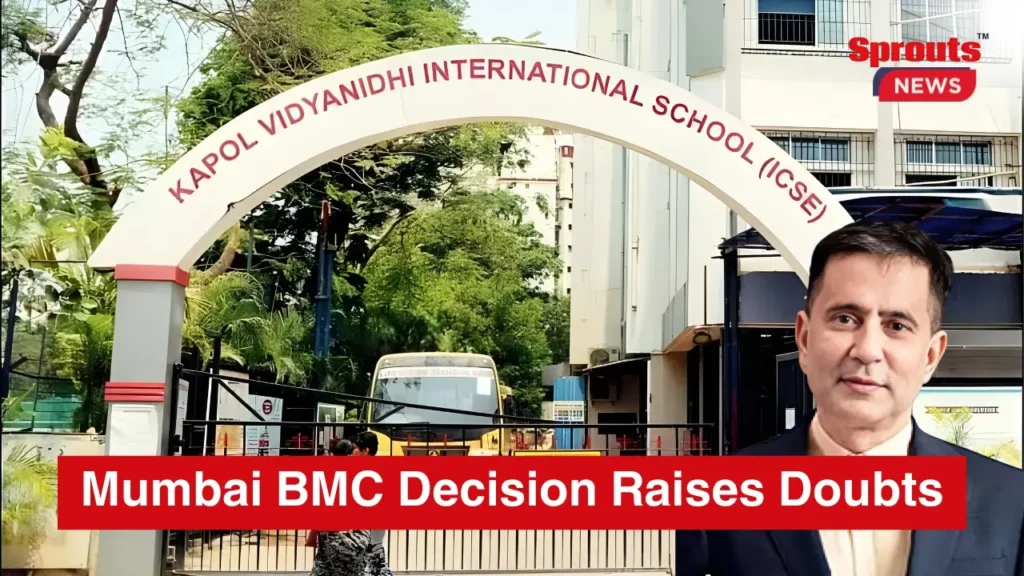
The Kapol Vidyanidhi Trust controversy has brought BMC’s approval process under scrutiny after a previously rejected playground concession proposal involving CTS 101A was later approved. Records indicate that the proposal was initially denied due to missing approvals, yet received clearance months later without clear documentation addressing earlier concerns. Experts highlight potential compliance gaps under Development Control regulations and question the use of public playgrounds for institutional requirements. The case raises broader concerns about transparency, consistency in decision-making, and safeguarding public land in Mumbai’s urban governance framework.
- Kapol Vidyanidhi Trust Playground Concession Row: BMC Approval on CTS 101A Raises Compliance, Transparency and Public Land Use Concerns
- BMC Approval Process Under Scanner After Contradictory Decisions
- Regulation 2034 and Playground Norms: Can Public Land Be Used
- Encroachment, Garden Land Violations and Environmental Concerns
- Occupancy Certificate Violations and Safety Compliance Issues
- AutoDCR System Bypass Allegations and Transparency Concerns
- Officials, Trustees and Accountability Questions in Public Interest
- Why This Case Matters for Mumbai’s Urban Governance and Public Spaces
Kapol Vidyanidhi Trust Playground Concession Row: BMC Approval on CTS 101A Raises Compliance, Transparency and Public Land Use Concerns
The Kapol Vidyanidhi Trust controversy highlights serious concerns after BMC approved a previously rejected playground concession on CTS 101A, raising questions on compliance, transparency, land use violations, and accountability in Mumbai’s public land governance system.
The Kapol Vidyanidhi Trust playground concession controversy has brought renewed scrutiny on BMC approvals in Mumbai, after a previously rejected proposal involving CTS 101A was later approved under unclear circumstances.
At the centre of the issue is a municipal playground in Kandivali West, reportedly used to grant a 40 per cent concession to a private educational institution under Development Control regulations.
This reversal has raised serious governance concerns, especially since the same proposal was earlier rejected in June 2025 due to incomplete compliance and lack of mandatory approvals.
BMC Approval Process Under Scanner After Contradictory Decisions
Official records confirm that on 30 June 2025, the Municipal Commissioner rejected the concession, citing the absence of approval from the Superintendent of Gardens, a key requirement for using public open spaces.
Such approvals are critical when municipal land is considered for institutional compliance, ensuring that public assets are not misused or diverted without proper regulatory safeguards.
However, on 6 March 2026, the same proposal appears to have been approved using CTS 101A, despite no publicly available record confirming that earlier deficiencies were addressed.
Urban governance experts state that such administrative reversals without clear documentation raise concerns about procedural integrity, consistency, and adherence to established municipal norms governing land use approvals.
This sequence has intensified public debate, as it indicates potential gaps in enforcement mechanisms and raises questions about whether due process was followed in granting the concession.
Regulation 2034 and Playground Norms: Can Public Land Be Used
Under the Development Control and Promotion Regulations 2034, educational institutions must provide dedicated playgrounds that ensure safety, accessibility, and exclusive functional use for students.
Regulation 38 allows limited relaxation where a municipal playground abuts a plot, but experts emphasise that such provisions are conditional and require demonstrable usability and legal backing.
A public playground such as CTS 101A remains open for unrestricted access, which may conflict with requirements of supervision, exclusivity, and controlled institutional use mandated under planning norms.
In the absence of formal agreements, such as a lease or allotment, questions arise about whether such land can be legally counted towards compliance for educational infrastructure requirements.
Urban planners warn that incorrect interpretation of these provisions could set a wider precedent, weakening planning discipline and affecting equitable access to public open spaces across Mumbai.
To view the related court document – Click Here
Encroachment, Garden Land Violations and Environmental Concerns
The controversy is further linked to Plot 106 in Mahavir Nagar, reserved as a municipal garden, where alleged encroachment and concretisation have raised environmental and regulatory concerns.
A Garden Department notice dated 21 January 2026 directed the removal of violations and restoration of the land, indicating that authorities had already flagged misuse of reserved green space.
Residents have expressed concern over delayed enforcement, particularly in a city where open spaces are scarce and critical for environmental balance and public well-being.
The pattern of alleged land use violations has strengthened arguments that stricter monitoring mechanisms are required to safeguard public assets from gradual encroachment or regulatory dilution.
Occupancy Certificate Violations and Safety Compliance Issues
A notice under Section 353A has also raised questions about unauthorised occupation and building safety compliance in structures linked to the institution.
Authorities reportedly flagged use of premises without a valid Occupation Certificate, which is mandatory before any building can be legally used for educational or commercial purposes.
This concern is particularly relevant to Wing B on Plot 101B, where educational activities are reportedly ongoing despite the absence of statutory approvals required under municipal regulations.
Additionally, the operation of playgroup and nursery facilities under Kapol Global Academy without clear permissions has raised further regulatory and safety concerns among local observers.
Also Read: Haffkine Controversy Highlights Governance, Health Risks.
AutoDCR System Bypass Allegations and Transparency Concerns
Another major issue relates to allegations that the proposal was processed outside the mandatory AutoDCR system, which ensures transparency and digital tracking of approvals.
AutoDCR creates an audit trail and minimises discretionary decisions, making any offline processing a matter of concern that requires detailed scrutiny by competent authorities.
Sources indicate that the concession proposal may have been handled through offline channels, raising questions about accountability and whether standard procedural safeguards were bypassed.
If confirmed, such deviations could have wider implications for governance standards within the BMC, particularly in cases involving public land and regulatory concessions.
Officials, Trustees and Accountability Questions in Public Interest
The matter has drawn attention to the roles of key officials, including Municipal Commissioner Bhushan Gagrani, Chief Engineer Sunil Rathod, and Deputy Chief Engineer Vilas Ganpat Khilari.
Observers have called for clarity on how an earlier rejected proposal was approved without addressing compliance gaps, emphasising the need for transparent documentation and decision-making processes.
Trustees associated with Kapol Vidyanidhi Trust include Alka P Vora, Paresh T Vora, Hemant J Sanghvi, Pravin P Sanghvi, and Vipul J Mody, whose roles have come under public discussion.
Institutions linked to the trust include Kapol Vidyanidhi Trust, Kapol Vidyanidhi International School, and Kapol Global Academy, all central to the ongoing controversy.
According to the Sprouts News Special Investigation Team, the case reflects broader governance challenges in managing public land and ensuring accountability in urban planning decisions.
Why This Case Matters for Mumbai’s Urban Governance and Public Spaces
Mumbai faces an acute shortage of open spaces, making the protection of municipal playgrounds and gardens essential for sustainable urban development and public welfare.
Using public land to meet private institutional requirements raises concerns about fairness, long-term planning discipline, and the risk of setting precedents that weaken regulatory frameworks.
Safety is another critical factor, especially when educational institutions depend on publicly accessible spaces without exclusive control or supervision mechanisms for student activities.
As the issue remains under scrutiny, its outcome is likely to influence future policy decisions, regulatory enforcement, and public trust in municipal governance across Mumbai.
Senior journalist Unmesh Gujarathi, based in Mumbai, has been at the forefront of exposing major corruption cases, highlighting governance failures, and bringing critical public interest issues to light through consistent investigative reporting and accountability-driven journalism.
Editorial Note:
This article is based on publicly available FIR records, court case references, and reports published by multiple media organisations. The information is presented in the context of ongoing investigations and public interest reporting. Sprouts News does not make any judicial determination regarding the individuals mentioned and does not intend to defame any person or organisation. Any individual seeking clarification or wishing to provide an official response may contact the editorial team with verifiable documentation. The information is presented for journalistic and informational purposes.