

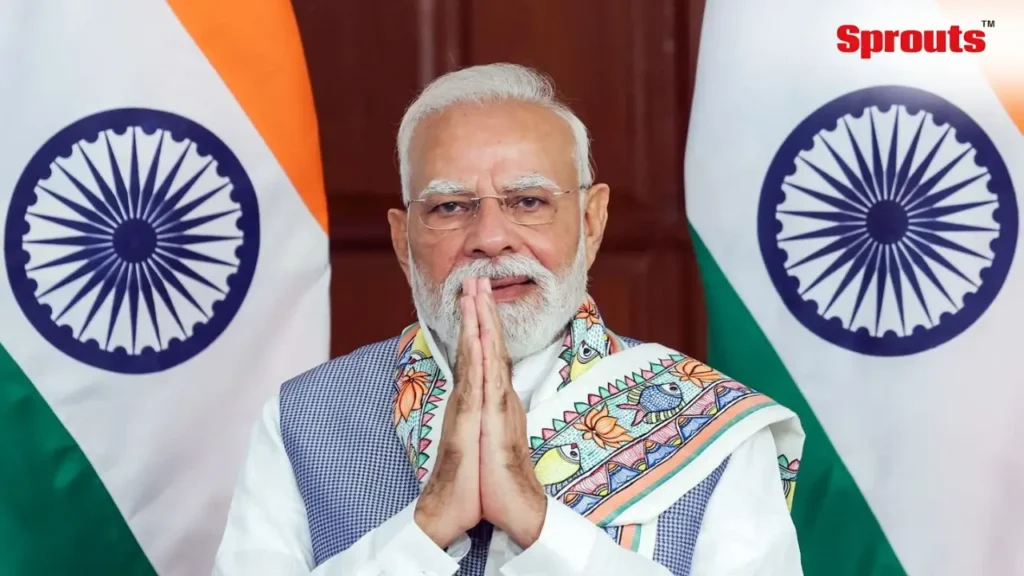
Prime Minister Narendra Modi’s completion of twelve years in office has renewed discussion about the impact of his leadership on India’s development and national identity. Supporters argue that the period has been defined by a shift from self-doubt to greater confidence in India’s capabilities, heritage, and global role. The era has witnessed significant emphasis on digital infrastructure, entrepreneurship, manufacturing, innovation, and self-reliance. Programmes related to technology, governance, and public service delivery have contributed to India’s growing international profile. Observers also point to increased aspirations among youth and rising participation from smaller cities in national development.
Modi Era Explained: How 12 Years of Leadership Shaped India’s Journey from Self-Doubt to Self-Belief
As Prime Minister Narendra Modi completes twelve years in office, supporters describe the period as a transformative phase that reshaped India’s confidence, aspirations, and global standing beyond conventional measures of governance and economic performance.
India’s twelve-year journey under Prime Minister Narendra Modi has become one of the most debated and consequential political chapters in contemporary Indian history. Beyond electoral victories and policy initiatives, supporters argue that the period represents a deeper transformation in national confidence and collective self-belief.
The discussion surrounding the Modi era increasingly extends beyond governance metrics and economic indicators. Many observers view the period as a shift in how India perceives itself, its capabilities, and its role within an evolving global order.
For decades after Independence, India’s development narrative was often accompanied by concerns about institutional limitations, economic dependency, and the lingering effects of a colonial mindset. Analysts frequently noted that international validation was often considered a benchmark of success.
Supporters of Narendra Modi contend that one of his most significant contributions has been challenging this mindset. They argue that his leadership has consistently emphasised confidence in India’s civilisational heritage, domestic capabilities, and long-term national ambitions.
National Confidence Emerges as a Central Theme of the Modi Era
Political observers note that the Modi government has repeatedly framed India not merely as a participant in global developments but as a nation capable of influencing international conversations and shaping future trends.
This narrative has coincided with visible growth across multiple sectors, including digital infrastructure, financial technology, manufacturing, innovation, and space exploration. India’s expanding technological footprint has increasingly attracted attention from governments, institutions, and businesses worldwide.
Programmes focused on digital governance and public infrastructure have particularly drawn international interest. India’s digital payment ecosystem, identity infrastructure, and public technology platforms are frequently cited as examples of large-scale implementation at population scale.
The government has also placed considerable emphasis on self-reliance, entrepreneurship, and domestic manufacturing. Initiatives promoting innovation and start-up culture have contributed to a growing perception of India as an emerging centre for technology development and intellectual capital.
Supporters argue that this shift has strengthened confidence among young Indians, encouraging them to pursue opportunities once considered beyond reach. The aspiration to compete globally is increasingly visible across sectors ranging from technology and research to sports and business.
Importantly, this sense of ambition is no longer confined to metropolitan centres. Smaller cities and towns have witnessed rising entrepreneurial activity, educational achievement, and participation in national development initiatives.
Also Read: Citizens Seek Probe Into Bhiwandi Hookah Lounge Allegations.
Governance, Enterprise and Social Inclusion
Another defining feature of Narendra Modi’s leadership, according to supporters and political commentators, is the attempt to balance economic growth with welfare-oriented governance.
His public messaging has frequently highlighted both entrepreneurship and social responsibility. This approach seeks to encourage investment, innovation, and wealth creation while simultaneously expanding welfare delivery mechanisms and financial inclusion programmes.
Observers often point to Modi’s background and political evolution as factors shaping this governance model. His emphasis on service, organisational discipline, and grassroots engagement has remained a recurring theme throughout his public life.
The government’s supporters argue that these efforts have helped create a framework where economic growth and social inclusion are presented as complementary objectives rather than competing priorities.
Critics, meanwhile, continue to debate the effectiveness of various policies and their long-term outcomes. However, even political opponents often acknowledge that the Modi era has significantly influenced public discourse and national priorities.
A Legacy Defined by Aspirations and Possibilities
As India advances further into the twenty-first century, the broader debate surrounding Narendra Modi’s legacy is likely to continue. Supporters view the period as a national awakening marked by renewed confidence and ambition.
The central argument advanced by many backers is that the most enduring transformation cannot be measured solely through economic data or administrative reforms. Instead, they believe it lies in a generational shift in mindset.
A growing number of Indians now see their country as capable of building, innovating, competing, and leading on the global stage. Whether viewed through political, economic, or cultural lenses, that change in perception may ultimately become one of the defining features of the Modi era.
As India positions itself for emerging opportunities in artificial intelligence, advanced manufacturing, and global innovation, the question of how this renewed confidence shapes the nation’s future will remain a subject of continuing national and international interest. Sprouts News will continue tracking developments shaping India’s evolving growth story.