

The Central Consumer Protection Authority (CCPA) has imposed penalties of ₹1 lakh each on Storia Foods and Beverages Pvt Ltd and Mrs Bectors Food Specialities Ltd, which markets English Oven products, over alleged misleading “100%” claims. The regulator held that absolute representations such as “100% Tender Coconut Water,” “100% Juice,” and similar product claims could create inaccurate impressions among consumers if product composition did not fully match the advertised representation. The CCPA also directed both companies to withdraw the disputed claims from packaging, websites, social media platforms, and e-commerce listings, reinforcing regulatory scrutiny of food and beverage advertising practices in India.
- CCPA Cracks Down on ‘100%’ Claims: Storia Foods and English Oven Fined ₹1 Lakh Each for Allegedly Misleading Advertisements
- CCPA Says ‘100%’ Must Reflect Actual Product Composition
- Storia Coconut Water and Juice Products Examined
- English Oven Advertisements Also Face Regulatory Action
- Consumer Rights and Future Enforcement
CCPA Cracks Down on ‘100%’ Claims: Storia Foods and English Oven Fined ₹1 Lakh Each for Allegedly Misleading Advertisements
The Central Consumer Protection Authority (CCPA) has imposed penalties of ₹1 lakh each on Storia Foods and Beverages Pvt Ltd and Mrs Bectors Food Specialities Ltd, holding that certain “100%” product claims were misleading and likely to create incorrect impressions among consumers.
The CCPA action against Storia Foods and Beverages Pvt Ltd and Mrs Bectors Food Specialities Ltd has drawn attention to the use of absolute marketing claims in India’s food and beverage sector.
In separate orders issued under the Consumer Protection Act, 2019, the Central Consumer Protection Authority imposed penalties of ₹1 lakh each on both companies for allegedly misleading advertisements.
The regulator also directed the companies to withdraw the disputed claims from product packaging, official websites, social media channels, and other digital platforms with immediate effect.
According to the authority, the action was initiated under the Consumer Protection Act, 2019, and the Guidelines for Prevention of Misleading Advertisements and Endorsements for Misleading Advertisements, 2022.
The orders reinforce the regulator’s position that consumers are entitled to accurate information regarding the composition, quality, and characteristics of products offered in the marketplace.
CCPA Says ‘100%’ Must Reflect Actual Product Composition
In its observations, the Central Consumer Protection Authority stated that the expression “100%” is an exact numerical claim and cannot be interpreted loosely or used merely as promotional language.
The regulator noted that ordinary consumers are likely to understand such claims in their literal sense unless a law specifically permits a different interpretation.
According to the authority, companies making absolute claims must ensure that product composition precisely matches the representation conveyed through advertising and packaging.
The regulator observed that misleading claims can influence purchasing decisions and potentially undermine consumer confidence in product labelling and advertising standards.
The latest orders are being viewed as significant developments in the regulator’s ongoing efforts to strengthen transparency and accountability within India’s consumer goods sector.
Storia Coconut Water and Juice Products Examined
The authority took suo motu cognisance of advertising claims made by Storia Foods and Beverages Pvt Ltd for products marketed as “100% Tender Coconut Water” and “100% Juice”.
The products included variants such as pomegranate, mango, mixed fruit, and guava chilli and were promoted through packaging, company websites, and major e-commerce platforms.
According to the regulator, advertisements appeared across Amazon, Flipkart, BigBasket, Blinkit, JioMart, and Zepto, making the claims widely accessible to consumers nationwide.
The authority stated that ingredient declarations indicated the coconut water products contained water and reconstituted coconut water concentrate rather than entirely natural tender coconut water.
The CCPA further observed that the preservative INS 202 was present in certain products, raising concerns regarding accompanying “100% natural” representations.
Regarding juice products, the regulator noted that several beverages contained combinations of water, fruit concentrates, pulp, and additional ingredients despite being marketed as “100% Juice”.
Also Read: Why Red Tape Had to Pay ₹8,000 Over a ₹10 Bag.
English Oven Advertisements Also Face Regulatory Action
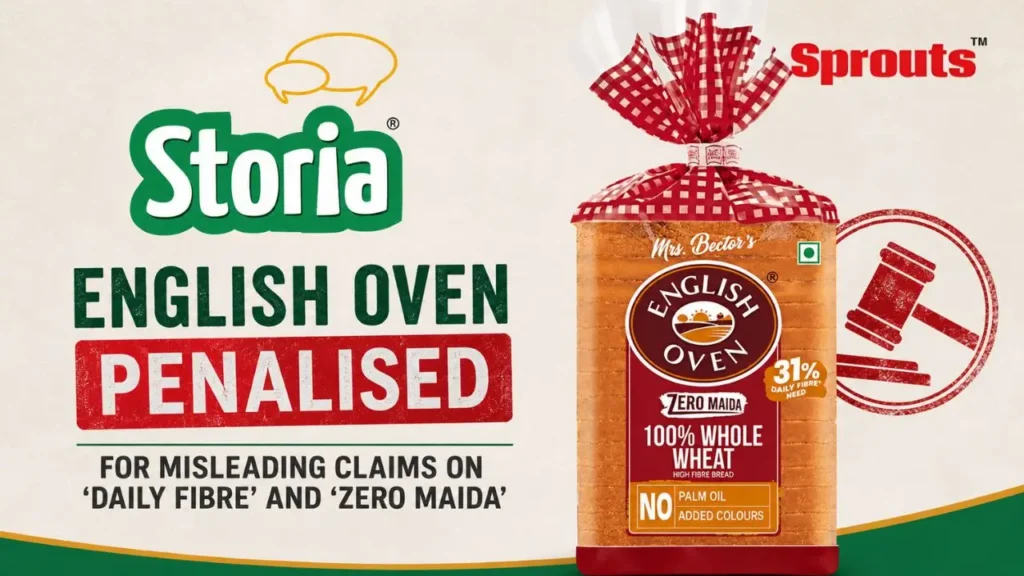
The regulator also examined advertisements issued by Mrs Bectors Food Specialities Ltd for products sold under the English Oven brand.
Promotional material carried claims including “100% Atta Bread”, “100% Whole Wheat Bread”, “Taste of 100% Nourishment”, and “The Taste of 100% Goodness”.
According to the authority, the advertisements appeared in newspapers, on product packaging, official websites, and social media platforms, reaching a large consumer audience.
The CCPA noted that promotional videos carrying the claims had collectively received more than 50 lakh views as of April 2026.
During proceedings, Mrs Bectors Food Specialities Ltd reportedly acknowledged that the bread products contained approximately 87 per cent whole wheat flour.
The regulator concluded that products containing 87 per cent whole wheat flour could not accurately be represented as “100% Atta Bread” or “100% Whole Wheat Bread”.
The authority also observed that simultaneous references to “Zero Maida” and “100% Whole Wheat Bread” could create a broader impression regarding complete product composition.
Consumer Rights and Future Enforcement
The CCPA emphasised that advertisements must be assessed from the perspective of a reasonable consumer rather than through technical explanations offered after publication.
According to the regulator, consumer rights include access to truthful, verifiable, and non-deceptive information regarding food composition, nutritional value, and product quality.
The authority reiterated that exaggerated or absolute claims intended to secure commercial advantage may attract regulatory scrutiny if consumers are likely to be misled.
Industry observers believe the orders could encourage greater caution among food and beverage companies when using numerical and composition-based marketing claims.
The latest enforcement actions send a clear signal that expressions such as “100%” must be supported by verifiable facts and accurate product composition disclosures.
Readers’ Appeal
Consumers who encounter potentially misleading advertisements, inaccurate product claims, or questionable marketing representations should preserve product labels, invoices, photographs, screenshots, and promotional material for future reference.
Unmesh Gujarathi, Investigative Journalist and Editor-in-Chief of Sprouts News, encourages citizens to report matters involving consumer rights, public interest, misleading advertisements, corporate accountability, and regulatory compliance. Readers possessing verified information or supporting documents may contact the Sprouts News Investigation Team for review and further investigation.
Editorial Note:
This article is based on publicly available FIR records, court case references, and reports published by multiple media organisations. The information is presented in the context of ongoing investigations and public interest reporting. Sprouts News does not make any judicial determination regarding the individuals mentioned and does not intend to defame any person or organisation. Any individual seeking clarification or wishing to provide an official response may contact the editorial team with verifiable documentation. The information is presented for journalistic and informational purposes.