The Dharavi redevelopment protest is gaining traction as residents mobilise against a project linked to the Adani Group, citing concerns over transparency and rehabilitation assurances. Thousands are expected to march, supported by leaders including Ambadas Danve, Anil Desai, and Varsha Gaikwad. Protesters allege a lack of clarity on housing allocation, eligibility criteria, and relocation plans. While authorities have not issued detailed responses, the issue highlights ongoing tensions between large-scale urban redevelopment initiatives and community concerns regarding displacement, rights, and consultation processes.
Dharavi redevelopment protest: Ambadas Danve, Anil Desai, Varsha Gaikwad among leaders backing march against Adani-linked project
Thousands of Dharavi residents plan a protest march towards the Adani office in Matunga, alleging a lack of transparency and written assurances in the Dharavi redevelopment project.
The Dharavi redevelopment protest has intensified as thousands of residents prepare to march against the Adani-linked project, alleging a lack of transparency, delayed assurances, and uncertainty over housing rights.
According to information reviewed by Sprouts News, the redevelopment of Dharavi is being undertaken by Navbharat Mega Developers Private Limited, associated with the Adani Group.
Residents have raised concerns that despite repeated representations, neither the state government nor the executing company has provided written assurances regarding key rehabilitation conditions and housing entitlements.
Mass mobilisation from Kumbharwada to Matunga amid rising concerns
The proposed protest march is expected to begin from Kumbharwada in Dharavi and proceed towards the company office in Matunga under intense summer conditions exceeding thirty-five degrees Celsius.
Participants are expected to carry placards and raise slogans highlighting concerns over redevelopment transparency, housing allocation, and the alleged absence of public consultation in project execution frameworks.
Organisers have indicated that the mobilisation reflects growing dissatisfaction among residents over perceived lack of clarity on land allocation, rehabilitation scope, and future housing entitlements within Dharavi itself.
Political leaders and civic representatives extend support to the Dharavi protest
The protest is expected to witness participation from several political leaders, including Ambadas Danve, Anil Desai, Varsha Gaikwad, and Anil Parab.
Other leaders likely to attend include Mahesh Sawant, Jyoti Gaikwad, Baburao Mane, and Kishori Pednekar.
Additional participants include Joseph Koli, T.M. Jagdish, Archana Shinde, Harshala More, Asha Deepak Kale, Babbu Khan, Ulesh Gajakosh, Milind Ranade, Nasrul Haq, Prakash Nakshe, Rahul Gaikwad, Asfaq Khan, Sameer Mangru, Ansar Sheikh, Arif Sheikh, Deepak Khandare, Shakeel Chaudhary, Rafael Paul, Vitthal Pawar, Mahadev Shinde, Kiran Kale, Anand Bhosale, Munna Sheikh, Satish Katke, Mani Kandan, Ganesh Tewar, Suresh Sawant, Ganga Derbar, Shyamlal Jaiswar, and Jagan Bhosale, among others.
Allegations of a lack of transparency in the Dharavi redevelopment project
Leaders of Dharavi Bachav Andolan have alleged that critical details regarding land allocation, the number of housing units, and rehabilitation eligibility criteria remain unclear despite repeated demands for clarification.
Baburao Mane has stated that the project requires a comprehensive public presentation similar to other redevelopment initiatives, including the Motilal Nehru Nagar redevelopment project in Goregaon.
Residents are seeking written assurances that all eligible and ineligible occupants will be rehabilitated within Dharavi itself and provided housing units measuring at least five hundred square feet.
Also Read: Harmony Foundation Row Deepens Amid FIR Against Founder.
Community concerns over rehabilitation rights and historical settlement claims
Leaders such as Anil Desai have highlighted that traditional communities, including Agri Koli residents, have a historical presence in Dharavi predating urban expansion, and their rehabilitation rights require careful consideration.
Mahesh Sawant has stated that the state government and project authorities must issue written commitments ensuring that all residents are accommodated within Dharavi under the redevelopment framework.
Observers note that large-scale redevelopment projects involving dense urban settlements require clear communication, documented consent, and adherence to regulatory norms to maintain public trust and minimise disputes.
Dharavi redevelopment protest signals broader policy scrutiny
The Dharavi redevelopment protest is expected to draw significant attention as thousands mobilise, raising questions about transparency, housing rights, and implementation practices in one of Asia’s largest redevelopment initiatives.
As the situation unfolds, the response from authorities and project developers will likely determine the future trajectory of the project and its acceptance among affected residents and stakeholders.
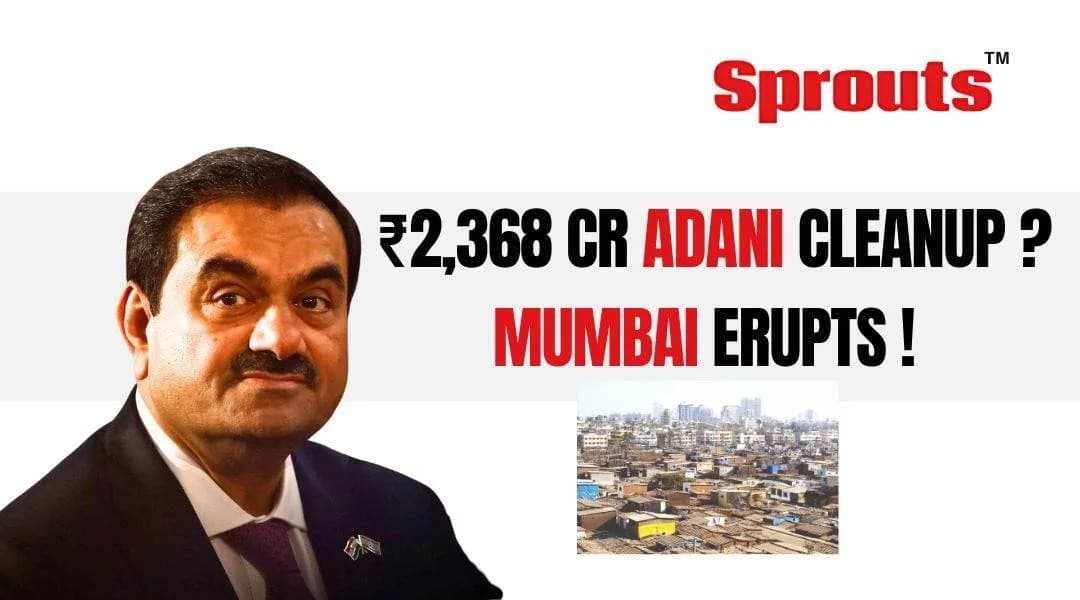
Gautam Adani and Adani Group: Previous controversies and scrutiny
Gautam Adani and the Adani Group have faced multiple phases of regulatory scrutiny, market controversy, and public debate over the past decade, particularly around governance, disclosures, and large-scale infrastructure projects.
One of the most prominent episodes emerged in 2023 following a report by Hindenburg Research, which alleged stock manipulation and accounting irregularities across several listed Adani entities. The group denied all allegations, calling the report “baseless” and “malicious,” while asserting full compliance with Indian laws. Subsequent market volatility erased significant market capitalisation before a partial recovery.
Separately, Adani projects, including ports, power plants, mining operations, and urban redevelopment initiatives, have drawn criticism from activists and civil society groups over environmental clearances, land acquisition processes, and rehabilitation concerns. In several cases, matters have been reviewed by regulatory bodies and courts, with outcomes varying across jurisdictions and projects.
The Dharavi redevelopment project in Mumbai has also become a focal point of public debate, with some residents and activists alleging a lack of transparency and seeking clearer rehabilitation assurances. These concerns remain part of an ongoing policy and governance discussion rather than established findings of wrongdoing.
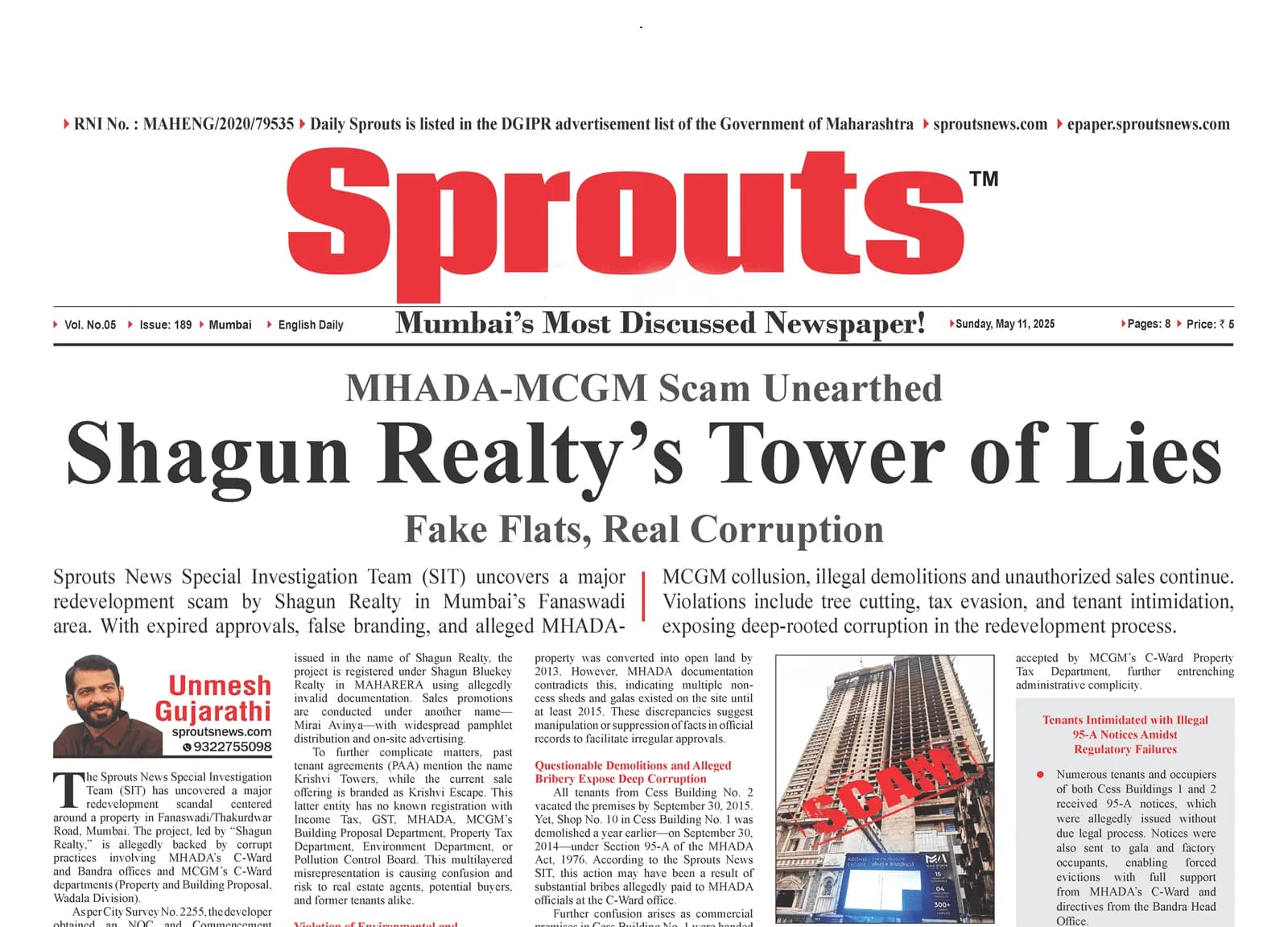
According to Sprouts News, Editor-in-Chief Unmesh Gujarathi has reported on multiple alleged irregularities linked to redevelopment processes, including Dharavi, based on documents and stakeholder claims. However, such allegations remain subject to verification and legal adjudication.
Overall, while the Adani Group continues to expand across sectors, its operations remain under periodic scrutiny, reflecting the broader challenges of accountability, transparency, and regulation in large-scale infrastructure development.
Readers’ Appeal
Unmesh Gujarathi, Editor-in-Chief of Sprouts News and an investigative journalist, continues to report on alleged irregularities linked to redevelopment and corporate practices. Readers with verified documents, evidence, or first-hand information are encouraged to come forward. Your inputs can strengthen accountability-driven journalism. Share credible information responsibly at 9322755098 and support transparent, fact-based public interest reporting.