
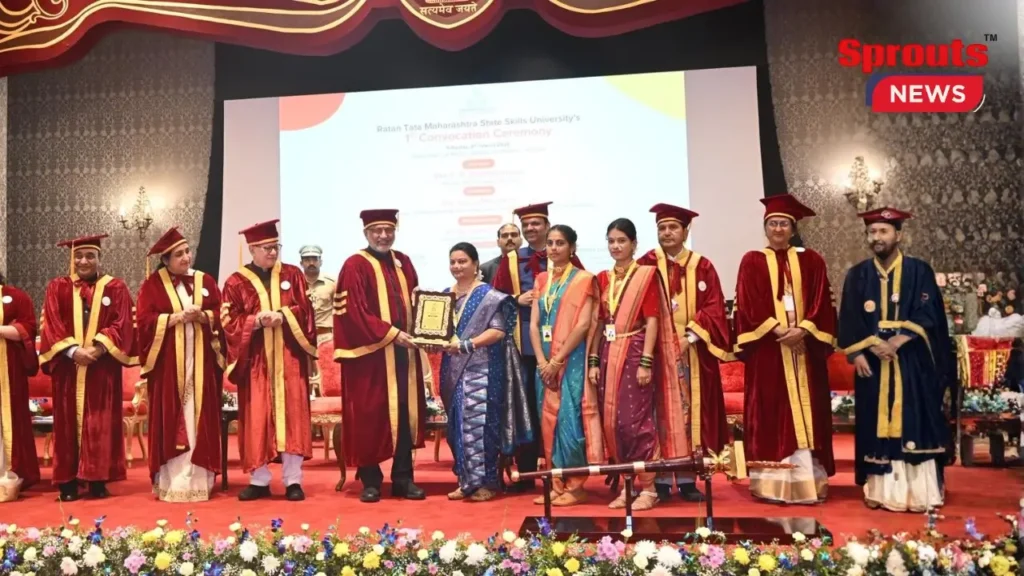
The Jain Diksha Ceremony in Mumbai brought together senior leaders who highlighted the enduring relevance of Jain philosophy in modern society. Vice President C. P. Radhakrishnan and other dignitaries emphasised values such as non-violence, service, and restraint, especially in the context of global conflicts and rising materialism. The event, attended by key political figures, also underscored the importance of preserving Jain heritage and promoting ethical living. With 64 individuals embracing diksha, the ceremony reflected a continued commitment to spiritual discipline and social harmony rooted in Jain teachings.
- Jain Diksha Ceremony Mumbai: Vice President C. P. Radhakrishnan highlights Jain values of non-violence and service
- Jain philosophy’s relevance in the modern global context
- Maharashtra government calls for preservation of Jain heritage
- Social unity and ethical values were emphasised at the Mumbai event
- Broader implications of Jain teachings in contemporary society
- What lies ahead for Jain community initiatives
Jain Diksha Ceremony Mumbai: Vice President C. P. Radhakrishnan highlights Jain values of non-violence and service
Vice President C. P. Radhakrishnan and other leaders highlighted Jain values of non-violence, service, and restraint at Mumbai’s 64th Jain Diksha ceremony, emphasising their relevance amid global conflicts, while urging heritage preservation and promoting social harmony through Jain philosophy.
Leaders, including Jishnu Dev Varma, Devendra Fadnavis, and Mangalprabhat Lodha, emphasise the relevance of Jain philosophy amid global tensions at the 64th Jain Diksha ceremony in Mumbai.
The Jain Diksha ceremony in Mumbai saw Vice President C. P. Radhakrishnan underlines the enduring relevance of Jain values such as non-violence, service, and sacrifice in contemporary society.
Addressing the 64th Jain Diksha ceremony at Darbar Hall in Lok Bhavan on March 21, Radhakrishnan said the Jain community has consistently set an example through charity, discipline, and spiritual commitment.
The event was attended by Governor Jishnu Dev Varma, Chief Minister Devendra Fadnavis, Cabinet Minister Mangalprabhat Lodha, and trustees, including Babulal Bansali, Hitendra Manek, and Rajesh Chandan.
Radhakrishnan noted that 64 individuals taking diksha reflected a strong commitment to simplicity and spirituality, adding that Jain teachings continue to guide society towards peace, compassion, and sustainability.
He also highlighted historical links between Tamil Nadu and Jainism, praising the community’s contributions to literature, culture, and knowledge preservation across centuries in India.
Jain philosophy’s relevance in the modern global context
Governor Jishnu Dev Varma said Jain principles offer a framework for peace and balance, especially amid rising global conflicts and increasing consumerism shaping modern lifestyles.
He emphasised that Indian traditions have historically valued restraint and simplicity, contrasting them with contemporary trends that prioritise material accumulation and unchecked desires in society.
Varma added that individuals from diverse backgrounds embracing diksha in today’s materialistic era signals a renewed interest in spiritual discipline and ethical living rooted in Jain philosophy.
Global conflicts highlight Mahavira’s teachings: Mangalprabhat Lodha
Cabinet Minister Mangalprabhat Lodha referenced ongoing global conflicts, including tensions such as Russia-Ukraine and Israel-Hamas, stating that Lord Mahavira’s message of “Ahimsa Parmo Dharma” remains deeply relevant.
He said the principle of “Live and Let Live,” articulated by Mahavira over 2,500 years ago, continues to resonate even as international institutions struggle to implement lasting peace frameworks.
Lodha also highlighted the concept of Anekantavada, which encourages understanding multiple perspectives, suggesting it could help resolve ideological and geopolitical conflicts in the modern world.
Maharashtra government calls for preservation of Jain heritage
Chief Minister Devendra Fadnavis urged the Jain community to take a proactive role in preserving and restoring ancient temples, describing heritage conservation as a shared cultural responsibility.
He stated that efforts are underway to protect nearly seven crore ancient manuscripts and ensure the safety and restoration of historic Jain temples across Maharashtra.
Fadnavis added that Jain philosophy promotes not only physical non-violence but also intellectual restraint, encouraging harmony in thought and action within increasingly complex modern societies.
Also Read: CoinDCX Co-Founders Arrested in ₹71.6 Lakh Thane Fraud Probe.
Social unity and ethical values were emphasised at the Mumbai event
Mangalprabhat Lodha described the diksha commemoration at Darbar Hall as historic, noting that Jain teachings continue to inspire unity, ethical conduct, and social harmony across communities.
He expressed gratitude to Chief Minister Devendra Fadnavis for supporting the Jain community and acknowledged its contributions to economic growth, philanthropy, and national development.
The ceremony also included recognition of individuals contributing to Jain community progress, alongside an exhibition showcasing ‘Ashta Dravya’—traditional Jain पूजा materials—marking Mahavir Jayanti celebrations.
Broader implications of Jain teachings in contemporary society
Speakers collectively emphasised that Jainism’s core values—non-violence, non-possession, and compassion—offer practical solutions to challenges posed by modern conflicts, environmental stress, and social divisions.
According to discussions at the event, misuse of scientific advancements for warfare and rising societal tensions highlight the urgency of adopting ethical frameworks rooted in spiritual traditions.
As highlighted during the ceremony covered by Sprouts News, leaders stressed that embracing Jain teachings could foster global peace, encourage dialogue, and reduce ideological polarisation.
What lies ahead for Jain community initiatives
The Mumbai Jain Diksha ceremony underscored a broader movement towards spiritual awareness, heritage conservation, and value-based living in India and beyond.
Observers note that continued engagement from institutions, policymakers, and communities will be crucial in translating these philosophical principles into actionable frameworks for societal well-being.
With increasing global uncertainty, the renewed emphasis on Jain philosophy signals a growing recognition of its potential to guide ethical decision-making and sustainable coexistence in the future.
Editorial Note:
This article is based on publicly available FIR records, court case references, and reports published by multiple media organisations. The information is presented in the context of ongoing investigations and public interest reporting. Sprouts News does not make any judicial determination regarding the individuals mentioned and does not intend to defame any person or organisation. Any individual seeking clarification or wishing to provide an official response may contact the editorial team with verifiable documentation. The information is presented for journalistic and informational purposes.