

Mahavir Jayanti 2026 has brought renewed focus on the teachings of Lord Mahavir, particularly ahimsa (non-violence) and anekantavada (acceptance of multiple perspectives). As global conflicts and social tensions rise, these principles offer practical guidance for peaceful coexistence, ethical living, and conflict resolution. Experts note that Mahavir’s emphasis on compassion, restraint, and pluralism aligns with modern calls for dialogue and harmony. The occasion highlights how ancient philosophical teachings continue to remain relevant in addressing contemporary challenges at both individual and global levels.
- Mahavir Jayanti 2026: Ahimsa and Anekantavada in Focus Amid Rising Global Conflicts
- Ahimsa and “Live and Let Live” in a Conflict-Ridden World
- Anekantavada and the Search for Common Ground
- Ethical Living and Inner Transformation
- Modern Challenges and Misuse of Science
- Mahavir Jayanti as a Call for Reflection
Mahavir Jayanti 2026: Ahimsa and Anekantavada in Focus Amid Rising Global Conflicts
Mahavir Jayanti underscores the relevance of ahimsa, compassion, and pluralism in today’s conflict-driven world. His teachings on non-violence, ethical living, and acceptance of multiple perspectives offer practical guidance for fostering peace, personal discipline, and global coexistence amid rising tensions.
As global tensions intensify, the teachings of Lord Mahavir on non-violence, compassion, and coexistence are gaining renewed relevance in shaping ethical and peaceful societies.
Mahavir Jayanti 2026 highlights the enduring relevance of ahimsa, or non-violence, as taught by Lord Mahavir, particularly at a time when global conflicts and social tensions continue to escalate worldwide.
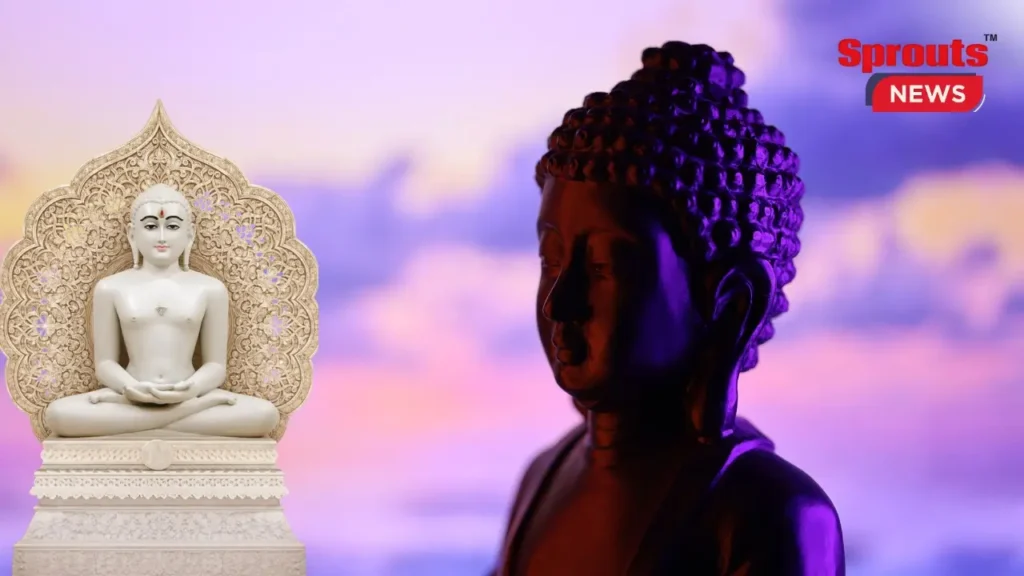
Lord Mahavir, the 24th Tirthankara of Jainism, emphasised ahimsa as a fundamental principle, urging individuals to avoid harming any living being, physically or emotionally, through actions, words, or intent.
In today’s fast-paced world, marked by stress, anger, and anxiety, Mahavir’s teachings offer a framework for personal discipline and emotional balance, encouraging individuals to begin each day with mindful reflection and restraint.
He advocated truthfulness, non-judgment, and respect for all individuals, including adversaries, while stressing ethical conduct such as returning borrowed possessions to uphold honesty and credibility in daily life.
Ahimsa and “Live and Let Live” in a Conflict-Ridden World
The principle of “live and let live,” central to Mahavir’s philosophy, resonates strongly amid ongoing global conflicts, including the Russia-Ukraine war, Israel-Hamas tensions, and unrest across regions such as Afghanistan and Pakistan.
These crises have heightened analysts’ concerns about geopolitical instability, with some experts warning of broader escalations, underscoring the importance of nonviolence and mutual coexistence in international relations.
Mahavir’s teachings assert that every living being values its life, and recognising this shared existence can foster empathy, potentially reducing hostility and promoting dialogue over confrontation in conflict zones.
Also Read: Ratan Tata Skills University Convocation Focuses on Skills.
Anekantavada and the Search for Common Ground
Another key teaching, anekantavada, or the acceptance of multiple perspectives, offers a philosophical approach to resolving ideological conflicts that often arise from rigid, one-sided viewpoints in political and social discourse.
According to this principle, truth is multifaceted, and understanding different perspectives can help reduce divisions based on religion, nationality, or identity, which often fuel unrest and societal fragmentation.
In contemporary contexts, this approach aligns with calls for inclusive dialogue and pluralism, particularly in diverse societies where competing narratives can otherwise escalate into conflict or misunderstanding.
Ethical Living and Inner Transformation
Mahavir also emphasised values such as karuna (compassion), madhyastha bhav (neutrality), and aparigraha (non-possessiveness), which collectively encourage individuals to overcome negative emotions like anger, greed, and attachment.
He taught that true progress lies not in material accumulation but in self-mastery, highlighting that conquering one’s inner weaknesses is more significant than external victories over others.
This philosophy positions ethical self-regulation as the foundation for broader societal harmony, suggesting that individual transformation can contribute to collective peace and stability.
Modern Challenges and Misuse of Science
Despite advancements in science and technology, concerns persist over their application in warfare, including the development of nuclear weapons and missile systems, raising questions about the ethical direction of modern progress.
At the same time, divisions based on religion and identity continue to fuel violence, with reports of increasing hardships faced by vulnerable groups, including women and children, in conflict-affected regions.
Such developments highlight the contrast between technological capability and moral responsibility, reinforcing the relevance of spiritual and ethical frameworks like those proposed by Mahavir.
Mahavir Jayanti as a Call for Reflection
On Mahavir Jayanti, observers across communities are encouraged to move beyond ritualistic worship and actively incorporate principles such as ahimsa, anekantavada, and aparigraha into everyday life and decision-making.
As noted in reflections compiled by Sprouts News, these teachings are not only spiritual ideals but also practical tools for addressing contemporary global and personal challenges through empathy, restraint, and understanding.
Looking ahead, the continued relevance of Mahavir’s philosophy suggests that sustainable peace may depend not only on policy and diplomacy but also on individual ethical choices and collective commitment to non-violence.