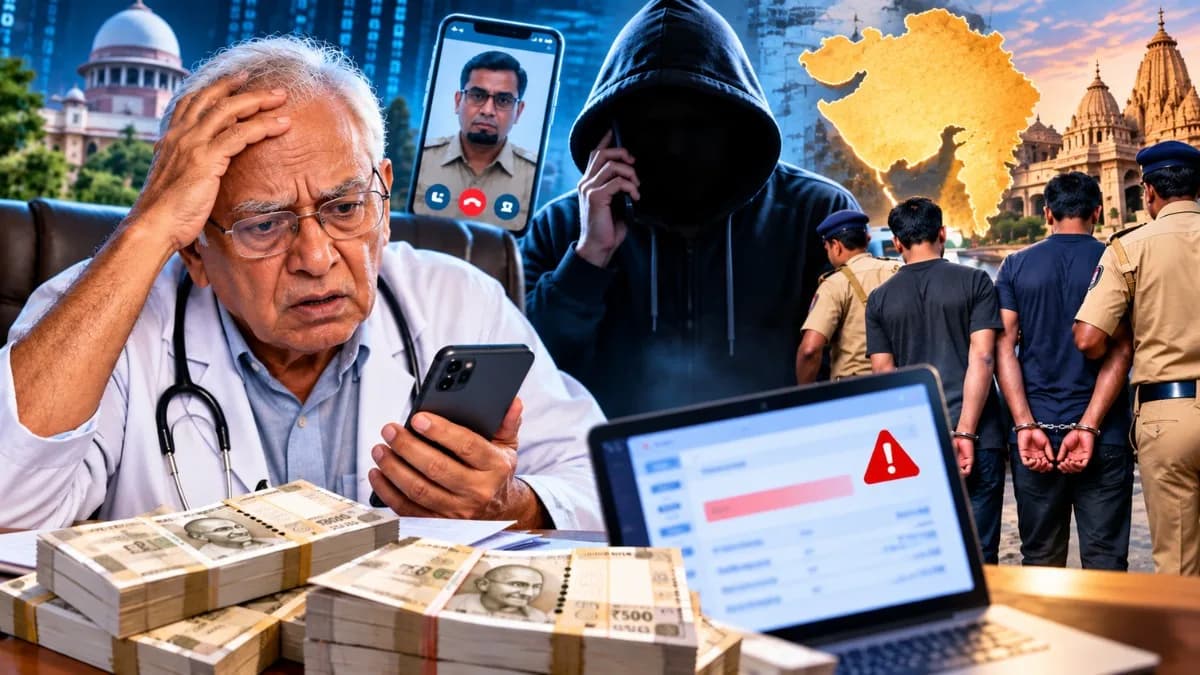
The Enforcement Directorate’s investigation into alleged digital arrest frauds has uncovered a vast financial network with transactions exceeding ₹27,850 crore, according to the agency. The probe began after a Goa woman allegedly lost ₹2.60 crore after being pressured into transferring money to accounts described as “Secret Supervision Accounts.” Investigators said the funds moved rapidly through hundreds of beneficiary accounts, cash withdrawals, payment gateways and foreign-exchange channels. The ED said the wider probe identified 330 victims and 163 FIRs, while examining financial activity involving commodity, travel and currency-exchange businesses.
ED Investigation Reveals Rs 27,850 Crore Network Behind Digital Arrest Frauds Across India
A complaint from a woman in Goa alleging a so-called digital arrest scam has led the Enforcement Directorate to uncover a sprawling money laundering network linked to 330 victims, 163 FIRs, and transactions exceeding Rs 27,850 crore.
The digital arrest scam investigation has exposed one of India's largest alleged cyber fraud-linked money laundering networks, according to findings released by the Enforcement Directorate (ED). Officials tracked transactions of over Rs 27,850 crore while investigating a complaint filed by a woman from Goa.
The woman was allegedly continuously monitored through a video call from May 21 to June 2, 2025, according to investigators. She was allegedly told by people posing as investigators that she was under criminal investigation.
She transferred Rs 2,60,33,634 to accounts which were described to her as ‘Secret Supervision Accounts’ within a period of 14 days. The transfers were allegedly made under duress and with the promise that cooperating would prove her innocence.
Later, the woman filed a First Information Report at the Cyber Crime Police Station in North Goa. That complaint was the beginning of a sweeping financial investigation across several states and institutions.
Money Trail Revealed Complex Banking and Currency Exchange Network
The Enforcement Directorate started probing the movement of the funds transferred and discovered that the cash did not stay for long periods in any single account.
The money moved through dormant and newly created bank accounts that appeared inactive until they were allegedly used to receive cyber fraud payments, investigators said. The money was then rapidly distributed through many channels.
Over 400 beneficiary accounts received portions of the funds through bank transfers, cash withdrawals, self cheques and payment gateways, the agency said. The officials believe the structure was designed to conceal the sources of transactions.
The probe then led the authorities to a web of commodity trading firms, travel firms and foreign exchange players across multiple places in India.
Some of them are said to be holding valid Reserve Bank of India licences as Full Fledged Money Changers. The Enforcement Directorate said the proceeds of crime were moved through legitimate business structures.
The cyber fraud funds were allegedly converted into cash and then converted into foreign currency through authorized channels, officials said. The process helped conceal the source of the stolen money, investigators said.
The agency said that the entities together had conducted banking transactions of more than Rs 27,850 crore. Cash deposits of nearly Rs 2,904 crore into various accounts/institutions were also noted.
Only through Bulk Note Acceptance Machines, Rs 584.70 crore was deposited, the Enforcement Directorate said. These deposits were made in 61,448 separate transactions in locations across the country.
The agency said the amount of cash handling was not consistent with normal commercial activity, citing transaction patterns seen during the investigation.
Also Read: IAS Anurag Verma Summoned in Punjab of ₹348-Crore Land Use Fraud Investigation.
Related News: ₹400-Crore Digital Arrest Racket: ED Probe Finds 330 Victims Nationwide.
Goa Complaint Linked to 330 Victims Across 20 States
But during the probe of those accounts where money was credited, investigators found that the connections went beyond the original complainant from Goa. The same financial channels kept turning up in complaints of cyber fraud.
The Enforcement Directorate said the accounts were linked to 330 complaints from victims and 163 FIRs registered in 20 states and union territories.
The authorities pegged the total reported loss in connection with these complaints at Rs 417.49 crore. Investigators found common financial pathways that connected more than one case of fraud.
Officials say in 101 cases, money taken from one victim was passed through two or more entities within the same network in a single instance of fraud.
Investigators also said several companies involved in the transactions were registered in the names of employees, drivers and residents of single-room tenements.
These people, the agency said, were registered as directors in official records, but the real control over banking and business activities was allegedly exercised by other people.
Searches, Arrests and Ongoing Investigation
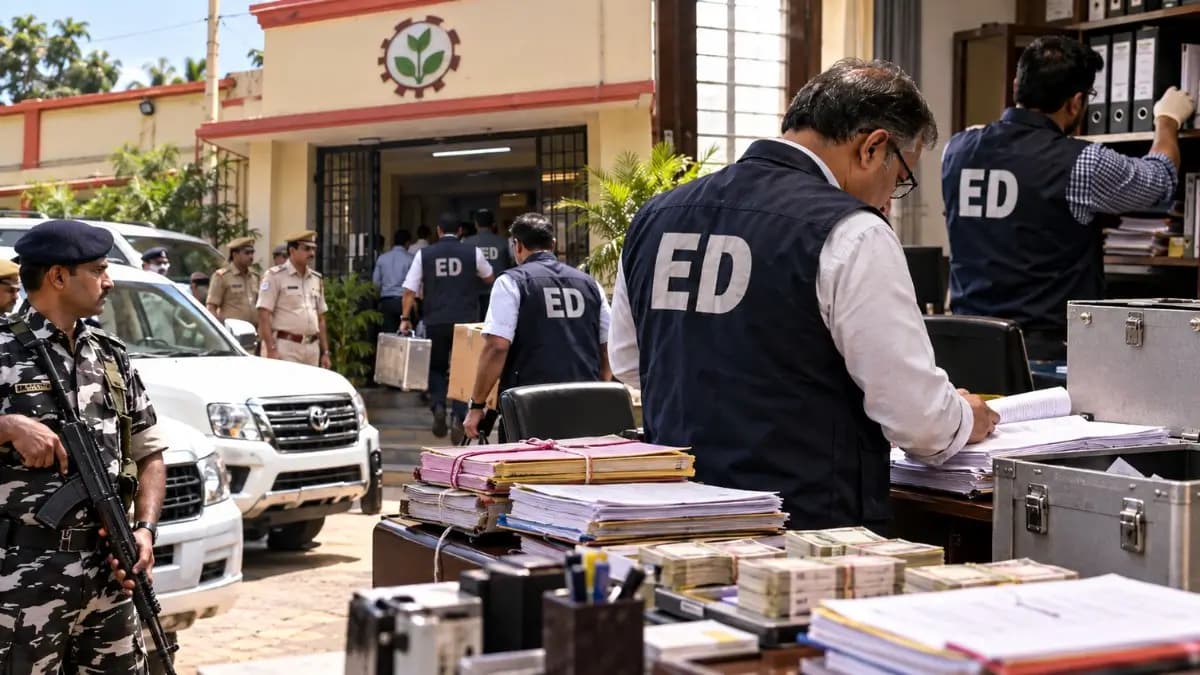
On July 17, 2026, Enforcement Directorate officials conducted searches at 20 premises in Mumbai and Goa under Section 17 of the Prevention of Money Laundering Act. Additional searches followed on August 21.
Officials seized Rs 3.25 crore in cash and froze bank accounts containing balances exceeding Rs 30 crore. Digital devices, account records, statutory registers, and financial documents were also seized.
On August 23, 2026, the Enforcement Directorate arrested Fahim Moin Hussain Sayed and Naim Mueen Sayyed under Section 19 of the Prevention of Money Laundering Act.
Both individuals were produced before the Special Court (PMLA) in Goa on August 24 and were remanded to Enforcement Directorate custody until August 29.
The agency said that the investigation continues and that, as the forensic examination of seized records continues, there could be further arrests or disclosures. As previously reported by Sprouts News, authorities have reiterated that there is no authentic Indian law enforcement agency that investigates through “digital arrest” procedures or requests money transfers for verification purposes.
The Enforcement Directorate has appealed to citizens receiving such calls to immediately disconnect the call and report the incidents to the national cybercrime helpline 1930 or the official cybercrime reporting portal.