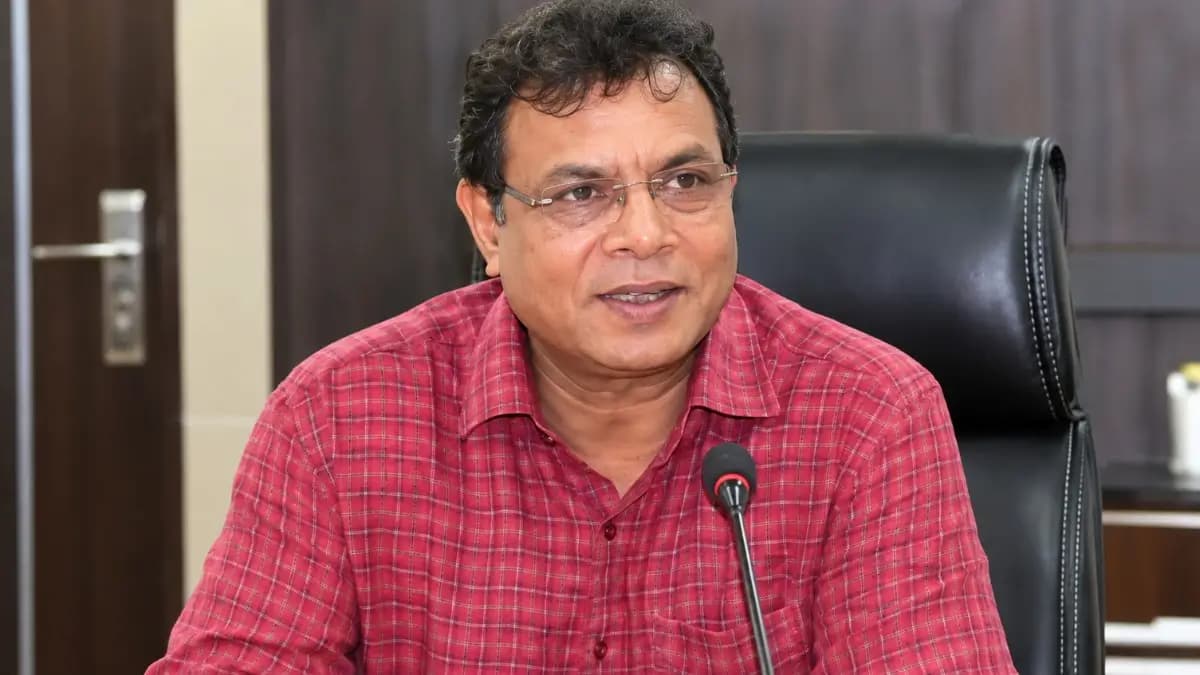
The approval of IES Skill Tech University marks a major step in Maharashtra’s push for industry-oriented education. Announced by Mangal Prabhat Lodha, the initiative aligns with the Skill India Mission to address the rising demand for skilled professionals. With increasing investments across sectors, the university aims to bridge the gap between academic learning and practical industry requirements. Officials believe such institutions will play a key role in preparing job-ready youth and supporting long-term economic growth in the state.
IES Skill Tech University in Mumbai approved: Maharashtra government clears private skills university plan
Cabinet nod for IES Skill Tech University in Mumbai signals a push for an industry-ready workforce under the ‘Skilled Maharashtra, Employment-Oriented Maharashtra’ vision.
The IES Skill Tech University approval marks a significant policy step by the Maharashtra government to address the rising demand for skilled human resources amid accelerating industrial investment across the state.
Announcing the decision on April 14 in Mumbai, Skill Development, Employment, Entrepreneurship and Innovation Minister Mangal Prabhat Lodha said the state cabinet has cleared the establishment of the university.
The proposed institution is expected to focus on industry-aligned training, aiming to bridge the gap between academic learning and practical workforce requirements in emerging and traditional sectors.
Maharashtra links investment growth with skilled workforce strategy
According to Lodha, the decision comes in response to increasing investment inflows into Maharashtra, which are expected to generate large-scale employment opportunities in the coming years across multiple industries.
He said the initiative aligns with Prime Minister Narendra Modi’s ‘Skill India’ mission, with the state advancing its own vision of ‘Skilled Maharashtra, Employment-Oriented Maharashtra’ through targeted policy measures.
Officials believe that without a parallel expansion in high-quality skill training infrastructure, industries may face shortages of trained professionals despite strong capital inflows and project pipelines.
Davos investment commitments and future workforce demand
Highlighting recent developments, Lodha referred to Maharashtra’s participation at the World Economic Forum in Davos, where the state reportedly secured investment commitments exceeding ₹30 lakh crore across sectors.
These proposed investments are expected to translate into multiple industrial and infrastructure projects, significantly increasing demand for technically trained and job-ready human resources in the near future.
The government has indicated that such large-scale investments necessitate structured skill development ecosystems to ensure that local youth can effectively participate in upcoming employment opportunities.
Also Read: JJT University Case: FIR Against Kachhawa Found Baseless.
Policy framework for private skill universities since 2021
The establishment of IES Skill Tech University follows a regulatory framework introduced by the Maharashtra government in 2021 to enable private skill universities focused on industry-relevant education.
Under this framework, institutions are expected to design curricula in collaboration with industry stakeholders, ensuring that graduates possess competencies aligned with real-world job requirements and evolving technologies.
This approach is aimed at reducing the disconnect between academic institutions and employers, a gap often cited as a challenge in India’s higher education and employment landscape.
University to begin operations in Bandra from the 2026–27 academic year
The university will be set up in Bandra, Mumbai, and is scheduled to commence operations from the 2026–27 academic year, subject to regulatory and infrastructure readiness.
According to the government, the institution will prioritise skill-based education, global competitiveness, and industry integration, with a focus on preparing students for both domestic and international job markets.
Officials have also emphasised the role of such institutions in fostering entrepreneurship and innovation, alongside conventional employment pathways, as part of a broader economic development strategy.
Broader implications for employment and the education ecosystem
Experts suggest that expanding private participation in skill-based higher education could help address structural gaps in India’s workforce readiness, particularly in high-growth sectors requiring specialised technical expertise.
However, they also note that the effectiveness of such universities will depend on implementation quality, industry partnerships, and accessibility for students across socio-economic backgrounds.
As reported by Sprouts News, the initiative reflects a broader shift towards outcome-driven education models, where employability and industry alignment are central to institutional design and policy direction.
What lies ahead for Maharashtra’s skill development roadmap
Looking ahead, the success of IES Skill Tech University may influence the pace and scale of similar institutions across Maharashtra, especially if it demonstrates measurable outcomes in employment generation.
Minister Lodha expressed confidence that the decision will strengthen the state’s skill development ecosystem and create a robust foundation for sustainable job creation in the coming years.
With large investments in the pipeline and policy emphasis on workforce readiness, Maharashtra’s approach could serve as a model for integrating education, industry, and employment planning at scale, according to observers.