The JJT University case has taken a significant turn after a police probe found the FIR against Sagar Kachhawa to be baseless. The investigation concluded that no criminal offence occurred, leading to the closure of the case during National Lok Adalat proceedings. The matter involved complaints related to academic processes at Shri Jagdishprasad Jhabarmal Tibrewala University. The findings have raised broader concerns about the use of legal action in institutional disputes and the protection of individuals raising governance-related issues.
JJT University case Latest Update: FIR against Sagar Kachhawa found baseless after police probe
The police final report in the Jhunjhunu case concludes that no offence occurred, raising questions about the intent behind the complaint filed against the whistleblower and prompting university-related concerns.
The JJT University case has drawn attention after a police investigation found the FIR against Sagar Kachhawa to be baseless, concluding that no criminal offence was established in the matter.
According to official findings, the case relates to Shri Jagdishprasad Jhabarmal Tibrewala University in Jhunjhunu, where allegations against Kachhawa were examined through a detailed police probe and subsequent legal proceedings.
The final report submitted by the investigating officer classified the case as “Adam Vakua,” indicating that no incident constituting a crime was found during the course of the investigation.
Complaints about academic processes triggered legal action
Available information indicates that during 2024–25, Sagar Kachhawa filed multiple complaints regarding alleged irregularities in the university’s functioning before regulatory and government bodies, including the University Grants Commission.
These complaints reportedly raised issues related to academic procedures, PhD programmes, and administrative transparency, prompting scrutiny from authorities and initiating formal communication between the university and oversight institutions.
Following these submissions, in 2025, the university administration filed a case against Kachhawa at Dhanuri police station in Jhunjhunu district under various provisions of the Indian Penal Code.
The charges reportedly included allegations of fraud, forgery, and violations under the Information Technology Act, forming the basis of the FIR that later became subject to police investigation.
Police probe finds no supporting evidence
During the investigation, officials reportedly did not find substantive evidence supporting the allegations made against Kachhawa, leading to the conclusion that the case lacked a factual basis.
The final report further noted that the FIR may have been registered with the intention of discouraging or stopping the complaints raised by Kachhawa, according to the investigating officer’s findings.
This observation has raised broader concerns about the use of legal provisions in disputes involving institutional accountability and individuals raising grievances related to governance or compliance issues.
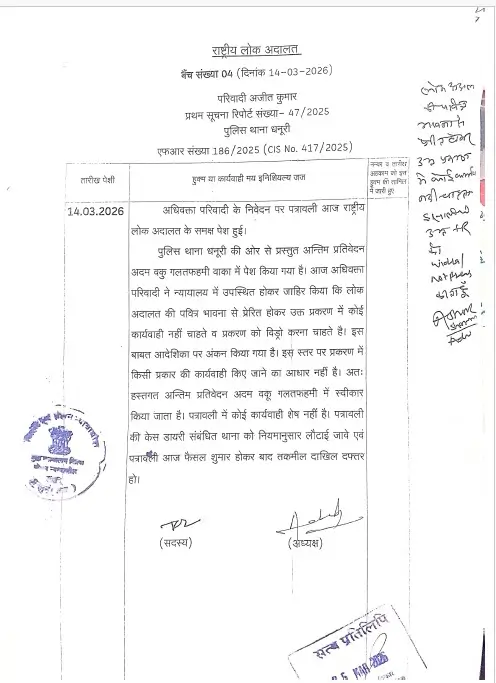
National Lok Adalat disposes of the case after the report acceptance
On March 14, 2026, during proceedings at the National Lok Adalat, the complainant side, representing the university administration, reportedly expressed unwillingness to pursue the matter further.
Following this submission, the court accepted the police’s final report and formally disposed of the case, bringing an end to the criminal proceedings against Sagar Kachhawa.
Legal experts note that acceptance of such reports typically indicates that the court found no grounds to continue prosecution based on the evidence presented by investigating authorities.
Administrative scrutiny by the Rajasthan higher education authorities
During the course of the dispute, the Rajasthan Higher Education Department is understood to have sought a factual report from the university regarding the issues raised in Kachhawa’s complaints.
This development suggests that the matter was also examined at an administrative level, beyond the criminal proceedings, particularly in relation to institutional processes and regulatory compliance.
Authorities have not publicly disclosed detailed findings from this administrative review, and further clarity may depend on official disclosures or subsequent actions by regulatory bodies.
Transparency, accountability and whistleblower concerns in focus
The case highlights ongoing debates around transparency and accountability within higher education institutions, particularly when individuals raise concerns about governance, academic integrity, or procedural irregularities.
Experts say such cases underline the importance of safeguarding complaint mechanisms to ensure that individuals can report issues without fear of retaliatory legal action, while maintaining due process for all parties involved.
As reported by Sprouts News, the outcome may contribute to broader discussions on regulatory oversight, institutional responsibility, and the protection of whistleblowers within India’s higher education framework.
What lies ahead after the JJT University case findings
While the criminal case has been closed, attention may now shift to any pending administrative reviews and potential policy responses concerning grievance redressal mechanisms in educational institutions.
Observers suggest that clearer guidelines and stronger institutional safeguards could help balance accountability with legal fairness, ensuring that disputes are addressed transparently without undermining confidence in regulatory systems.
The JJT University case, therefore, remains significant not only for the individuals involved but also for its implications on governance practices and complaint handling frameworks across the higher education sector.
Also Read: FTv Kashiff Khan case: Complaints Raise Absconding Fears.
Related News: JJTU PhD Row Over 700+ Doctorates Despite UGC Ban.
Previous controversies surrounding JJT University: A closer look at past allegations and regulatory action
Shri Jagdishprasad Jhabarmal Tibrewala University (JJT University), based in Jhunjhunu, Rajasthan, has faced repeated scrutiny over the years amid allegations related to academic practices, degree validity, and regulatory compliance.
One of the most widely reported controversies involves the alleged large-scale issuance of PhD degrees. Multiple reports have claimed that the university awarded an unusually high number of doctoral degrees within a short period, raising concerns among regulators.
According to findings cited in media investigations, this surge in PhD awards prompted action from the University Grants Commission (UGC), which reportedly debarred the university from enrolling students in PhD programmes for a specified period.
Further reports suggested that more than 700 PhD degrees were awarded despite regulatory restrictions, triggering additional scrutiny and a broader probe into academic practices at the institution.
Separate investigative reports have also alleged that thousands of doctoral degrees issued by the university may have been questionable, with concerns raised about faculty availability, research supervision, and infrastructure adequacy.
In addition to individual allegations, JJT University has been named among several private universities in Rajasthan that came under government investigation over claims of fake degrees and academic irregularities.
The Rajasthan government, according to official statements, initiated probes into multiple institutions following complaints regarding manipulated mark sheets, degree authenticity, and broader governance issues within private higher education systems.
These developments highlighted systemic concerns beyond a single institution, pointing to gaps in regulatory oversight and quality control mechanisms in the private university sector across the state.
The controversies have also sparked debate within academic and policy circles regarding the balance between institutional autonomy and regulatory accountability, particularly in the context of higher education expansion in India.
While the university and associated trusts have, at times, contested regulatory findings and appealed against actions such as UGC restrictions, the repeated scrutiny has kept the institution in focus within ongoing discussions on education standards.
Overall, the past controversies linked to JJT University underline broader challenges in ensuring transparency, maintaining academic integrity, and protecting student interests in an evolving higher education landscape.
As highlighted in multiple reports referenced by Sprouts News, the case continues to be cited as an example of why stronger regulatory frameworks and enforcement mechanisms are considered essential in India’s private university ecosystem.
Readers’ Appeal
Investigative journalist Unmesh Gujarathi has reported on multiple alleged irregularities linked to JJT University. If you have credible information regarding the university or similar cases, you may contact us at 9322755098.