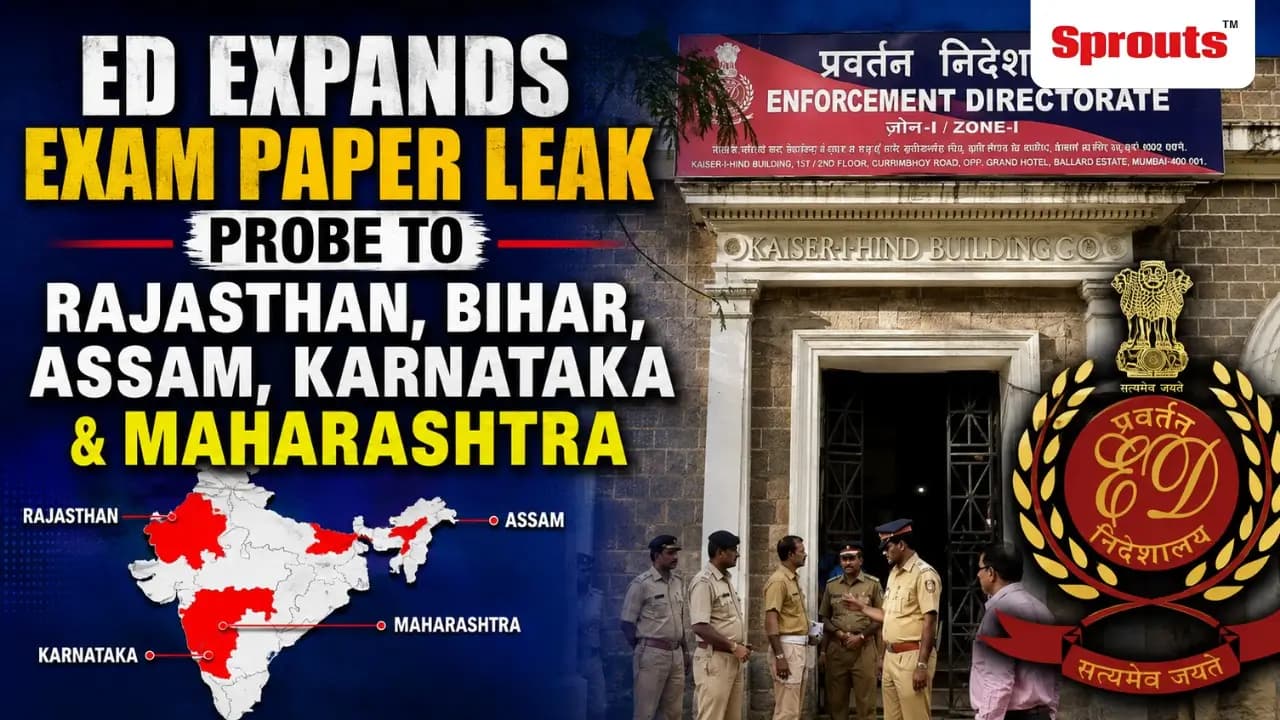
The National Testing Agency (NTA) has issued a ₹7.5 crore tender to strengthen security across its headquarters, regional offices and examination infrastructure following the NEET-UG 2026 paper leak controversy. The proposed contract covers protection of confidential records, server rooms, strong rooms and digital systems as the agency seeks to reinforce examination security amid ongoing investigations and public scrutiny.
NEET 2026 Paper Leak Fallout Forces NTA Into Massive ₹7.5 Crore Security Overhaul
The National Testing Agency (NTA) has floated a tender worth ₹ 7.5 crore to strengthen security at its offices, examination infrastructure and confidential systems, amid continuing scrutiny over exam integrity after the NEET-UG 2026 paper leak controversy.
A security tender of ₹7.5 crore has been floated by the National Testing Agency (NTA) in the wake of the NEET-UG 2026 paper leak controversy, one of its biggest efforts to beef up security around India’s high-stakes entrance examination system. The purchase is designed to protect sensitive exam materials, digital systems and key facilities amid ongoing investigations and increasing public scrutiny.
The tender, issued on July 25, is for the appointment of a professional security agency for providing round-the-clock security at the NTA headquarters at Minto Road in New Delhi, its regional office in Okhla and other places as may be designated by the agency. The firm shall be responsible for providing security of personnel, visitors, premises, confidential examination records, server rooms, strong rooms, warehouses, record rooms and other infrastructure used during the conduct of national level examinations.
The contract is for an initial period of 2 years with an option for the National Testing Agency to extend the agreement for two additional terms of one year each. Bids are to be submitted by interested agencies till August 17, tender documents said.
NTA Expands Security Measures Across the Examination Process
The security contract is part of a wider procurement exercise that includes housekeeping services and examination grade printing services. Together, these initiatives signify the National Testing Agency’s attempts to improve safeguards at all levels of the examination lifecycle.
The expanded measures aim to improve protection in the areas of printing, storage, transportation, access control and digital operations related to national entrance examinations. The agency is strengthening several layers of the examination process to reduce vulnerabilities that have come under increasing scrutiny in recent years.
The procurement exercise also points to a growing emphasis on protecting both physical and digital infrastructure, driven by concerns that exam breaches can be made through a variety of access points, rather than one single point of vulnerability.
Also Read: Ramayana Film Faces Protest Warning Over Alleged Religious Concerns.
NEET-UG 2026 Paper Leak Renewed Concerns Over Exam Integrity
The latest security measure comes after months of public scrutiny in the wake of the NEET-UG 2026 paper leak, which once again brought nationwide concerns about the credibility of India’s medical entrance examination system under the spotlight.
The case has attracted greater attention and investigations into the alleged leak are ongoing, with some raising fears that organised networks are exploiting weaknesses in printing, storage, transportation and authorised access to confidential examination materials. Earlier probes into paper leak cases in NEET have suggested that the supply chain of the examination can be compromised at various levels, including at the stage of printing, storage or by insiders having legitimate access.
The row has also sparked wider debate over the need for stronger technological safeguards and tighter operational controls to protect high-stakes exams conducted across the country.
Previous NEET Controversies Continue to Shape Reforms
The NEET-UG 2026 controversy has also revived memories of the NEET-UG 2024 row, when allegations of paper leaks, examination irregularities and abnormally high scores triggered nationwide protests, legal challenges and an investigation by the Central Bureau of Investigation (CBI).
The Supreme Court of India later ruled that some candidates had benefited from a paper leak but refused to order a re-examination across the country, saying that the evidence at hand did not prove a systemic failure that affected the full exam process. The ruling, however, triggered more calls for stronger safeguards and more transparency in the administration of competitive examinations.
The National Testing Agency is trying to boost confidence in the country’s examination system with the latest security initiative worth ₹7.5 crore as investigations continue and policymakers consider further reforms to prevent future breaches. The effectiveness of these enhanced security measures will likely be closely watched by students, institutions and government authorities alike, with scrutiny remaining high. Sprouts News will keep track of further developments around the NEET-UG 2026 investigation and examination reforms.