
SoftBank Corp. may launch its AI cloud business outside the United States first if American market conditions worsen, CEO Junichi Miyakawa said on November 9, 2026. The Japanese telecom company is assessing political developments following US midterm elections and growing opposition to data centre construction. Its planned American AI infrastructure could reach 10 gigawatts, according to Bloomberg. Despite the uncertainty, SoftBank reported 37% year-on-year growth in Cloud & AI revenue and raised its annual earnings outlook.
SoftBank AI Cloud Business Could Launch Overseas Before the US Amid Rising Data Centre Opposition
SoftBank is reconsidering the timing of its planned US AI cloud launch as political changes and growing resistance to data centre building create uncertainty around expansion.
Junichi Miyakawa, the chief executive of the mobile arm, said that SoftBank AI cloud business expansion plans could shift to countries other than the United States if conditions in the American market worsen.
Miyakawa told investors in Tokyo on Monday that the recent developments in the United States would not help the company as it prepared its artificial intelligence cloud operations.
SoftBank could launch its services elsewhere first if conditions deteriorate sharply, he said. He also said that global customers were looking for big AI data centre capacity.
Bloomberg reported that SoftBank had been getting ready to set up AI cloud operations in the United States. It has plans to develop as much as 10 gigawatts of capacity there.
Bloomberg reports that the company is now looking at the possible effects of the Democratic Party's sweeping wins in last week's midterm elections, as well as growing opposition to new data centres.
The Democrats’ gains are expected by observers to bring with them increased regulatory scrutiny and slower data centre construction. The report that is available does not identify specific proposed rules or measures.
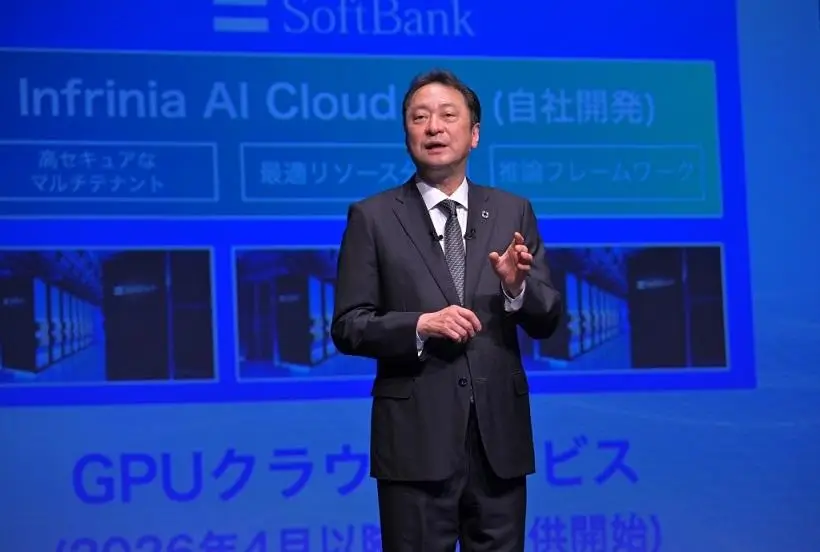
SoftBank AI Cloud Business Faces US Political and Regulatory Uncertainty
SoftBank spoke after reporting its consolidated earnings for the six months ended September 30. Results were released on Monday, 9 November 2026.
Its results announcement said cloud and artificial intelligence-related revenue rose 37% in the six months to September, and the company also raised its annual profit outlook.
According to Bloomberg, SoftBank is the third-largest wireless carrier in Japan. It has also expanded beyond mobile services into artificial intelligence offerings and data centre operations to serve Japanese businesses.
The possible move would not necessarily involve leaving the United States. Miyakawa’s comments suggested the project would be launched first in other countries if conditions worsened sharply, not scrapping the American project.
Also Read: Rimzim Paan Ulhasnagar Controversy Raises Concerns Over Children's Safety
Malaysia and Wider Asian Ambitions Add Another Route for AI Infrastructure
The larger corporate grouping, SoftBank Group, has also been eyeing artificial intelligence infrastructure opportunities in Asia, as well as ambitions in the United States and Europe.
In a separate announcement last month, Malaysian Prime Minister Anwar Ibrahim said SoftBank Group planned to invest $50 billion in Malaysia in AI, data centres and other emerging technologies.
Anwar said possible locations were identified by Masayoshi Son, the founder and chief executive of SoftBank Group, in Kuching, Sarawak, and in peninsular Malaysia.
The group is talking about the Malaysian plan as it looks to bring to Asia the kind of infrastructure building it has done in the US and Europe.
SoftBank’s mobile carrier is not part of SoftBank Group, as part of the wider corporate structure. The reported Malaysian investment plan was attributed to SoftBank Group, not directly to the wireless carrier.
What SoftBank’s Next Steps Could Mean
SoftBank has not yet announced a final change to its rollout timetable, nor confirmed which countries might get the service before the United States.
The company’s next steps will likely depend on how it sees US regulatory conditions, community resistance, and appetite for computing capacity in possible alternative markets.
Miyakawa said global demand for AI data centre capacity remains strong, suggesting the company sees opportunities beyond one national market as it considers its expansion plans.
Investors will be looking for more details on the size, timing and location of planned facilities and whether the raised annual profit outlook is maintained.