Exclusive: Bhivpuri Sai Baba Temple near Karjat traces its origins to 1916, when devotee Keshavrao Pradhan reportedly established a shrine at Ukrool following an encounter with Sai Baba of Shirdi. Historical material published by Shree Saibaba Sansthan Trust, Shirdi, records that Sai Baba gave Pradhan a replica and instructed him to establish it at his residence. The shrine therefore dates to the period before Sai Baba’s Mahasamadhi in 1918. Claims that it was the first Sai Baba temple worldwide, however, require careful historical qualification.
Bhivpuri Sai Baba Temple — The 1916 Shrine Established During Sai Baba’s Lifetime
One of Maharashtra’s least-known Sai heritage sites traces its beginnings to Keshavrao Pradhan and a sacred representation personally entrusted to him by Sai Baba in 1916.
Bhivpuri Sai Baba Temple near Karjat in Maharashtra traces its origins to 1916, when devotee Keshavrao Pradhan established a shrine there during Sai Baba’s lifetime.
Historical material published by Shree Saibaba Sansthan Trust, Shirdi, records that Sai Baba personally gave Pradhan a replica and instructed him to build a temple.
Bhivpuri Sai Baba Temple and its remarkable 1916 origin
The account gives Bhivpuri unusual significance within Sai tradition, because the shrine developed before Sai Baba’s Mahasamadhi in 1918 and remained linked to Pradhan’s family.
Today, the temple at Ukrool near Bhivpuri Road continues to preserve that legacy, while several episodes associated with its founding remain matters of devotional testimony.
Keshavrao Pradhan, who lived at Ukrool and travelled frequently for work, was initially described in Sai Leela records as sceptical about Sai Baba of Shirdi.
According to the published account, a friend persuaded Pradhan to visit Shirdi, where the encounter transformed his outlook and led to repeated journeys for Sai Baba’s darshan.
During one such visit in 1916, Sai Baba reportedly handed Pradhan a replica of himself and instructed him to establish it at his own residence.
The Sai Leela account records Sai Baba telling Pradhan that his own place would now be his Shirdi, discouraging him from making repeated journeys there.
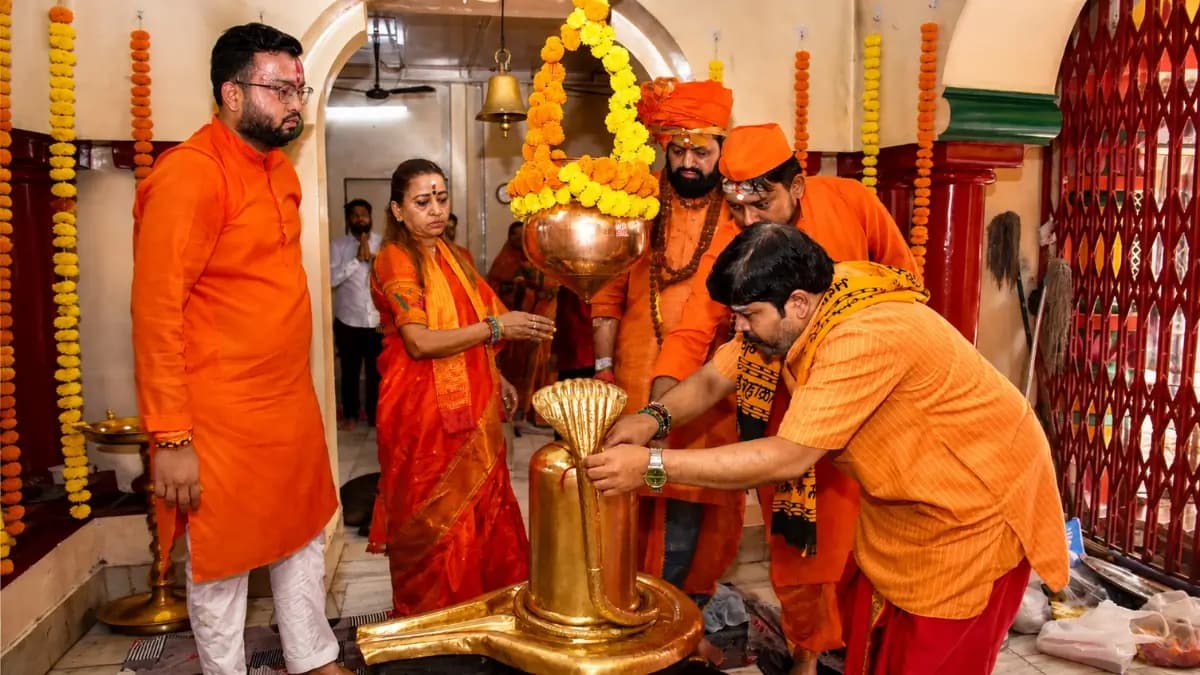
Pradhan later erected a small temple near his home at Ukrool, ceremonially installed the replica, and began regular worship, offerings and occasional religious functions there.
The source material supplied for this article describes the object as a shadu-clay image, while Sai Leela uses the English term “replica” for the sacred representation.
Was Bhivpuri the first Sai Baba temple?
That distinction is important because the historical record supports the existence of a consecrated representation, but does not conclusively establish every later description of its material.
The temple’s founding is frequently described by devotees as the earliest Sai Baba shrine established during his lifetime, although such global priority claims require careful qualification.
Official Sai Leela material confirms the temple’s 1916 origin narrative, but it does not, in the cited passage, independently catalogue every Sai shrine then existing worldwide.
The devotional account also connects the Bhivpuri image with another celebrated Sai episode involving Anna Saheb Dabholkar, known as Hemadpant, during Holi Purnima in 1917.
Shree Saibaba Sansthan Trust’s historical chronology records that Ali Mohammed brought Hemadpant a framed portrait after Sai Baba had appeared to him in a dream.
The Bhivpuri tradition notes visual similarities between these representations and says another comparable image existed in Mumbai, reflecting the early circulation of Sai Baba imagery.
Pradhan’s devotion deepened through experiences later preserved in Sai literature, including accounts that Sai Baba was reportedly seen within the temple precincts during the night.
Such episodes are best understood as devotional testimony: Sai Leela records them as experiences reported by Pradhan, his family members and guests, not independently verifiable events.
Accounts of Sai Baba’s presence at Bhivpuri
One tradition says Sai Baba appeared near the temple before entering and later leaving it, convincing Pradhan that his spiritual presence remained permanently associated with Bhivpuri.
Pradhan then reportedly built a Tulsi Vrindavan at the place where Sai Baba was believed to have stood, preserving the location from ordinary foot traffic.
After Sai Baba’s Mahasamadhi, the Bhivpuri complex expanded as pilgrim numbers increased, and responsibility for its continuation passed to Pradhan’s family and associated local devotees.
Sai Leela records that Keshavrao Pradhan died in 1939, after which his sons, son-in-law and supporters organised Shri Sadguru Sainath Seva Samstha with seven trustees.
A later phase centred on the Dhuni, the sacred fire closely associated with Sai Baba’s life at Dwarkamai in Shirdi and his tradition of distributing Udi.
According to Sai Leela, devotee Narayan Purohit undertook a continuous reading of Sai Satcharita while renovation work faced serious shortages of money and construction materials.
The magazine says Purohit experienced repeated dreams in which Sai Baba asked why Bhivpuri lacked a Dhuni, prompting the temple’s trustees to consider establishing one there.
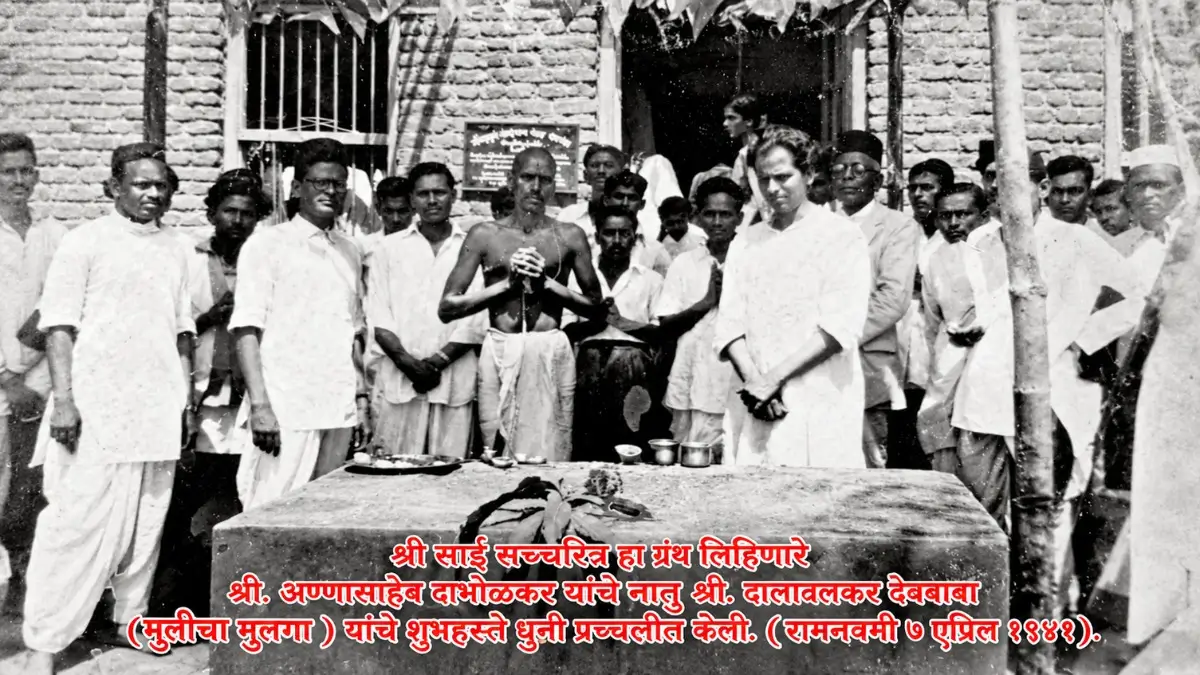
After consultation, A. R. Walawalkar, grandson of Shri Dabholkar, author of Sai Satcharita, lit Bhivpuri’s sacred Dhuni on April 7, 1949, during the Ramnavami observance.
Also Read: ED Widens Tirupati Infra Probe to GMADA Land Deals Across Punjab
How the sacred Dhuni became part of Bhivpuri
Shri Kumarsen Samarth later supported construction expenses around the Dhuni, while Sai Leela records the site’s continuing development as an important centre of organised worship.
The devotional interpretation places the Dhuni within a broader spiritual lineage connecting Sai Baba with Shri Datt Prabhu, the Nath tradition and revered Shri Gorakhnath.
Believers identify parallels involving alms-seeking, Udi or sacred ash, yogic practices, the Dhuni, and ritual objects such as the chimta and satka within these traditions.
The invocation “Shri Satchidanand Sadguru Sainath Maharaj Ki Jai” remains central to Sai worship and reflects the theological understanding of Sai Baba as a revered Sadguru.
Over time, the Bhivpuri temple grew from a modest shrine into a more spacious complex where festivals connected with Sai Baba are celebrated with sustained community participation.
The Pradhan family’s later generations have continued their association with the temple, according to the source narrative, maintaining ceremonies and preserving inherited stories about its beginnings.
The account specifically names Sheetal Tai Pradhan, a daughter-in-law of the Pradhan family, whose relationship with the unnamed Marathi author began around 2016 or 2017.
The author describes Sheetal Tai Pradhan as a spiritual sister whose affection filled the absence of a biological sister, presenting that bond as Sai Baba’s grace.
Sheetal Pradhan and a legacy carried across generations
That personal testimony belongs to the article’s devotional dimension rather than its institutional history, but it illustrates how Bhivpuri continues generating relationships shaped by shared faith.
The author also credits Sheetal Pradhan with providing recent temple photographs that prompted this written account and renewed attention to Bhivpuri’s relatively lesser-known history.
For readers, Bhivpuri’s importance rests on two parallel layers: a documented 1916 temple tradition and a larger body of faith narratives preserved across generations of devotees.
Sprouts News found that official Sai Leela archives substantiate key chronological elements, including Pradhan’s 1916 encounter, the temple’s establishment and the Dhuni’s later documented installation.
Claims involving apparitions, divine instructions and spiritual manifestations remain matters of religious belief, and responsible reporting should clearly distinguish them from independently documented historical events.
That distinction does not diminish their importance to devotees; instead, it allows the temple’s archival history and living spiritual tradition to be presented with appropriate clarity.
More than a century after its beginnings, Bhivpuri remains an important Sai pilgrimage centre whose legacy connects Keshavrao Pradhan’s private devotion with an enduring public institution.