The Pateshwar Shivling complex near Satara in Maharashtra is known for its unusual concentration of Shivlings, rock-cut sculptures, caves, tanks, and temple remains spread across a Sahyadri hill. The site includes the Pateshwar temple, a large Pushkarani, and the Varhad Ghar cave, along with distinctive Shaivite representations carved or installed in stone. Some sculptures have unusual forms, including a Nandi associated with a Shivling. While the complex appears historically significant, comprehensive archaeological research is needed to establish its chronology, authorship, and different phases of development.
Pateshwar Shivling Complex: Ancient Stone Sculptures in Maharashtra Remain a Research Challenge
A remarkable concentration of Shivling sculptures, caves, tanks, and temple remains at Pateshwar near Satara has drawn attention for its unusual artistic and religious features.
Pateshwar Shivling complex near Satara in Maharashtra preserves a remarkable collection of ancient and medieval Shaivite sculptures, including hundreds of Shivlings carved or installed across the hill.
Located approximately 12 kilometres from Satara, the Pateshwar hill rises above Deogaon village, where local historical accounts connect the village name with the presence of divine habitation.
The hill stands at roughly 3,250 feet above sea level and forms part of the Sahyadri landscape, surrounded by dense vegetation, birds, wildlife and a relatively tranquil natural environment.
At the summit, visitors encounter the medieval Pateshwar temple, an extensive Pushkarani, the ancient Varhad Ghar cave, rock-cut tanks and numerous sculptural remains.
The most distinctive feature, however, is the extraordinary variety of Shivlings visible across the site, with several examples carved directly into rock and others separately installed.
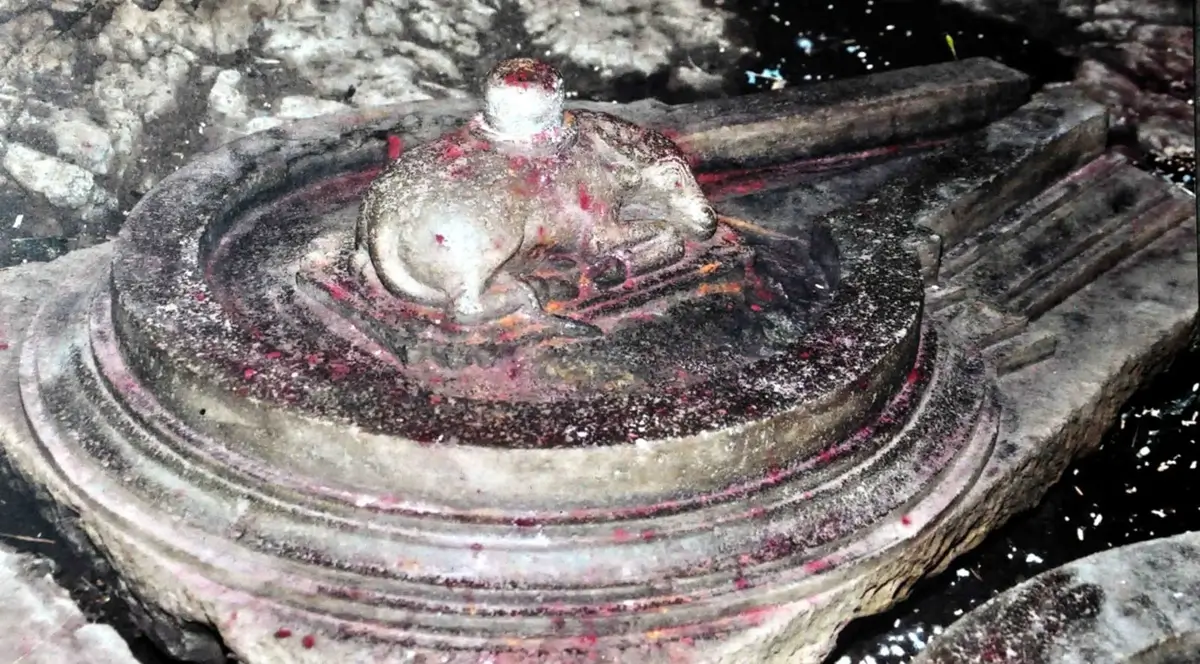
Pateshwar’s unusual concentration of Shivling sculptures
The Pateshwar hill contains Shivling-related sculptures at several locations, including the temple precinct, Pushkarani, Varhad Ghar cave, and pathways leading through the surrounding rocky landscape.
Some Shivlings appear conventionally installed, while others were carved directly into stone, creating a complex archaeological landscape whose chronology and precise purpose require systematic scholarly investigation.
One particularly unusual sculpture reportedly depicts Nandi lying inside a cave, with another Shivling positioned on the animal’s back, creating an uncommon religious and artistic composition.
Other rock-cut objects reportedly include vessels and a hearth shaped like Shivlings, suggesting that the site contains several unconventional representations connected with Shaivite symbolism.
The complex also reportedly contains representations associated with the Navagraha, or nine planetary deities, with identifying symbols including Shani’s crescent-like mark, the Sun’s radiating circle, and vehicles associated with other planets.
These features make Pateshwar potentially significant for researchers examining ancient Indian religious practices, iconography, stone-working traditions, and the evolution of Shaivite worship across different historical periods.
However, the absence of widely documented comprehensive research makes it difficult to establish definitive dates, authorship, construction phases or the precise cultural circumstances surrounding the sculptures.
Also Read: ED Raids 12 Premises in ₹58 Crore Online Betting Money Case.
The mysterious craftsmanship behind Pateshwar’s stone heritage
The identity of the craftsmen responsible for several sculptures at Pateshwar remains unclear, leaving questions about artistic traditions, patronage, chronology and the historical development of the complex.
The concentration of numerous Shivlings within one geographical area is unusual and could provide researchers with valuable evidence about regional religious traditions and changing patterns of worship.
The eastern-facing cave containing multiple Shivling forms is particularly noteworthy, although detailed archaeological documentation would be necessary before assigning definitive historical dates or interpretations.
The wider landscape also includes the large Pushkarani, ancient rock-cut tanks, and Varhad Ghar cave, indicating that Pateshwar was more than an isolated sculptural location.
Together, these features create a cultural landscape combining religious architecture, water management, cave excavation, rock-cut sculpture, and natural surroundings within the Sahyadri region.
For historians and archaeologists, systematic mapping, photography, architectural documentation, and comparative study could help determine whether different sections belong to separate periods or represent one continuous tradition.
Such research could also examine connections between Pateshwar and other Shaivite centres across Maharashtra, while carefully distinguishing established evidence from local traditions and later religious interpretations.
The site’s condition, accessibility and conservation requirements would likewise merit assessment, particularly because exposed rock sculptures can face gradual deterioration from weathering, vegetation, visitor activity and environmental changes.
The Basaveshwar Shivling and the Kashi Khanda reference
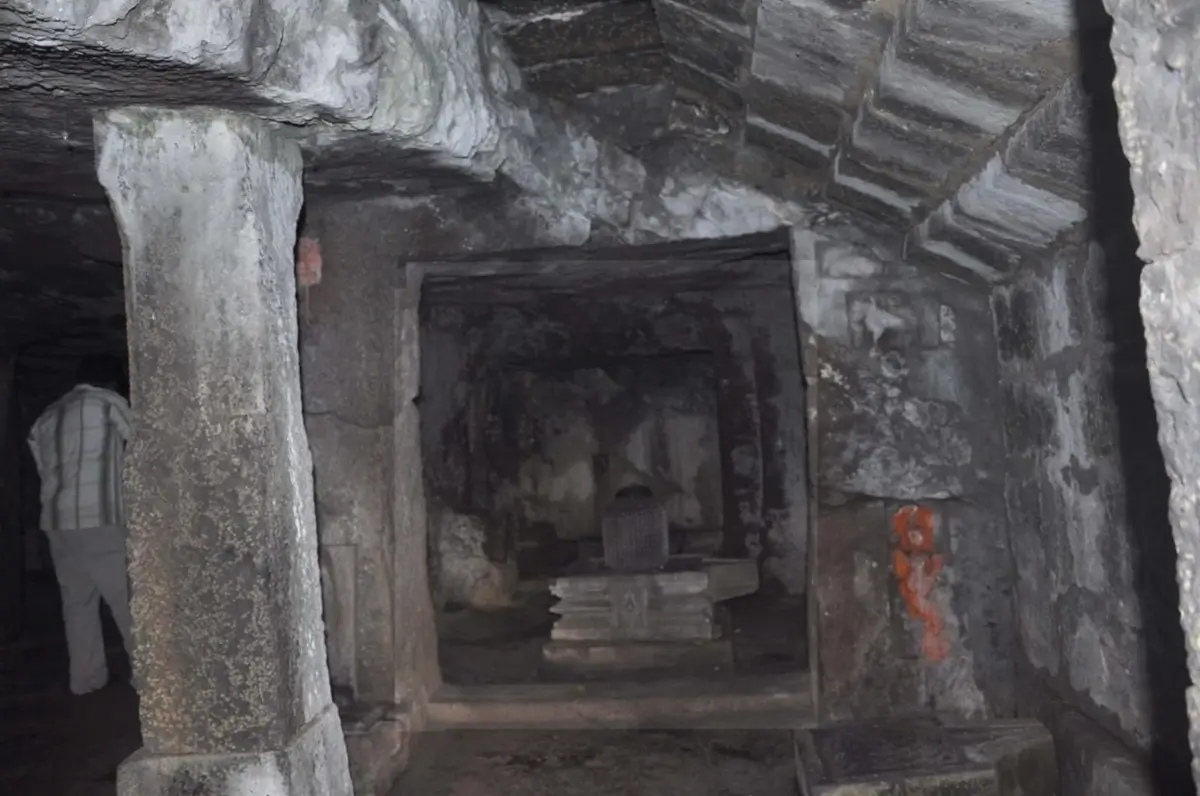
Among the site’s most intriguing features is a Shivling reportedly located inside an underground cave associated with the Kamal Pushkarani at Pateshwar.
According to the supplied tradition, this particular Shivling is identified as Basaveshwar, with its interpretation linked to the Kashi Khanda, a religious text associated with the sacred traditions of Kashi.
The name is explained through the components “Ba” for Brahma, “Sa” for Sadashiva, and “Ve” for Vishnu, creating a distinctive theological interpretation surrounding the Shivling.
Local scholarly interpretations further associate Nandi with living beings and environmental elements, giving the animal a broader sacred significance within the religious symbolism of the site.
This interpretation is presented as an observation attributed to researchers and should be examined against the original Kashi Khanda text, archaeological evidence, and established Shaivite scholarship.
The reported association between Nandi, environmental elements, and the sequence of worship also provides an interesting subject for researchers studying religious symbolism and ecological ideas in traditional Indian culture.
Why Pateshwar deserves systematic historical research
Pateshwar’s combination of Shivling sculptures, caves, water structures, temple remains, and natural surroundings makes the hill potentially important for multidisciplinary research into Maharashtra’s cultural history.
Rather than relying exclusively on oral traditions or isolated interpretations, researchers could establish a detailed inventory documenting every major sculpture, cave, tank, architectural element and inscription found across the site.
Archaeological dating, comparative iconography and epigraphic investigation could potentially clarify the chronology of the complex and identify influences from different periods of Indian history.
The site could also contribute to understanding how religious landscapes were organised, particularly where sacred water structures, caves, temples and rock-cut religious symbols occur within the same geographical setting.
For the Maharashtra government and cultural authorities, a systematic assessment could help determine appropriate conservation measures while ensuring that the religious character and environmental setting of Pateshwar are respected.
Further academic research could also establish whether the unusual Shivling forms represent specific theological concepts, artistic experimentation, ritual requirements, or successive additions made over different historical periods.
Until such studies are undertaken, claims about the exact age, creators, and historical significance of individual sculptures should remain subject to scholarly verification.
Pateshwar therefore stands as a potentially important but comparatively under-researched cultural landscape, where ancient stone craftsmanship and Shaivite traditions continue to invite questions from historians, archaeologists and researchers.
For visitors, the hill offers an unusual encounter with Maharashtra’s religious and sculptural heritage; for scholars, it presents an opportunity to investigate a distinctive concentration of unexplained stone traditions.
A comprehensive archaeological and historical study could ultimately help place Pateshwar within the wider narrative of Indian art, religious architecture and cultural heritage, while protecting its remarkable legacy for future generations.
Sprouts News highlights the need for evidence-based documentation of such heritage locations, particularly where extraordinary sculptures and traditions remain insufficiently studied or formally recorded.
The future significance of Pateshwar will depend on sustained research, responsible conservation, and careful documentation, allowing its remarkable Shivling heritage to be understood without separating history from living cultural traditions.