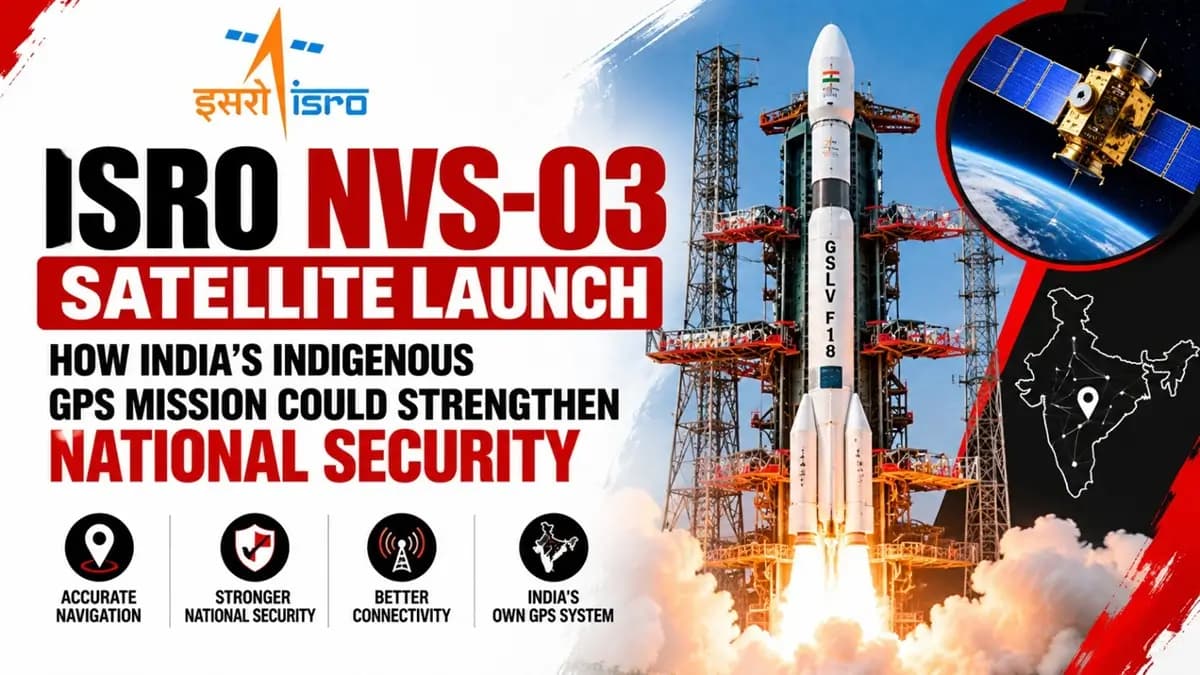
The Indian Space Research Organisation (ISRO) successfully launched its next-generation NVS-03 navigation satellite aboard GSLV-F18 from Sriharikota, Andhra Pradesh, at 11:51 pm IST on October 30, 2026. The rocket placed the spacecraft into a Geosynchronous Transfer Orbit, marking the 20th GSLV flight.
ISRO NVS-03 Satellite Launch Successful as GSLV-F18 Places Navigation Satellite in Orbit
India’s space agency ISRO has successfully launched the 2,250 kg NVS-03 satellite on-board GSLV-F18 from Sriharikota, an important step in India’s efforts to bolster its indigenous NavIC navigation system.
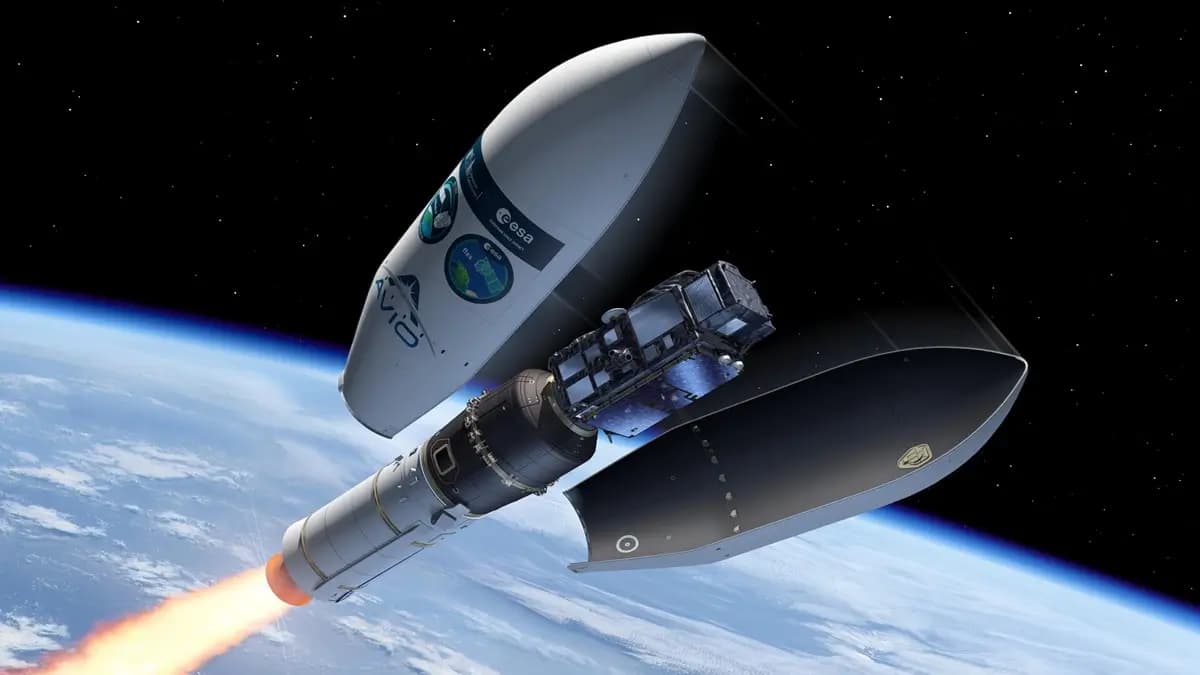
The ISRO NVS-03 satellite was launched successfully on 30 October, 2026. The Geosynchronous Satellite Launch Vehicle GSLV-F18 put the navigation satellite into its intended geosynchronous transfer orbit.
The rocket blasted off at 11:51 pm IST from the second launch pad at the Satish Dhawan Space Centre at Sriharikota in Andhra Pradesh. About 18 minutes later, the satellite was in its assigned elliptical orbit, and the launch was a success.
The ISRO Chairman Dr V. Narayanan congratulated the scientists, engineers, industrial partners and academic institutions of the agency for their contribution to the mission.
He confirmed the satellite, weighing 2,250 kg, was injected exactly into its required orbit and called it an important milestone for India's space program.
ISRO NVS-03 Satellite Launch Strengthens NavIC Capabilities
NVS-03 is the third satellite in the next-generation navigation satellite series of India, intended to ensure continuity of services under the Indian Regional Navigation Satellite System (IRNSS), commercially known as Navigation with Indian Constellation (NavIC).
Besides the procured atomic clocks, the satellite has an indigenous atomic clock. This is a step toward indigenous capabilities in precision timing technology.
Apart from the current L5 and S-band signals, NVS-03 will also carry the L1 navigation signal, ISRO said. It includes all of India and extends to approximately 1,500 kilometres beyond the political boundaries of the country.
These upgrades are expected to enhance navigation, positioning and timing services for both civilian and strategic applications, boosting India’s ability to sustain an indigenous satellite navigation infrastructure.
NavIC Faces Challenges Following Earlier Satellite Setbacks
The launch comes amid concerns about the operational robustness of India’s regional navigation constellation. The NavIC was designed to provide autonomous positioning services and not to completely depend on foreign navigation systems.
There have been long gaps between launches in India’s NVS-series program. NVS-01 was launched in May 2023, NVS-02 in January 2025, and NVS-03 in October 2026.
The NVS-02 mission ran into trouble when the onboard engines did not fire during the orbit-raising manoeuvres, and the satellite did not reach its intended operational location.
Information from the Indian government suggested that at the time of the reported assessment, only three of NavIC’s 11 satellites could perform their primary functions.
The constellation consisted of first-generation satellites IRNSS-1B and IRNSS-1I and second-generation satellite NVS-01. But ageing infrastructure and operational setbacks have created more demand for replacement satellites.
Also Read: Residents Allege Late-Night Operations at Jayashankar Wine Shop in Thane.
Satellite Manoeuvres and India's Navigation Roadmap
ISRO confirmed on October 31 that NVS-03 has successfully carried out its first orbit manoeuvre and the health of the spacecraft is reportedly normal.
More orbit manoeuvres will be performed in the coming days to place the satellite into its final geosynchronous orbit at 111.75 degrees East, the agency said.
NavIC needs to be upgraded to its minimum operating capacity with the launch of more NVS-series satellites, including NVS-04 and NVS-05. A constellation of six or seven satellites would offer greater operational resilience.
India’s NavIC is used in conjunction with other popular navigation systems around the world, including the United States’ Global Positioning System (GPS) and China’s BeiDou satellite navigation system.
Thus, the successful GSLV-F18 mission is a major step toward the development of India’s independent navigation infrastructure and technological self-reliance.
Prime Minister Narendra Modi also congratulated the ISRO scientists and engineers for their contribution in strengthening the NavIC and in taking forward indigenous critical technologies.
The eventual injection of NVS-03 into its designated geosynchronous slot will be an important milestone for India to improve the reliability of navigation and maintain continuity of NavIC services as further orbital manoeuvres progress.